


SC ruling on Vinp Distilleries restores parity in ethanol procurement: ISMA
The dispute arose after Vinp approached the High Court seeking higher allocation under its long-term offtake agreement (LTOA) in the OMC tender for the 2025-26 ethanol supply year
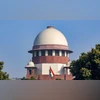 "SC, Supreme Court")
Setting aside the High Court orders, the Supreme Court held that decisions on how much ethanol to procure, from which feedstock and under what terms fall within the domain of government policy, an area where courts should exercise restraint. (Photo:PTI)
Listen to This Article
The Supreme Court of India has set aside an order from the Karnataka High Court that granted preferential ethanol allocation to Vinp Distilleries and Sugars Pvt Ltd, restoring parity in the ethanol procurement process followed by oil marketing companies (OMCs), according to the Indian Sugar & Bio-energy Manufacturers Association (ISMA).
The dispute arose after Vinp, a Dedicated Ethanol Plant (DEP), approached the High Court seeking higher allocation under its long-term offtake agreement (LTOA) in the OMC tender for the 2025-26 ethanol supply year. The company argued that the agreement entitled it to receive allocation beyond its annual offtake quantity.
However, the OMC tender framework does not provide preferential treatment beyond the agreed annual quantity. Despite this, both the single judge and division bench of the Karnataka High Court directed OMCs to revise Vinp’s allocation in its favour, effectively allowing a private contractual arrangement to override a uniform national tender process.
Setting aside the High Court orders, the Supreme Court held that decisions on how much ethanol to procure, from which feedstock and under what terms fall within the domain of government policy, an area where courts should exercise restraint.
ISMA said the ruling brings clarity and stability to the ethanol procurement framework. Had the High Court’s orders remained in force, other DEPs could have sought similar preferential allocation, potentially distorting the competitive bidding system that governs ethanol procurement.
Also Read

 "Liquefied Natural Gas, LNG, OIL SECTOR")
 "Real estate")
 "President, Droupadi Murmu Budget session")
 "Harish Rana has remained in a permanent vegetative state since 2013 after falling from the 4th-floor of a building.")
 "Practo")
Industry estimates suggest that nearly 1.99 billion litres of ethanol allocation could have shifted away from non-DEPs if the High Court’s directions had been implemented.
Of this, around 0.73 billion litres of ethanol produced from sugar-based feedstock — such as sugarcane juice and B-heavy and C-heavy molasses — would have been impacted.
Such a shift would have reduced revenues for sugar mills and lowered offtake of cane-based feedstock, affecting farmers and disrupting the balance between sugar production, ethanol diversion and cane price stability, ISMA said.
The Supreme Court’s intervention, the industry body added, restores predictability and ensures a level playing field for ethanol suppliers across the country.
More From This Section
 "fertilisers")
 "seed paddy")
 "Nagauri Pan Methi")
 "wheat")
 "Wheat, Grain")
Don't miss the most important news and views of the day. Get them on our Telegram channel
First Published: Mar 12 2026 | 4:11 PM IST