


Govt cuts EV import tax for firms investing in local manufacturing
The application window for new government scheme will likely open within the next few weeks and will remain open for a minimum of 120 days
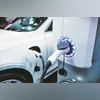 "EV, ELECTRIC VEHICLE")
According to the ministry, companies must make the required investment of ₹4,150 crore (around $500 million) within three years of receiving approval.
Listen to This Article
The Indian government on Monday released detailed guidelines for its scheme to promote the manufacturing of electric passenger vehicles. Under the new rules, companies that commit to investing at least ₹4,150 crore in setting up manufacturing units in India will be allowed to import up to 8,000 electric cars each year at a reduced import duty of 15 per cent. Currently, this duty ranges between 70 per cent and 100 per cent.
Although the scheme was first announced on 15 March 2024, the Ministry of Heavy Industries has now published the full set of guidelines, enabling car manufacturers to prepare for applying. Officials stated that the application window will likely open within the next few weeks and will remain open for a minimum of 120 days.
Import duty benefits for approved applicants
“To encourage the global manufacturers to invest under the Scheme, the approved applicants will be allowed to import Completely Built-in Units (CBUs) of e-4W with a minimum CIF value of $35,000 at reduced customs duty of 15 per cent for a period of 5 years from the application approval date. Approved applicants would be required to make a minimum investment of ₹4,150 crore in line with the provisions of the scheme,” an official statement said.
The maximum duty foregone per applicant has been capped at ₹6,484 crore or the investment made under this scheme.
Also Read

 "Mamata Banerjee, Mamata")
 "Imgae")
 "US Department")
 "CEA Krishnamurthy Subramanian")
 "Pakistan's Foreign Minister, Bilawal Bhutto Zardari")
Investment and local manufacturing requirements
According to the ministry, companies must make the required investment of ₹4,150 crore (around $500 million) within three years of receiving approval. During this period, they must also set up manufacturing facilities and begin production of electric four-wheelers (e-4Ws).
Eligible expenses for the investment benefits include new plants, machinery, equipment, associated utilities, and engineering research & development (ER&D). Costs related to land are excluded, but the construction of new buildings for the main plant and utilities is allowed as long as it doesn’t exceed 10 per cent of the total committed investment.
Additionally, companies can allocate up to 5 per cent of the investment for setting up charging infrastructure.
The scheme requires that a minimum of 25 per cent domestic value addition (DVA) be achieved within three years of approval. By the fifth year, this must increase to at least 50 per cent.
To ensure commitment to the scheme, each applicant must provide a bank guarantee from a scheduled commercial bank in India. This guarantee should cover either the total import duty to be waived or ₹4,150 crore—whichever amount is higher.
Application fees and revenue criteria
The application process involves a non-refundable fee of ₹5 lakh. In addition, to qualify for the scheme, companies must meet certain financial criteria:
* A minimum global revenue of ₹10,000 crore from automotive manufacturing.
* Global fixed asset investments of at least ₹3,000 crore, as per the latest audited financial statements at the time of application.
The ministry will accept applications for a 120-day period (or longer, if needed) each time the application window is opened. This process can continue until 15 March 2026, giving companies multiple chances to apply.
More From This Section
 "Cars, auto industry")
 "Electric vehicle, electric car, EV, Mercedez")
 "Tesla")
 "Maruti Suzuki, Maruti Suzuki logo")
 "passenger vehicle, pv sales")
Don't miss the most important news and views of the day. Get them on our Telegram channel
First Published: Jun 02 2025 | 6:55 PM IST