


One size cannot rate India's electric two-wheeler ride, says Siam
Industry body flags Vietnam reference point, seeks India-specific star-rating framework
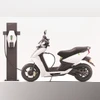 "Representative Picture")
premium
Representative Picture
3 min read Last Updated : Jun 25 2026 | 11:03 PM IST
Listen to This Article
The Society of Indian Automobile Manufacturers (Siam) — which has most automobile makers as members — has raised concerns over the draft five-star rating of electric two-wheelers (e2Ws) based on energy efficiency proposed by the Bureau of Energy Efficiency (BEE).
Siam believes that using just one country model — Vietnam, which is not a high-volume producer — as the reference is not a suitable benchmark or an encouraging starting point for formulating standards and labelling norms for the sector.
The BEE study, while looking for global benchmarks, shows that Vietnam has the lowest specific energy consumption globally at only 1.60 kilowatt-hour (kWh) for a 150-200 kilometre (km) range. This is far lower than India’s 2.91 kWh per 150-200 km and better than China, Europe, Indonesia, among others. Vietnam also has the lowest energy consumption of electricity in the 100-150 km range.
Siam, while supporting BEE’s decision to formulate voluntary standards and a labelling regime, plans to highlight its concerns on the draft, which has been sent to stakeholders involved in the discussions, to BEE.
Instead, the apex association is looking at an alternative — analysing Indian e2W data to decide on its own star rating system, which would be encouraging initially and can be tightened as technology develops.
Siam has already started collecting data and will complete this exercise within the next two weeks. It plans to finish its internal analysis by the end of July and then brainstorm an India-specific star rating programme. The association expects to meet in August to build consensus on the methodology and freeze the final plan by February-March 2027.
The association also points out that the current specific energy consumption in kWh per 100 km is based on the Indian Driving Cycle (IDC), whereas Siam has already agreed to shift to the World Motorcycle Test Cycle (WMTC), which will start from October-November and is more relevant.
Developed by the Automotive Research Association of India, the IDC cycle measures energy consumption, range, and emissions of two-wheelers (2Ws) by simulating gentle Indian city traffic. The WMTC model tests a wider variety of riding conditions, including higher top speeds, harder acceleration and suburban driving, and provides a range estimation that is closer to real-world driving.
The country already has over 41 appliances where the five-star rating has been implemented, either voluntarily or made mandatory. These include air conditioners, refrigerators, and television sets, among others.
The e2W segment has seen growth, with sales rising by 22 per cent in 2025-26 (FY26) over the previous year to 1.35 million vehicles. However, the market share in total 2W sales (internal combustion engine and electric) has been much slower than the ambitious target set by the government of reaching 30 per cent by 2030. In FY26, e2Ws accounted for a share of 6.54 per cent compared to 6.09 per cent year-on-year.
Right road, right yardstick
· Siam flags BEE’s draft five-star rating, saying a Vietnam-based benchmark may not fit India’s e2W market
· Auto body proposes a rating system built on Indian e2W data and usage patterns
· It wants World Motorcycle Test Cycle testing to replace Indian Driving Cycle for a more realistic range assessment
· Plans to finalise an India-specific star-rating framework by February-March 2027
Topics : Siam two-wheelers sales Electric Vehicles