


India's ferrous scrap imports jump 45% in FY26 as domestic supply lags
India's ferrous scrap imports rose sharply in the current financial year, underlining continued dependence on overseas supplies as domestic scrap generation remains structurally constrained
 "scrap metal")
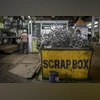
In October, imports of ferrous scrap stood at 0.687 mt, marginally lower than 0.692 mt in September. Despite this, volumes were higher by 24 per cent compared to the 0.553 mt recorded in the same month last year. (Photo: Bloomberg)


Listen to This Article
India’s ferrous scrap imports rose sharply this fiscal even as monthly volumes steadied in October, pointing to continued dependence on external supplies for scrap-based steel manufacturing.
Cumulative imports during April-October 2025 climbed to 5.695 million tonnes (mt), compared to 3.932 mt a year earlier, according to data compiled from major and minor ports by mjunction services.
In October, imports of ferrous scrap stood at 0.687 mt, marginally lower than 0.692 mt in September. Despite this, volumes were higher by 24 per cent compared to the 0.553 mt recorded in the same month last year.
The data also shows a notable rise in stainless steel scrap imports, which more than doubled to 1.055 mt from 0.488 mt a year earlier.
What does the import trend say about India’s scrap demand and supply balance?
Also Read

 "Artificial Intelligence")
 "Kris Singh, Holtec International")
 "Indian export, exporters, Budget 2025, Export Promotion Mission")
 "alcohol effects by age")
 "Delhi air pollution")
For the April-October period, India’s estimated ferrous scrap requirement was around 22.956 mt, while domestic availability was assessed at approximately 17.955 mt. This reflects continued reliance on imports to meet demand.
Vinaya Varma, managing director and chief executive officer of mjunction, said that a flat trend does not automatically imply a significant uptick in domestic ferrous scrap availability or sourcing. He pointed out that domestic generation remains structurally constrained due to the relatively young vehicle fleet and limited large-scale organised scrap processing, meaning the market continues to rely partly on imports to bridge the gap.
“With slow finished steel sales and firm inventory levels, liquidity was tight. Buyers are adopting a wait-and-watch stance, expecting prices to drop further,” Varma said.
Why is ferrous scrap critical for steelmaking and sustainability goals?
Ferrous scrap is used as a raw material across a wide range of steel-producing and steel-consuming sectors. Beyond primary steelmaking, foundries consume ferrous scrap for producing cast iron and cast steel components which are used in automotive, engineering, machinery, pipes and infrastructure equipment. Scrap is considered one of the most viable sustainable solutions for green steel manufacturing, which has seen a greater push across the globe in recent years.
As of December 10, domestic heavy melting scrap (80:20) offered in Mumbai was quoted at Rs 30,300 per tonne (eGST). Internationally, Europe-origin shredded scrap was offered at $348 a tonne, while HMS (80:20) stood at $318 a tonne.
What do stable scrap prices indicate for steelmakers and foundries?
Varma added that a flattish trend in scrap prices generally indicates a balance between supply and demand, giving mills and foundries cost visibility.
India consumed around 42 mt of scrap in FY25, generating 33 mt internally and importing 9 mt. The country is the fourth-largest consumer globally after China, the European Union and the US, and as Indian society and its economy mature, domestic scrap sources are expected to diversify.
More From This Section
 "Delhi High Court")
 "Universal Music, Devraj Sanyal")
 "holiday travel health tips")
 "artificial intelligence, AI,")
 "corporate deals")
Topics : Industry News Steel Industry steel scrap
Don't miss the most important news and views of the day. Get them on our Telegram channel
First Published: Dec 22 2025 | 7:15 PM IST