


Tyre industry revenue to rise 7-8% in FY26 on replacement demand: Crisil
Operating profitability is likely to remain steady at 13-13.5 per cent, supported by stable input costs and healthy capacity utilisation
 "Shares of tyre companies rallied for a second consecutive day on Tuesday, with most of the big players registering cumulative gains of up to 6 per cent over the past two days.")
Domestic demand remains the mainstay, propelling 75 per cent of total volume with exports making up the rest
Listen to This Article
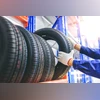
The domestic tyre industry is expected to witness revenue growth of 7-8 per cent this fiscal year, driven by replacement demand that accounts for half of annual sales, according to a report by Crisil Ratings.
The segment is expected to post growth even as offtake by original equipment manufacturers (OEMs) is likely to be subdued, the report stated.
It also noted that the rising premiumisation is expected to give a slight leg-up to realisations.
However, escalating trade tensions and the risk of dumping by Chinese producers diverting inventories because of US tariffs could pose challenges, the report stated.
Operating profitability is likely to remain steady at 13-13.5 per cent, supported by stable input costs and healthy capacity utilisation, it said.
Also Read

 "MRF Tyres")
 "Shares of tyre companies rallied for a second consecutive day on Tuesday, with most of the big players registering cumulative gains of up to 6 per cent over the past two days.")
 "Balkrishna Industries, BKT")
 "Goods and Services Tax, GST")
This, along with strong accruals, lean balance sheets and calibrated capital spending should help sustain the sector's stable credit outlook, the report stated.
"Our analysis of India's top six tyre makers, catering to all vehicle segments and accounting for 85 per cent of the sector's Rs 1 lakh crore revenue, indicates as much," it said.
Domestic demand remains the mainstay, propelling 75 per cent of total volume with exports making up the rest, it added.
The export momentum, however, comes with risks, the report noted.
The US, accounting for 17 per cent of India's tyre export volume last fiscal year, and 4-5 per cent of overall industry volume, has imposed reciprocal tariffs on several Indian goods, potentially eroding price competitiveness, it stated.
And steep US tariffs limit China's access to that market, raising the risk of excess supply being diverted into price-sensitive markets such as India, it added.
To curb cheap imports, India imposes anti-dumping and countervailing duties, including a 17.57 per cent levy, on large truck and bus radials from China.
"However, a broader influx of low-cost tyres across other segments could pressure domestic realisations without timely safeguards," the report added.
(Only the headline and picture of this report may have been reworked by the Business Standard staff; the rest of the content is auto-generated from a syndicated feed.)
More From This Section
 "Di-Ammonia Phosphate, DAP")
 "artificial intelligence, large language model, LLM")
 "Russian Oil")
 "airtel bharti airtel")
 "Aadit Palicha (22) and Kaivalya Vohra (22)")
Don't miss the most important news and views of the day. Get them on our Telegram channel
First Published: Jul 18 2025 | 1:34 PM IST