


Explained: Why FIIs matter for markets, even with DIIs' strong presence?
DIIs' steady inflows, backed by retail investors and long-term capital, have made Indian markets more self-reliant and less vulnerable to global shocks
 "market, stock market, investor, BSE, NSE")
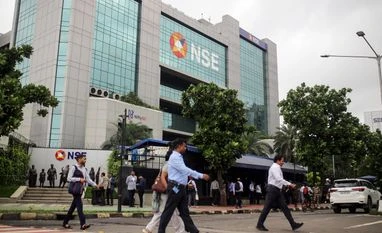
Any slowdown in DII buying could dry up market liquidity and impact overall sentiment. | Image: Bloomberg
Listen to This Article
Foreign Institutional Investors (FIIs) have been paring back exposure to India amid tariff jitters and valuation pressure. Domestic institutional investors (DIIs), however, have provided a cushion to the markets in this backdrop.
Year-to-date (Y-T-D), FIIs have sold ₹1.42 trillion worth of equities, while DIIs have bought around ₹5.24 trillion worth of Indian shares, data shows.
"DIIs have become the primary drivers of market resilience and growth. Their steady inflows, backed by retail investors and long-term capital, have made Indian markets more self-reliant and less vulnerable to global shocks," said Mohammad Imran, research analyst, Mirae Asset Sharekhan.
In FY25, despite $15.6 billion of FII outflows, the Nifty still delivered a 5 per cent gain. Contrast this with FY09, when a smaller outflow of $10.4 billion led to a 36 per cent market decline, data shows.
Why are FIIs important?
Analysts believe that even though healthy domestic flows have reduced market volatility, global capital still remains key for market stability and sentiment. Indian markets, they said, cannot remain decoupled to what's happening globally.
"India cannot be completely insulated from global shocks since equity valuations, currency movements, and commodity prices are interlinked globally. DIIs can limit the downside, but a prolonged FII sell-off amid global turmoil would still impact the market," said Devarsh Vakil, head of prime research, HDFC Securities.
Also Read

 "rollercoaster")
 "supremacy, king, leader, seat")
 "Markets, Market Lens, Market outlook, India stock market outlook, FII flow outlook India, FPI flow outlook India, FPI flows, GST rate cut, GST rates India")
 "Gold")
 "GST rate cut")
That said, analysts said any slowdown in DII buying could dry up market liquidity and impact overall sentiment. Thus, a balance between foreign flows and domestic flows is needed in a healthy market, believe analysts, as foreign investors - like DIIs - drive market sentiment, provide liquidity, and stability.
"While India's equity landscape is now more balanced with a strong domestic base, FIIs will continue to matter, especially for driving sentiment, valuations, and integration with global capital flows, making them an indispensable part of the overall market ecosystem"” said Puneet Singhania, director, Master Trust Group.
Besides, foreign flows also impact market returns. Over the last decade, NSE 500 returns have exhibited a meaningful correlation (64 per cent average) with FII flows on a TTM basis, which has remained high even in recent times and currently stands at 74 per cent, data shows.
FIIs, according to Ankur Jhaveri, MD & CEO, institutional equities, JM Financial Institutional Securities Ltd, remain important due to the scale of active and passive flows and India's rising weight in global indices like MSCI. While FIIs may not be perceived to dominate Indian equities to the same extent as a few years ago, they still wield power, particularly in large ticket activities like qualified institutional placements (QIPs), initial public offerings (IPO) anchor investments, and block trades, where domestic institutions are still building scale, they said.
More From This Section
 "Securities and Exchange Board of India, Sebi")
 "listing")
 "initial public offerings, IPO")
 "Fintech companies are tapping into traditional forms of banking products such as fixed deposits (FDs) as they expand their financial services bouquet.")
Topics : Market Lens Markets FIIs DIIs FII flows Market Outlook Foreign investments Foreign investors Domestic Institutional Investors
Don't miss the most important news and views of the day. Get them on our Telegram channel
First Published: Sep 08 2025 | 6:43 AM IST