


CMF Phone 2 Pro review: Design, UI highlight Nothing's 'modular' smartphone
CMF Phone 2 Pro is a refined evolution of last year's model, with noticeable improvements in design and user experience, though Nothing has made only minimal progress in performance and imaging
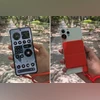 "Nothing's CMF Phone 2 Pro and its accessories")
Nothing's CMF Phone 2 Pro and its accessories
Listen to This Article
The CMF Phone 2 Pro is Nothing’s latest attempt to shake up the budget smartphone space with a focus on modular design. Building on the foundation laid by last year’s CMF Phone 1, the successor brings several upgrades, including a larger display, a telephoto camera, and, more notably, a more premium look and feel. But are these upgrades meaningful and elevates the user experience in real life? Let us find out.
Design and Modularity
As with most Nothing products, design remains a highlight of the CMF Phone 2 Pro. The smartphone is both thinner and lighter than the CMF Phone 1 from last year, and the updated build adds a more premium touch thanks to the glass-like finish on the back (review unit) and a sleek, metal-textured frame.
Despite the changes, the phone retains the CMF identity, with visible screws along the back edges and the signature wheel screw at the bottom right. Among the new additions is a “Essential Key” placed just below the power button, featuring a smoother texture that makes it easier to distinguish by touch. Up front, while the bezels do not appear much slimmer than last year, they are more uniform, which gives the front profile a cleaner look.
The new triple rear camera setup does cause the phone to wobble when the phone is laid flat on a surface. However, I mostly used the device with the attachable “Universal Cover” and the magnetic “Wallet and Stand” accessories, which even out the surface and improve stability. Important to note, these accessories are sold separately and currently not available for purchase in the country.
When it comes to modularity, the CMF Phone 2 Pro takes a slightly different direction. The back panel is no longer removable or swappable like on last year’s model. Instead, Nothing has introduced a new approach: modularity through the Universal Cover. This may actually broaden the phone’s appeal – many buyers may prefer a sleeker, more premium-looking device over one with easily replaceable parts. By offloading accessory attachment to a custom case rather than the phone itself, Nothing has managed to make the phone thinner and lighter while still offering modular options for those who want them.
Also Read

 "Nothing's CMF Phone 2 Pro")
 "Nothing Phone 3a series")
 "CMF Phone 2 Pro accessories")
 "Nothing's CMF Phone 2 Pro")
 "CMF Phone 2 Pro")
So how does modularity work on the Phone 2 Pro? First, you attach the Universal Cover to the device using screws. The case includes built-in magnets and precisely cut inlets that allow compatible accessories to latch on.
The Universal Cover itself only protects the back of the phone and not the metal side frame, which could reduce protection in the event of a drop. Also, it’s currently available in just a matte white finish, which tends to attract dirt and smudges fairly quickly. Hopefully, Nothing will introduce more colour and texture options for this cover in the future.
Of all the accessories, I found the new Wallet and Stand to be the most useful. Unlike last year’s cardholder, this one feels more premium and uses strong magnets to attach securely to the Universal Cover. While you can only store a few cards or some cash, the fact that it also functions as a phone stand adds welcome utility. Other accessories include the returning Lanyard from last year and a pair of new interchangeable camera lenses.
These new lenses are especially interesting: one provides a fisheye effect, while the other works as a macro lens. Both attach only to the primary rear camera via a dedicated socket on the Universal Cover. I’ll cover their performance in the camera section, but visually, they certainly make the phone stand out.
It's worth reiterating that all accessories are sold separately, and most of last year’s CMF Phone accessories are not compatible with the Phone 2 Pro—with the Lanyard being the only exception.
Display
The display on the new CMF-branded phone receives a modest yet meaningful upgrade. It now features a larger 6.77-inch FHD+ panel, made possible by a thinner chin bezel that gives the front a more uniform and balanced look. Brightness has also improved, with the company claiming a peak of up to 3000 nits. While I couldn’t verify the exact number, the display remains easily readable in nearly all lighting conditions. There is some glare under direct sunlight, but overall visibility and viewing angles are solid.
One of the key upgrades is the addition of dynamic refresh rate adjustment. The panel can now switch between 30Hz, 60Hz, 90Hz, and 120Hz refresh rates depending on usage, which should help improve power efficiency. This is a step up from last year’s model, which was limited to just 60Hz and 120Hz. Another important improvement is the touch sampling rate, which jumps from 240Hz on the Phone 1 to 1000Hz on the Phone 2 Pro – making touch interactions, especially in gaming, noticeably more responsive.
Overall, the display delivers sharp and vibrant visuals for its price. Scrolling feels smooth, and HDR playback is supported on YouTube. The phone also supports Widevine L1, enabling high-definition streaming on platforms like Netflix, though HDR streaming support is not available on such services.
Camera
The CMF Phone 2 Pro brings a substantial upgrade to its camera system – at least on paper – and deserves credit for introducing a truly usable telephoto lens in the budget segment. In terms of real-world performance, the 50MP primary camera captures good detail in natural lighting, although colours can sometimes appear a bit washed out. The 8MP ultra-wide sensor goes in the opposite direction, often oversaturating images under bright light. Interestingly, the 50MP telephoto camera with 2x optical zoom delivers the most colour-accurate results outdoors while retaining solid detail. However, under artificial lighting, the roles are reversed, with the primary camera emerging as the best performer.
The telephoto lens proves particularly useful for portrait photography, allowing users to take close-up shots of subjects without physically moving in. That said, edge detection in portrait mode remains hit or miss.
As for the new attachable lenses, Nothing includes a macro lens and a fisheye lens—both of which can only be mounted on the main camera via the Universal Cover. The fisheye lens produces the expected wide-angle distortion, but the results do not differ much from what software-based filters could offer. The macro lens, on the other hand, lets you get impressively close to subjects and capture finer details. However, focus becomes a challenge with this lens, largely due to the camera’s lack of optical stabilisation.
In terms of video, the phone supports 4K recording at 30FPS using both the main and telephoto cameras, while the ultra-wide is limited to 1080p at 30FPS.
The 16MP front camera captures decent selfies in outdoor lighting, but tends to smooth out facial details under indoor conditions to compensate for sensor limitations. Front camera video recording is capped at 1080p at up to 60FPS.
Performance
The CMF Phone 2 Pro is powered by the MediaTek Dimensity 7300 Pro 5G, a slight upgrade over the standard Dimensity 7300 5G used in last year’s CMF Phone. In day-to-day use, the phone handles routine tasks well – I experienced no slowdowns while browsing, switching between apps, or streaming videos. Network performance was stable, and general UI responsiveness felt smooth.
However, the phone begins to show its limitations when pushed with heavier workloads. For instance, I noticed occasional lag when downloading multiple apps in the background while simultaneously scrolling through Reddit. The experience wasn't unusable, but there was a definite drop in smoothness.
Gaming performance is decent for casual titles, but if you're planning to run more demanding games like BGMI or Genshin Impact, don’t expect consistently smooth gameplay – especially at medium to high graphics settings. The phone can handle short sessions, but it’s clearly not tuned for intensive gaming.
Software
Software remains one of the CMF Phone 2 Pro’s strongest areas. Nothing has maintained its philosophy of delivering a consistent user experience across its product range, meaning the interface here is nearly identical to what you’d find on the higher-end Nothing Phone 3a Pro. The UI carries Nothing’s signature minimalist aesthetic – clean, responsive, and refreshingly free from bloatware or intrusive ads. All the signature widgets and customisation options are present, offering a polished and flexible experience.
Nothing has also brought its full suite of artificial intelligence (AI) features to the CMF Phone 2 Pro. This includes the Magic Eraser tool in the Gallery app, AI-generated wallpaper options, and a smart app drawer that automatically groups similar apps. Additionally, the AI-powered “Essential Space” is a notable new addition, accessible via the dedicated “Essential Key” on the side of the phone. As with the 3a series, this space acts like an AI hub, allowing users to save screenshots, audio notes, and more. It intelligently organises content and can even set reminders based on context.
Another standout new addition is the “Private Space” feature. Swiping right on the app drawer reveals this secure zone, where users can store apps, files, and images behind a separate password, PIN, or fingerprint.
Battery
With a 5000mAh battery, the CMF Phone 2 Pro delivers excellent battery life. Throughout my review period, the phone consistently lasted a full day on a single charge, even with moderate to heavy use. On several occasions, I forgot to charge it overnight, yet it still had enough power to get me through the morning and into work without shutting down.
For charging, Nothing includes a 33W charger in the box. It takes just over an hour to fully charge the device, which is convenient enough for daily use.
Verdict
The CMF Phone 2 Pro by Nothing comes across as a more refined and practical evolution of last year’s CMF Phone 1. It retains the distinctive design language and modular elements, while improving on usability and polish. Priced at Rs 18,999 onwards, the device strikes a good balance between style and substance, delivering a solid experience for everyday users.
The standout features remain its clean and capable software experience – unmatched at this price – and impressive battery life. While it doesn’t aim to be a powerhouse in terms of performance or photography, it still delivers reliable day-to-day output in both areas, making it a well-rounded choice in the budget segment.
More From This Section
 "Motorola Pad 60 Pro")
 "JBL Tune Beam 2")
 "Asus Zenbook A14 with Qualcomm Snapdragon X chip")
 "Apple Intelligence in India")
 "Motorola Edge 60 Stylus")
Don't miss the most important news and views of the day. Get them on our Telegram channel
First Published: May 12 2025 | 12:03 PM IST