


China firms in limbo after Iran strikes disrupt trade, oil flows in Gulf
US-Israel strikes on Iran have left Chinese firms facing stalled deals, shipping delays and oil price risks, exposing China's trade links and heavy dependence on West Asia energy supplies
 "oil, crude oil,")
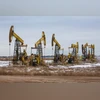
China imported an average of 1.38 million barrels per day of Iranian oil last year. (Image: Bloomberg)


Listen to This Article
The ongoing conflict in West Asia has pushed Chinese companies into uncertainty, disrupting trade links that many had counted on for growth. From stalled contracts to rising freight costs, businesses across sectors say the fallout has been swift, according to a report by South China Morning Post.
For Beijing, the crisis also raises a larger concern: China’s deep energy reliance on West Asia, especially at a time of heightened geopolitical risk.
Chinese firms face stalled deals in Iran
Business ties between China and Iran have expanded in recent years under the Belt and Road Initiative, with Iran seen as a key gateway to West Asia. But fresh US-Israeli strikes have left many Chinese exporters in limbo.
The news report quoted David Xie, a manager at a Shenzhen-based technology company, as saying that his firm recently signed a contract worth over 5 million yuan with an Iranian delegation. The group had visited factories in Shenzhen earlier this year and placed a deposit.
Now, communication has broken down. He said that he tried contacting, but there has been no response.
Also Read

 "uk parliament")
 "Delhi International Airport, Delhi Airport")
 "Iran, US Israel attacks on Iran, Israel Iran conflict, US Iran, Israel Iran")
 "Mumbai Airport")
 "Air India")
Iran imports a range of Chinese goods, including machinery, electronics and auto parts, while exporting petrochemicals, minerals and metals to China. The conflict has disrupted both payments and shipments, exporters said.
Yeno Yan, an agricultural equipment maker from Shandong, said reaching customers in Iran has become nearly impossible. His company exports small tractors to Iran, which makes up about 5 per cent of its overseas sales. Yan said the firm is now focusing on Europe and South America instead.
He warned that even if the fighting stops soon, Iran’s economy may take years to stabilise. Inflation and domestic pressures were already weighing on business before the latest attacks, he added, as cited by the news report.
Cost pressures ripple through supply chains
For companies not directly trading with Iran, the main worry is energy prices. The news report quoted Steve Xie, a textile exporter, as saying that his factory relies on petroleum-based raw materials. Any spike in crude oil prices could quickly raise chemical input costs in China. To reduce risk, he shifted some production to Egypt last year. Manufacturing outside China, he said, offers flexibility if shipping routes through the Strait of Hormuz are disrupted.
Goods shipped from Egypt can reach West Asia and North African markets without crossing the narrow waterway, and can also move into Europe via the Mediterranean, he noted.
China’s heavy dependence on West Asian oil
The conflict also highlights China’s strong reliance on West Asian energy supplies.
China is the world’s largest crude oil importer and the biggest buyer of Iranian oil. Roughly half of its total crude imports come from West Asia.
Data from analytics firm Kpler shows China imported an average of 1.38 million barrels per day of Iranian oil last year -- about 13 per cent of its seaborne crude purchases. Around 42 million barrels of Iranian crude were also held in floating storage in Asian waters earlier this year, The Times of India reported.
Beijing has built large strategic petroleum reserves over the years. Although official figures are not published, analysts estimate the stockpile at about 900 million barrels -- enough to cover nearly three months of imports.
China is also the world’s top importer of liquefied natural gas, with about one-third of LNG shipments coming from West Asian suppliers.
ALSO READ: West Asia conflict disrupts jewellery trade, Surat exporters raise concerns
Steel exports hit by shipping disruptions
The conflict has also begun to affect China’s steel trade. The Strait of Hormuz, a key route between Iran and Oman, handles not only a large share of global oil shipments but also cargo bound for Gulf countries -- now China’s second-largest steel export market.
Rising freight rates and insurance cancellations have made shipping through the strait increasingly difficult. Some Chinese steelmakers have stopped offering new cargoes to West Asian buyers due to a lack of available vessels, news agency Reuters reported.
West Asia accounted for about 16 per cent of China’s steel exports last year, helping offset trade barriers in markets such as Vietnam and South Korea.
Analysts at Shanghai Metals Market said exports to the region could drop sharply in the near term, increasing supply pressure at home and weighing on domestic steel prices.
For Chinese companies, the Iran conflict has quickly turned a key growth region into a zone of risk. From unpaid invoices to blocked shipping lanes, the disruption is being felt across industries. While China’s energy reserves may provide temporary relief, businesses say the bigger challenge is unpredictability, Reuters reported.
More From This Section
 "US Israel strike Iran")
 "flights, planes")
 "Israel, Hezbollah")
 "oil tankers, sea shore, trading")
 "Dubai attack")
Don't miss the most important news and views of the day. Get them on our Telegram channel
First Published: Mar 03 2026 | 1:28 PM IST