


China's $23.9 bn port push: How Beijing is reshaping global maritime trade
A new global report shows Beijing has financed hundreds of port projects across continents, expanding its role in maritime trade infrastructure
 "Pnama Canal, Maersk exports, ports")
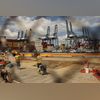
A new report shows China has financed 363 port projects across 90 countries since 2000. | Representational Image: Bloomberg
Listen to This Article
China’s financial footprint in the world’s seaports has expanded steadily over the past two decades, turning the country into one of the most important backers of maritime infrastructure worldwide.
A recent study by AidData, a research lab at the College of William & Mary, shows that between 2000 and 2025 Chinese state lenders and government agencies committed about $23.9 billion in loans and grants for 363 port-related projects at 168 ports across 90 countries.
The projects range from building entirely new terminals to expanding existing facilities and supplying equipment such as container cranes and security scanners. The study is based on the Chinese-Financed Ports Overseas and Related Terminals dataset (CPORTS 2.0), one of the most detailed databases compiled on China’s overseas port financing.
Panama port dispute highlights geopolitical stakes
The report comes just weeks after Panama took control of two ports at the Atlantic and Pacific entrances of the Panama Canal after its Supreme Court voided the concession of their Hong Kong-based operator towards February-end. The government authorised the Panama Maritime Authority to occupy and run the Balboa and Cristobal ports, previously operated by Panama Ports Company, a subsidiary of CK Hutchison. Washington welcomed the move, calling it consistent with efforts to curb Chinese influence around the strategic waterway.
The development highlights how control and financing of ports have increasingly become a geopolitical issue. At the same time, new research shows China’s role in global port infrastructure is already extensive and spread across dozens of countries, highlighting how Chinese lenders were becoming a major source of infrastructure finance for maritime trade.
Also Read

 "Health insurance")
 "pelvic inflammatory disease")
 "US green card, US Passport, US immigration")
 "Rural India, Rural women")
 "Kurd, Kurdish group")
Where are Chinese-financed ports located globally?
Chinese-financed ports are spread across almost every major shipping region. According to the research firm’s analysis, some of the most heavily financed ports include:
> Hambantota International Port in Sri Lanka (Chinese investment of $1.97 billion)
> Port of Newcastle ($1.32 billion) and Port of Melbourne in Australia ($1.14 billion)
> Autonomous Port of Kribi in Cameroon ($1.17 billion)
> Haifa Port in Israel ($1.13 billion)
Many projects are concentrated along busy maritime routes in the Indian Ocean, the Red Sea, West Africa and parts of South America.
But the investments are not limited to developing economies only. About 45 per cent of China’s overseas port financing portfolio supports projects in high-income countries, including Australia, Spain, Singapore and New Zealand.
In these countries, Chinese banks often finance acquisitions or refinancing deals rather than building new ports from scratch.
How China participates in international port operations
China’s involvement in overseas ports comes through a mix of loans, construction contracts and operational roles.
The analysis showed that around 35 per cent of Chinese-financed port projects involve some level of Chinese ownership or operational control.
Effectively, operational participation can give companies influence over how a port functions, including shipping schedules, logistics coordination and berth allocation. In many cases Chinese state-owned enterprises serve as port operators after construction is completed.
Chinese shipping groups are also expanding their presence globally. For example, COSCO Shipping Ports operates or manages terminals at dozens of ports worldwide, including facilities in Europe, Asia and the Middle East.
These investments form part of a broader strategy to strengthen maritime logistics networks linked to Chinese trade.
Why is China financing ports across the globe?
Ports play a central role in global trade, and China is the world’s largest exporter of goods. According to the AidData report, the projects often serve commercial purposes such as:
- handling container cargo
- supporting mineral and energy exports
- facilitating shipping routes linked to Chinese supply chains
The dataset goes on to show that general cargo and container facilities account for the largest share of Chinese port financing, while another group of projects focuses on ports linked to minerals, coal or energy shipments.
Some investments also appear tied to broader infrastructure corridors connecting ports with railways, mines and industrial zones.
For example, the deep-water Port of Chancay in Peru is expected to become a major logistics hub for trade between South America and Asia once fully operational, potentially reducing shipping times to China.
What are the strategic implications of Chinese-financed ports?
The report noted that many Chinese-financed ports sit along major sea lanes used for global trade. While most projects are commercial, analysts say their locations could carry strategic importance.
According to AidData, Chinese naval activity, including port calls and exercises, has taken place at more than half of the ports where Chinese companies also have ownership or operational roles.
However, the study says there is limited evidence that China is systematically converting these facilities into overseas naval bases. Instead, the projects appear primarily focused on trade logistics and commercial shipping.
More From This Section
 "US Israel strike Iran")
 "Iran-Israel, Iran Israel flag")
 "Petronet LNG (Photo: LNG Prime)")
 "A 3D printed miniature model of U.S. President Donald Trump, Israel and Iran flags are seen in this illustration")
 "Iran warship")
Topics : BS Web Reports chinese companies Chinese investors Chinese investment Chinese economy China economic growth
Don't miss the most important news and views of the day. Get them on our Telegram channel
First Published: Mar 05 2026 | 3:41 PM IST