


What is force majeure and why are global energy firms invoking it now
As tensions in West Asia disrupt oil and LNG flows through the Strait of Hormuz, Indian energy firms are invoking force majeure clauses to suspend contractual obligations amid rising maritime risks
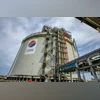 "Petronet LNG (Photo: LNG Prime)")
India’s largest LNG importer, Petronet LNG, said it had issued a force majeure notice to QatarEnergy in respect of three LNG tankers — Disha, Raahi and Aseem — citing the security situation and risks to maritime navigation. (Photo: LNG Prime)


Listen to This Article
As the conflict in West Asia disrupts oil and gas flows, several Indian energy firms have invoked a contractual provision known as 'force majeure'. The move allows companies to suspend or delay obligations when events beyond their control make performance impossible.
What is force majeure?
Force majeure is a provision in a contract that frees both parties from obligation if an extraordinary event directly prevents one or both parties from performing. It covers extraordinary events such as war, natural disasters or government action.
Why is it being invoked now?
Qatar, one of the world’s largest liquefied natural gas (LNG) exporters, halted operations at its Ras Laffan facility after an Iranian drone strike, reported Bloomberg. The plant accounts for roughly a fifth of global LNG supply. According to Norway-based consultancy Rystad Energy, natural gas prices have risen more than 40 per cent as supply tightens.
Indian energy companies have cited the US-Israel conflict with Iran as grounds for invoking the clause. The companies have said that shipping through the Strait of Hormuz, a narrow passage between Iran and Oman that handles a significant share of global oil and gas trade, has been severely disrupted due to the ongoing strikes in West Asia.
Also Read

 "US green card, US Passport, US immigration")
 "Kurd, Kurdish group")
 "Iran, US Iran, Israel Iran, LNG, Strait of Hormuz")
 "L&T, larsen and toubro, larsen and toubro")
 "US Israel strike Iran")
Which companies have declared force majeure?
India’s largest LNG importer, Petronet LNG, said it had issued a force majeure notice to QatarEnergy in respect of three LNG tankers — Disha, Raahi and Aseem — citing the security situation and risks to maritime navigation. QatarEnergy has also declared force majeure following the Iranian strikes.
"In light of the recent and ongoing war in the Middle East region involving Iran and Israel, vessels are presently unable to safely transit through the Strait of Hormuz to reach Ras Laffan, the loading port of QatarEnergy," said Petronet LNG. It added that the likely impact of force majeure cannot be estimated at this point of time. "Acts of war" is excluded under Business Interruption Insurance covers taken by Petronet LNG.
State-run Mangalore Refinery and Petrochemicals has also declared force majeure on gasoline export cargoes for March and April, according to Reuters. The refinery, which exports about 40 per cent of its fuel output, cited disruption to crude flows from the Gulf.
Separately, Gujarat Gas said it would invoke force majeure in supply contracts as regasified LNG availability has become "severely constrained". The company will restrict supplies to industrial customers from March 6. It too noted that "acts of war" are not covered by insurance and that the impact cannot yet be quantified.
The force majeure clause has previously also been invoked during Covid-19, the ongoing Russia-Ukraine war, or during an unprecedented issue faced by a supplier.
More From This Section
 "A 3D printed miniature model of U.S. President Donald Trump, Israel and Iran flags are seen in this illustration")
 "Iran warship")
 "us iran, us flag, iran flag")
 "Nepal, Kathmandu")
 "Iran, Iran flag")
Topics : US Iran tensions Israel Iran Conflict West Asia Petronet LNG Qatar BS Web Reports Explained
Don't miss the most important news and views of the day. Get them on our Telegram channel
First Published: Mar 05 2026 | 1:33 PM IST