


Iran promises to avenge US sinking of warship in Indian Ocean waters
The IRIS Dena was in India from February 15 to 25 to participate in the International Fleet Review, alongside vessels from 40 other countries, including the US and Russia
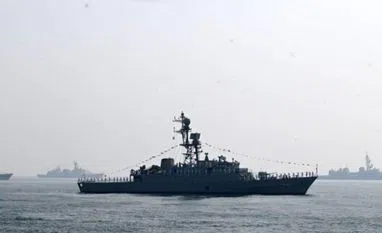 "Iran warship")
Image Credit: AP


Listen to This Article
By Dan Strumpf, Sudhi Ranjan Sen and Jon Herskovitz
The US sinking of an Iranian warship off Sri Lanka’s coast expands the deepening Middle East war to India’s doorstep, unsettling New Delhi’s calibrated approach to the conflict as Iran vowed to avenge the attack.
A US submarine sank the Iranian frigate IRIS Dena off the coast of Sri Lanka on Wednesday, with 32 sailors rescued and more than 100 missing or dead. The episode was the first time since World War II that an American submarine had attacked a surface vessel, US Defence Secretary Pete Hegseth said.
Iran vowed to retaliate, with Foreign Minister Abbas Araghchi calling the attack an “atrocity” that the US “will come to bitterly regret.”
The attack took place just days after the Iranian ship had participated in a flagship Indian naval exercise at the invitation of New Delhi, alongside Indian and other foreign warships. The incident places the government of Prime Minister Narendra Modi in a difficult position as it continues to avoid taking firm sides in the widening Middle East conflict.
It wasn’t immediately clear whether the US had informed India of its plans to conduct military activities in the region. India’s Ministries of Defence and External Affairs didn’t respond to requests for comment. The US Embassy in New Delhi also didn’t immediately respond.
Also Read

 "global stocks")
 "Indian stock market outlook amid Iran war")
 "us iran, us flag, iran flag")
 "aviation, plane")
 "Jammu and Kashmir protest")
“By sinking a vessel returning from an Indian-hosted multilateral exercise, Washington effectively turned India’s maritime neighbourhood into a war zone, raising uncomfortable questions about India’s authority in its own backyard,” Brahma Chellaney, professor emeritus of strategic studies at the New Delhi-based Centre for Policy Research, said in a post on X.
The sinking of the IRIS Dena occurred in Sri Lanka’s exclusive economic zone in the Indian Ocean, a busy shipping corridor. The presence of a US submarine in the area raises concerns over trade routes, as well as strategic risks for India, which often conducts joint patrols with Sri Lanka in the waters.
The IRIS Dena was in India from February 15 to 25 to participate in the International Fleet Review, alongside vessels from 40 other countries, including the US and Russia.
The incident “just demonstrates once more that navies do not fight like armies, lobbing men, machines, and ordnance across a line on the land, but engage wherever the enemy or his commerce might be found,” said Pradeep Chauhan, a retired vice admiral in India’s navy. “With China and Russia sending naval forces into the area, the situation is fraught with great risk for everyone.”
Modi Backlash
Modi’s government is already weathering criticism at home for not explicitly condemning the US and Israeli strikes on Iran. Modi had visited Israel and met with Prime Minister Benjamin Netanyahu shortly before the joint US-Israeli strikes, prompting criticism from opposition figures that the visit provided tacit approval for the attacks.
The conflict puts India in a particularly difficult position. New Delhi has historical ties with Iran and had previously bought large quantities of its oil. At the same time, Modi faces precarious relations with the Trump administration after it slapped punitive 50 per cent tariffs on Indian exports last year, before abruptly unveiling a trade deal that reduced the duties.
Relations with the US is a balancing act as India seeks to manage relations with key regional actors while safeguarding citizens and preserving energy, security and investment interests, according to Bloomberg Economics.
“The episode risks frictions with Washington and domestic embarrassment for Indian Prime Minister Narendra Modi’s government,” Chetna Kumar and Adam Farrar, geoeconomics analysts for Bloomberg Economics, wrote Thursday.
While the strike on the vessel sets an uncomfortable precedent and increases political pressure on the Indian and Sri Lankan governments over the war, “we don’t see it as an indicator that the conflict is widening to South Asia,” they said.
More From This Section
 "Nepal, Kathmandu")
 "Iran, Iran flag")
 "Mahatma Gandhi in Montana")

 "Balendra Shah")
Don't miss the most important news and views of the day. Get them on our Telegram channel
First Published: Mar 05 2026 | 1:01 PM IST