


How a 1953 CIA-backed coup set Iran and the US on today's collision course
Today's Iran-US confrontation traces back to a Cold War coup, oil politics and the 1979 revolution that transformed a strategic partnership into one of the world's longest geopolitical rivalries
 "us iran, us flag, iran flag")
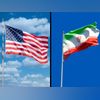
The hostility between Washington and Tehran did not begin with the present conflict, or even with Iran’s nuclear programme but with roots stretching back to a Cold War coup, and a revolution that reshaped Iran’s political identity. | Image: Canva/Fr
Listen to This Article
Missiles, air strikes and drone attacks have pushed the United States and Iran into open confrontation. The latest war erupted after the US and Israel launched coordinated strikes on Iranian military infrastructure and leadership in late February, triggering retaliatory missile and drone attacks by Tehran across the region.
This escalation has rapidly expanded beyond the battlefield. Iran has targeted US bases and regional allies, while disruptions around the Strait of Hormuz have rattled global oil markets and raised fears of a wider West Asia war.
To understand this confrontation, it is necessary to look beyond the current crisis. The hostility between Washington and Tehran did not begin with the present conflict, or even with Iran’s nuclear programme. The roots of the rivalry stretch back more than seventy years and run through a Cold War coup, the fall of a monarchy, and a revolution that reshaped Iran’s political identity.
The long and complex journey of modern Iran
Modern Iran’s political trajectory began with the rise of the Pahlavi dynasty in the early twentieth century. In 1925, Reza Shah Pahlavi took power and established a monarchy that aimed to centralise authority and build a modern Iranian state.
Also Read

 "LNG, LNG supply")

 "Strait of Hormuz")
 "LPG, LPG cylinders, cylinder, cylinders")
 "Supreme Court, SC")
Reza Shah implemented extensive reforms through several initiatives, including developing national infrastructure, establishing a stronger military force, and reducing the power of tribal leaders and religious institutions. His rule also coincided with increasing global interest in Iran’s oil reserves, which Western nations, especially Britain, recognised as strategically valuable resources.
However, the monarchy’s position was shaken during the Second World War. In 1941, Britain and the Soviet Union occupied Iran, worried that the Shah might lean toward Nazi Germany. Reza Shah was forced to abdicate his throne, and his son, Mohammad Reza Shah Pahlavi, took his place.
The younger Shah inherited a politically fragmented country. Nationalists, leftist groups, clerics and royalists were all competing for influence, and it was in this environment that Iran’s relationship with the United States began to deepen.
How oil politics triggered Iran’s first major crisis with the West
By the early 1950s, the most explosive issue in Iranian politics was control over oil. Iran’s petroleum industry was dominated by the British-controlled Anglo-Iranian Oil Company. Many Iranians believed the arrangement gave the country only a small share of the profits from its own resources.
In 1951, Prime Minister Mohammad Mosaddegh nationalised the oil industry, a decision that proved hugely popular inside Iran, where it was seen as a step toward economic sovereignty.
How the 1953 coup turned Iran into a US ally
The move triggered a confrontation with Britain and alarmed the United States, which feared instability in Iran during the early phase of the Cold War and the possibility of Soviet influence expanding in the oil-rich country.
Subsequently, in August 1953, intelligence agencies from the United States and the United Kingdom backed a coup that removed Mosaddegh from power and strengthened the rule of Shah Mohammad Reza Pahlavi.
Declassified Central Intelligence Agency (CIA) documents later revealed how Washington helped organise protests, political pressure and propaganda campaigns in Iran that contributed to the overthrow of the elected government.
The Shah used this Western backing to strengthen his authority after the coup. He maintained power in Iran for more than two decades. Meanwhile, Washington needed allies in West Asia during the Cold War, and Iran became one of its most important partners.
However, the coup was widely viewed inside Iran as foreign interference in the country’s democratic politics. Over time, it became one of the central events shaping anti-American sentiment among Iranians.
How the Shah’s rule deepened Iran’s ties with the US
During the 1960s and 1970s, the Shah pursued rapid modernisation through programmes known as the “White Revolution”. Iran expanded its economy, invested heavily in infrastructure and maintained close military and political ties with the United States.
At the same time, critics accused the monarchy of authoritarian rule. Political opposition was suppressed and dissent was often targeted by SAVAK, the Shah’s secret police.
Economic inequality, political repression and resentment toward Western influence gradually fuelled widespread opposition. By the late 1970s, protests had spread across Iranian cities.
The 1979 revolution that transformed Iran-US relations
The turning point came during the upheaval of 1978–79, when a broad coalition of religious leaders, secular activists and political groups rose against the Iranian monarchy. The uprising eventually forced the Shah to leave the country.
In February 1979, the Pahlavi dynasty collapsed and Iran became an Islamic republic under the leadership of Ayatollah Ruhollah Khomeini.
Later that year, militants seized the US embassy in Tehran and held American diplomats hostage for 444 days. Diplomatic relations between the two countries were severed, and the conflict between Washington and Tehran has continued ever since.
How the 1953 coup still shapes Iran-US hostility
The rupture created by the 1953 coup laid the foundations for decades of mistrust between Iran and the United States. The revolution of 1979 then transformed that mistrust into open confrontation.
Since then, relations between the two countries have been defined by sanctions, regional rivalries, proxy conflicts and disputes over Iran’s nuclear programme. Both sides have repeatedly accused the other of destabilising West Asia.
More than seventy years after the coup that toppled Mosaddegh, its political legacy continues to shape one of the most enduring geopolitical rivalries in the modern world.
More From This Section
 "UAE, Iran war")
 "Lebanon, Israel, strikes")
 "The United Nations headquarters in New York")
 "Quran")
 "Iran, US Israel attacks on Iran, Israel Iran conflict, US Iran, Israel Iran")
Don't miss the most important news and views of the day. Get them on our Telegram channel
First Published: Mar 11 2026 | 12:56 PM IST