


UK, EU seal post-Brexit 'reset' deal to boost trade, security ties
UK and EU strike a landmark deal to ease post-Brexit trade barriers, enhance security ties, and launch youth mobility plans amid changing global dynamics and reduced US engagement in Europe
 "UK EU deal")
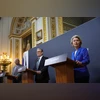
The announcement of the new deal was made in London at Lancaster House, where Keir Starmer was joined by Ursula von der Leyen, President of the European Commission, and António Costa, President of the European Council. | Credit: X@vonderleyen
Listen to This Article
Britain and the European Union have agreed on a significant new deal aimed at restoring closer ties, especially in the areas of trade and security, which were strained after Brexit. The agreement also reflects growing concerns about the US pulling back from European security matters and introducing new trade tariffs.
The deal is part of British Prime Minister Keir Starmer’s broader aim to “reset” relations with the EU, nearly nine years after the Brexit referendum. “It’s time to look forward,” Starmer said in a statement. “To move on from the stale old debates and political fights to find common sense, practical solutions. We’re ready to work with partners if it means we can improve people’s lives here at home.”
Travel and trade: Key changes under the agreement
The new arrangement introduces several practical benefits for British citizens and businesses:
- UK travellers will be able to use electronic passport gates in EU countries, easing border checks.
- Pet travel between the UK and EU will become simpler.
- British meat products can once again be sold in the EU.
- Some checks on animal and plant products crossing the border will be scrapped.
The announcement of the new deal was made in London at Lancaster House, where Starmer was joined by Ursula von der Leyen, President of the European Commission, and António Costa, President of the European Council.
Fishing rights: A sensitive compromise
A particularly delicate part of the negotiations involved fishing rights. The UK agreed to allow EU fishing boats access to British waters until June 30, 2038. Although this is not the indefinite extension some EU members had hoped for, it is a much longer term than what Britain originally proposed.
Also Read

 "European Union, EU")
 "Giorgia Meloni, Meloni")
 "India, EU, European Union, India flag")
 "Microsoft logo, Microsoft")
 "India-EU")
Today we struck a landmark deal with the EU. A deal that is in the national interest: delivering more jobs, cheaper bills and secure borders. pic.twitter.com/fM5BjJGhhe
— Keir Starmer (@Keir_Starmer) May 19, 2025
The deal faced criticism from pro-Brexit media outlets in the UK, with one calling the decision a “surrender”. Aware of possible backlash from hardline Brexit supporters, Starmer had already ruled out rejoining the EU’s single market or customs union, both of which would have had a stronger impact on economic growth.
Nonetheless, Britain had to agree to follow some EU food standards to reach this agreement on exports.
Starmer is likely counting on the visible benefits to British consumers and travellers to outweigh any political resistance from Brexit supporters.
Youth mobility rebranded as 'youth experience'
Another key component of the deal is a new initiative that will allow young people from the EU and UK to live and work in each other’s regions. Due to concerns over rising immigration, British officials have carefully reframed the scheme. Originally described as a “youth mobility” plan, it is now being called a “youth experience” programme.
Starmer’s office clarified that the time young Europeans spend in Britain will be limited and that their numbers will be capped.
The EU confirmed in a fact sheet that both sides had agreed to “work toward” this initiative, although the details remain under discussion. EU officials are also pushing for their students to pay the same university fees as UK students, a proposal British authorities have said is too costly.
“The exact conditions related to this scheme will be decided during the negotiations,” the EU said.
Security cooperation gains urgency
The EU has long sought a formal security partnership with Britain, given its military strength. However, former Prime Minister Boris Johnson rejected the idea during the initial Brexit talks.
Now, the war in Ukraine and shifting US foreign policy — especially under President Trump — have made such cooperation more pressing. Trump’s “America First” stance and his push for European countries to invest more in their own defence have created uncertainty. He has also introduced tariffs that have increased economic instability across Europe.
With both the EU and UK now looking to reduce their reliance on the US, this new agreement could pave the way for Britain’s involvement in the EU’s €150 billion joint defence procurement fund.
Looking back: What was Brexit?
Brexit, a blend of “Britain” and “exit,” refers to the UK’s decision to leave the EU following a 2016 referendum. Many voters were motivated by a desire for national sovereignty, believing the UK would regain control over its laws and borders.
Although the vote took place in 2016, the UK formally left the EU on 31 January 2020. An 11-month transition period followed, during which the UK continued to follow EU rules. The final post-Brexit trade agreement, covering areas such as trade, defence, immigration, and security, was sealed on 24 December 2020.
What’s changed since Brexit?
The global environment has shifted significantly in recent years. The ongoing war in Ukraine has increased the need for strong European alliances. In March, the UK led an initiative to coordinate international support for Ukraine, which included many EU countries. Both sides have also introduced sanctions against Russia to push for a ceasefire.
Meanwhile, Donald Trump’s re-emergence as a dominant political figure in the US has complicated matters. His administration’s tariffs have had global economic consequences. Last week, the UK also reached a deal with the US. The deal is expected to save Britain's economy £6.5 billion ($8.69 billion) by reducing the impact of US tariffs.
But overall, transatlantic relations have become strained under Trump. His scepticism of multilateral alliances and insistence on higher European defence spending have led to tariff battles between the US and the EU. These have been paused for 90 days to allow room for negotiations.
As Europe looks to become more self-reliant, especially in the area of defence, the UK sees clear value in partnering with the EU rather than trying to go it alone.
More From This Section
 "Iran, Iran flag")
 "Nippon Steel")
 "Trump-Putin chat for hours, not even Melania could separate the two")
 "Lufthansa (Photo: Unsplash)")
 "India has more than 100 space technology startups and most were founded in the past five years. It owns 55 active space assets that include communication, meteorological and Earth observation satellites. According to a report by Tracxn, a market inte")
Topics : Brexit European Union Britain trade agreements
Don't miss the most important news and views of the day. Get them on our Telegram channel
First Published: May 19 2025 | 10:23 PM IST