


Mamata wipes out losses from Manjusha, Tantuja
Tantuja, set up in 1945, made record operational profit in 2015-16 at Rs 3.5 crore
 "West Bengal Chief Minister Mamata Banerjee")
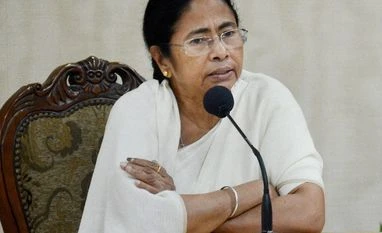
West Bengal Chief Minister Mamata Banerjee
West Bengal Chief Minister Mamata Banerjee might have kept Infosys and Wipro waiting for years but her focus on the small and medium enterprises has done wonders for the state's handloom enterprises -Manjusha and Tantuja.
Manjusha under the West Bengal Handicrafts Development Corporation posted its first operational profit of Rs 3.15 crore since 1976, while Tantuja (under the West Bengal State Handloom Weavers Cooperative Society), set up in 1945, made record operational profits in 2015-16 at Rs 3.5 crore.
Till 2013, the two entities - established with the purpose of promoting and marketing the craftsmanship of Bengal - were heavily subsidised by the state government. Finally, they were told to "perform or perish", says micro and small scale enterprises and textiles secretary Rajiva Sinha.

What followed was an overhaul of the system. The state government agreed to provide capital expenditure but operational expenses were to be met from sales. The game changer was the setting up of upscale showrooms under the aegis of Biswa Bangla. Biswa Bangla, Banerjee's brainchild, promoted by Biswa Bangla Marketing Corporation, aims to promote Bengal's art and craft at a global level through conservation, revival and marketing.
"Unlike Manjusha and Tantuja, Biswa Bangla is a social venture. The operating profit of Biswa Bangla is ploughed back to the artisans and weavers engaged with the venture," Sinha explains. Biswa Bangla has revived many heritage products of Bengal since it was established in 2014.
One of its many finds was Shakhawat Hussain Khan, whose great grandfather had made the fragrant silk quilt, Balaposh, for Bengal's first nawab, Mushid Quli Khan. Hussain makes one or two such pieces a month for Biswa Bangla. There are special Jamdani sarees, spun by hand and foot tools that take a year to complete and cost about Rs 1 lakh apiece. Then there is the Indo-Portuguese silk-muslin shawl, which takes work by four women for three months to complete a piece.
There are around eight Biswa Bangla showrooms. The only showroom outside Bengal is in Delhi.
The Biswa Bangla logo, designed by Banerjee for which she has a copyright, and an agreement with the state government to use in perpetuity, has already gained some mind space. "We are planning a showroom in London and a presence in Germany," says Sinha. "For Manjusha and Tantuja, Biswa Bangla meant competition was as close as next door."
Tantuja, which used to work with 35 co-operatives, has expanded to 250 co-operatives. Similarly, Manjusha used to operate through six traders but has now expanded.
The Budget statement in February mentioned that employment generation in the handloom sector increased six times from 4.8 million person-days as on March 31, 2011 to 29.49 million person-days as on March 31, 2015.
Identity cards issued to artisans had increased from 43,841 in 2011 to 569,000 in 2015.
Clearly, Banerjee has delivered on her focus areas.
Don't miss the most important news and views of the day. Get them on our Telegram channel
First Published: Jul 11 2016 | 12:32 AM IST