


Rs 6,000 cr can be saved per year by replacing poor-quality irrigation pumps: Rajneesh Rana
All pumps which are being replaced will be monitored for energy used in an interval of one year, which would give us the saving
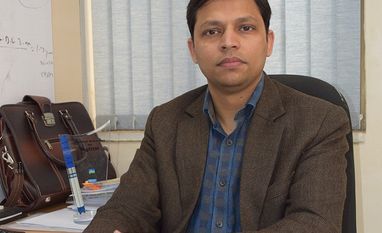 "Rajneesh Rana")
Rajneesh Rana
The Energy Efficiency Services Ltd (EESL), a public sector undertaking under the ministry of power, plans to save around Rs 6,000 crore over the next three-five years by replacing around 7 million gird-connected pump-sets across the states of Maharashtra, Andhra Pradesh, Karnataka and Rajasthan. In an interview with Sanjeeb Mukherjee, RAJNEESH RANA, head of Agriculture-demand supply management at EESL, explains the viable business model for all three: Farmers, discoms and EESL. Edited excerpts:
How do you plan to monetise the energy saved so that it can work out into a viable business model for all three stake holders, that is discoms, farmers and EESL?
For this first we need to understand the model that we are working one. There are around 20 million grid-connected pump-sets in India and another 10 million diesel-run ones. EESL plans to replace these grind-connected pumps in the first phase as because of highly subsidised tariffs, farmers opt for energy inefficient pumps over the star-rated ones. There is no incentive in saving electricity. What we plan to do along with the discoms is to replace all the energy inefficient pumps with the efficient ones, which we would purchase through competitive bidding.
But what is the business model involved?
EESL replaces the old pumps with new energy-efficient ones free of cost and also undertake their repair and maintenance during project duration. The discoms save some energy, which is then multiplied with the prevailing power rates to monetise the same. This is then shared between discoms and EESL.

But then how would you measure how much energy is being saved because one cannot go to individual fields to measure the saving?
All pumps which are being replaced will be monitored for energy used in an interval of one year, which would give us the saving. This difference would then be multiplied with the average tariff to get a financial value of the saving. Our pilots in Hubli and Mysuru have shown that against an estimation of 30 per cent energy saving, we ended up saving around 37 per cent electricity.
So in times of drought, when power consumption usually goes up, power saving will go down, which means that your return on investment also suffers?
Not, exactly, though we do carry the risk in times of drought because when rain falters, the water table goes down and farmers run their pumps longer, but we do factor in all these before we enter into a formal agreement. Also, studies have shown that in times of drought, the water table falls by maximum 10-15 feet.
Our main expenditure is procuring huge quantities of energy efficient pumps, which we manage to bring down by making bulk purchases.
Where do you plan to start your experiment first?
We have targeted to replace around 7 million grid-connected pumps in Maharashtra, Andhra Pradesh, Karnataka and Rajasthan in the next two years. The total energy saved, assuming that most of them are five-horsepower pumps, is around 25 per cent. The total energy consumed in these four states through pumps is 60 billion units and if 25 per cent is saved around 15 billion is saved. This when multiplied with average power rate of Rs 4.5 per unit, would ensure that we get paid back in three-four years.
And how much investment would you make?
Ans: We provide an electric panel along with the pump-set free of cost to the farmers, which in total costs around Rs 30,000 per unit. To replace 7 million pumps, we invest around Rs 20,000-23,000 crore and the return through monetising power saving is around Rs 6,000 crore per year, which means we recover our expenditure in three-four years.
What about the around 10 million diesel operated pump-sets? Do you have any plan to make them energy efficient?
We are working on various technologies like using solar panels, but cost is a problem here; solar-powered pump-sets costs around Rs 3 lakh per unit for 3 HP set, which is prohibitive.
More From This Section
Don't miss the most important news and views of the day. Get them on our Telegram channel
First Published: Jan 27 2016 | 2:47 PM IST