


Automation, industrialising service delivery would be a big focus for us: Srinivas Kandula
Interview with Chief Executive officer, Capgemini India
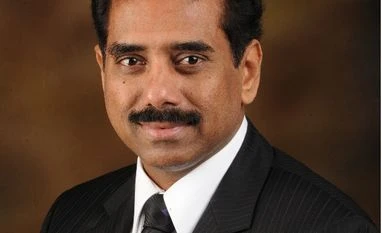 "Q&A: Srinivas Kandula, Chief Executive officer, Capgemini India'Automation and industrialising service delivery would be a big focus for us'")
After completion of the first phase of integration of iGate with itself, Capgemini, the Paris-headquartered management consultancy, has appointed the former's former global head of human resources, Srinivas Kandula, chief executive officer (CEO) of its India operations. At iGate since 2007, he was part of the team that oversaw integration of the two companies in the past six months. In an interview with Bibhu Ranjan Mishra, he talks about the new structure of Capgemini India, his immediate priorities and other plans. Edited excerpts:
How would you term your journey, first at iGate and now at Capgemni India?
I think it was a logical expansion of my roles and a logical destination for my career. I am quite satisfied, as well as challenged to fulfill the expectations of the company but. I feel we are on the right track.
Recently, another multinational information technology (IT) services company also appointed as its India head a person from an HR background. Why has that kind of skill become important for global companies in India?
What are the key requirements for an information technology services business from India? Even if you look at Indian pure-play IT services companies, the role of India in their companies is no different from that of Capgemini. We deliver the projects from India, predominantly. So, it means a lot more focus on execution, which has got elements like people and tools, technologies and delivery mechanism.
Therefore, leadership has to come only from two places, either from delivery or from people (functions). Some companies have historically taken the route of delivery, some from people. I am sure, going forward, more leaders would come from a people management background.
What are your immediate priorities?
Capgemini in India has grown rapidly. We are close to 90,000 people in India and by 2016-end, would cross 100,000. So, one of my major tasks would be managing 100,000 people and serving 800-plus clients globally, across all verticals. Critical, as a little more than half the entire delivery the Capgemini group does is from India. We need to meet the expectations and aspirations of employees here, so that they are motivated to meet clients’ requirements.
So, the singular focus area for me as CEO of India is execution. That is an intersection of multi-functional areas such as people management, delivery methodologies and client expectations. We will also bring a good deal of automation and industrialisation in service delivery.
How far has the integration of iGate with Capgemini progressed?
So far, we have been fairly successful. We started in July (last year), after the transaction was complete, financially and legally. The first phase is coming to an end by the close of this month. The key focus in the first phase is stabilisation and consolidation. Usually when a company gets acquired, there are anxieties in the minds of employees and clients, as they'd like more communication on how the new set-up is going to work for them. Capgemini has in the past done 42 acquisitions and have extensive experience in integration management. iGate has in its own way had a solid experience, of acquiring Patni, two and half times bigger than it at that point of time. So, the experience of both these companies came in handy.
Have client concerns been addressed?
When we started, there were mixed reactions. Some clients felt joyful, as they felt Capgemini and iGate together could bring in a larger resource base, capabilities, platforms and solutions, and experience in delivery. There were also a few who'd chosen iGate because of size. Their apprehension was that it would become too large a company and whether it would lose the focus. Then, Capgemini named a few of the people of iGate to key leadership roles which addressed their concerns. We did not have a single client attrition in this period.
Did any senior roles at iGate become redundant?
One attraction point is that given the size of Capgemini, there was no need to declare anyone as redundant. They had a huge opportunity to absorb. Expect for the role of CEO at iGate, no other role became redundant.
For example, I was global head of HR while heading functions such as marketing and quality. So, given my multifunctional orientation focus, I moved into this (present) role. Similarly, Sujit Sircar (earlier finance head at IGate), who, apart from finance also had exposure in running operations, is currently the chief operating officer (COO) for our North America application services business.
Why did Ashok Vemuri quit, though inducted to Capgemini’s group management board?
When this acquisition happened, the CEO of IGate was required for consolidation and stabilisation. He was required to be a stakeholder for the integration, to demonstrate to 33,000 iGate employees that the iGate leadership also had the right seats on the table. So, he was inducted into the group management board. No final decision was taken on what was going to happen after that because nobody knew it at that point. So, Capgemini was very open, so also Ashok, and both came to an understanding that since he wants to pursue interests outside, it is reasonable for him to be there for at least six months, as by that time, there was a reasonable degree of stability and consolidation.
What about the other operational roles at Capgemini India?
Capgemini has a matrix organisation structure; iGate had a linear one. So, Capgemini has a geography focus and a vertical or strategic business unit focus. Therefore, we have India delivery leaders for different verticals who work with their respective global delivery leaders. The India delivery leader also works in close coordination with me and Ashwin Yardi, who has been appointed COO of Capgemini India, with primary responsibility of managing delivery out of India.
How would you term your journey, first at iGate and now at Capgemni India?
I think it was a logical expansion of my roles and a logical destination for my career. I am quite satisfied, as well as challenged to fulfill the expectations of the company but. I feel we are on the right track.
Also Read

Recently, another multinational information technology (IT) services company also appointed as its India head a person from an HR background. Why has that kind of skill become important for global companies in India?
What are the key requirements for an information technology services business from India? Even if you look at Indian pure-play IT services companies, the role of India in their companies is no different from that of Capgemini. We deliver the projects from India, predominantly. So, it means a lot more focus on execution, which has got elements like people and tools, technologies and delivery mechanism.
Therefore, leadership has to come only from two places, either from delivery or from people (functions). Some companies have historically taken the route of delivery, some from people. I am sure, going forward, more leaders would come from a people management background.
What are your immediate priorities?
Capgemini in India has grown rapidly. We are close to 90,000 people in India and by 2016-end, would cross 100,000. So, one of my major tasks would be managing 100,000 people and serving 800-plus clients globally, across all verticals. Critical, as a little more than half the entire delivery the Capgemini group does is from India. We need to meet the expectations and aspirations of employees here, so that they are motivated to meet clients’ requirements.
So, the singular focus area for me as CEO of India is execution. That is an intersection of multi-functional areas such as people management, delivery methodologies and client expectations. We will also bring a good deal of automation and industrialisation in service delivery.
How far has the integration of iGate with Capgemini progressed?
So far, we have been fairly successful. We started in July (last year), after the transaction was complete, financially and legally. The first phase is coming to an end by the close of this month. The key focus in the first phase is stabilisation and consolidation. Usually when a company gets acquired, there are anxieties in the minds of employees and clients, as they'd like more communication on how the new set-up is going to work for them. Capgemini has in the past done 42 acquisitions and have extensive experience in integration management. iGate has in its own way had a solid experience, of acquiring Patni, two and half times bigger than it at that point of time. So, the experience of both these companies came in handy.
Have client concerns been addressed?
When we started, there were mixed reactions. Some clients felt joyful, as they felt Capgemini and iGate together could bring in a larger resource base, capabilities, platforms and solutions, and experience in delivery. There were also a few who'd chosen iGate because of size. Their apprehension was that it would become too large a company and whether it would lose the focus. Then, Capgemini named a few of the people of iGate to key leadership roles which addressed their concerns. We did not have a single client attrition in this period.
Did any senior roles at iGate become redundant?
One attraction point is that given the size of Capgemini, there was no need to declare anyone as redundant. They had a huge opportunity to absorb. Expect for the role of CEO at iGate, no other role became redundant.
For example, I was global head of HR while heading functions such as marketing and quality. So, given my multifunctional orientation focus, I moved into this (present) role. Similarly, Sujit Sircar (earlier finance head at IGate), who, apart from finance also had exposure in running operations, is currently the chief operating officer (COO) for our North America application services business.
Why did Ashok Vemuri quit, though inducted to Capgemini’s group management board?
When this acquisition happened, the CEO of IGate was required for consolidation and stabilisation. He was required to be a stakeholder for the integration, to demonstrate to 33,000 iGate employees that the iGate leadership also had the right seats on the table. So, he was inducted into the group management board. No final decision was taken on what was going to happen after that because nobody knew it at that point. So, Capgemini was very open, so also Ashok, and both came to an understanding that since he wants to pursue interests outside, it is reasonable for him to be there for at least six months, as by that time, there was a reasonable degree of stability and consolidation.
What about the other operational roles at Capgemini India?
Capgemini has a matrix organisation structure; iGate had a linear one. So, Capgemini has a geography focus and a vertical or strategic business unit focus. Therefore, we have India delivery leaders for different verticals who work with their respective global delivery leaders. The India delivery leader also works in close coordination with me and Ashwin Yardi, who has been appointed COO of Capgemini India, with primary responsibility of managing delivery out of India.
Don't miss the most important news and views of the day. Get them on our Telegram channel
First Published: Jan 14 2016 | 12:37 AM IST