


Why Tata Steel will continue to bleed
Europe's share in Tata Steel's consolidated revenue is higher and global dumping of steel by China will continue to impact the company
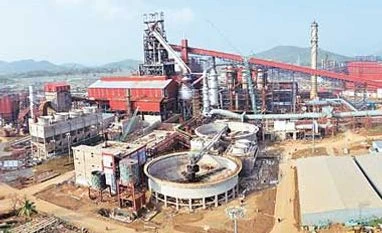 "No output in sight, Odisha CM to open Tata Steel plant")
A weak dollar has resulted in all commodities that change hands in that currency to rebound. It started with oil and has now moved to metals and stocks in the industry.
However, a small bounce in commodity prices is unlikely to change the health of the industry, especially since the bounce is technical in nature and not structural that can help the metals sector.
Slowdown and over capacity is affecting companies especially those who have presence in countries where growth has stagnated. Tata Steel in its December 2015 quarter numbers proved the point.
The company’s Indian operations profit was wiped out by its losses abroad. India standalone numbers of Tata Steel resulted in an EBIDTA (earnings before interest depreciation tax and amortization) per tonne of Rs 6,375 while its European operation posted a loss of $31 per tonne as compared to a loss of $7 per tonne in September 2015 quarter.
The company’s Indian operations profit was wiped out by its losses abroad. India standalone numbers of Tata Steel resulted in an EBIDTA (earnings before interest depreciation tax and amortization) per tonne of Rs 6,375 while its European operation posted a loss of $31 per tonne as compared to a loss of $7 per tonne in September 2015 quarter.
These numbers essentially captures the state of steel industry globally. India with its small but steady growth in demand and import duty restrictions is able to protect integrated players. Despite high levels of dumping by steel majors from China, Japan and Korea, integrated steel producers were able to keep themselves afloat.
Also Read

Imports from the above mentioned countries increased by nearly 30 per cent from 6.99 million tonnes to 9.04 million tonnes. Imports shot up mainly from Japan and Korea while that from China was stable. China preferred to sell their products in European markets.
India was the only major steel producer in the world to have reported positive growth in production. Though production was higher, consumption of domestically produced steel was lower as the consumer preferred imported steel over domestically produced ones.
As Europe’s share in Tata Steel’s consolidated revenue is higher, it makes more sense to understand the changing dynamics in global steel market. The story unfortunately from the global steel market is not good.
Tata Steel has blamed the dumping of state-subsidised Chinese steel on global markets for its loss of Rs 2,217 crore in the third quarter. Lower demand in China has resulted in global steel industry operating at a capacity utilisation of less than 65 per cent and steel prices falling from $460 per tonne to $260 per tonne. Tata Steel took a hit in UK as the country saw imports from China pick up by 50 per cent.
Chinese companies too have been affected by the slowdown as steel production for the first time since 1981 posted a negative growth rate. China’s production fell by 2.3 per cent to 803.8 million tonnes.
As China’s financial health deteriorates, the country has decided to cut down its production from 100 to 150 million tonnes. Though no timeframe is given for the cut, the social cost of such a high level of production cut (more than total production from India) is likely to be very high. Around 400,000 jobs are expected to be lost on account of closing these units. Doubts are being raised whether China will bite the bullet.
But the cut in steel production though high will not be enough for the global steel market. China at over 800 million tonnes accounts for nearly 50 per cent of around 1.6 billion tonnes global capacity. The slowdown in China has resulted in excess capacity of 360 million tonnes per year in the country.
At such high levels of over-capacity and the crawling growth rates globally, steel producers will continue to be badly impacted. It will be a question of who shuts down shop first, the Chinese or other producers.
Indian companies have been given some protection by increasing the trade barriers. Producers in other countries, including Europe are asking their governments to increase duties. Unless these are introduced or demand shoots up, prospects for steel industry will be bleak.
Don't miss the most important news and views of the day. Get them on our Telegram channel
First Published: Feb 05 2016 | 2:41 PM IST