It is only when the Delhi Metro Rail Corporation (DMRC) authorities announced a fare hike a few days ago that many have questioned the fairness of this step. The DMRC has cited the increasing cost of electricity and maintenance works and salaries of staff as the reason behind the steep increase in fares. The fare hike has come after seven years or so, and just the rate of inflation over this period would justify a hike of about hundred per cent if the service is seen as a commercial project and not a social good.
Actually, the DMRC need not have gone into any detailed justification as no one has ever demanded any justification for anything the DMRC does. According to Mr. Sreedharan and the original detailed proposal, 31.85 lakh passenger trips per day were expected on the completion of 65.1 km in 2005. Twelve years later, with the system expanded to 213 km, the average ridership is only about 28 lakhs per day. We don’t have a credible explanation why the average ridership is so much less than the original expectations. Obviously, the DMRC spends much more per passenger than it planned to. In addition, the hundreds of crores needed to service its debt will keep increasing as the system expands. It would be naive to expect the Delhi metro to keep fares at the former rates under the present circumstances.
The accompanying table shows the fares to be charged October onward.
After October a trip in the metro would cost more than Rs 5 per km for short trips and more than Rs 3 per km for most long trips. These rates are quite unfavourable compared to the marginal cost of running a motorcycle which is about Rs 1.5 per km. Private bus operators also offer rates which are less than the new metro fares. Shared taxi rates at present also compare favourably with the metro rates for a more comfortable point to point ride in an air-conditioned vehicle. The cost of petrol per person in a private car carrying two or more persons would also turn out to be cheaper than the metro fare per km. It appears possible that with this increase in rates the use of public transport might decline in Delhi especially in view of the fact that the bus systems have become less attractive over time.
One could demand lower fares if the Delhi metro operated as a service for the public good. But, in truth, the Delhi Metro has never presented itself as a public service, but more as a prestige project. The world over, metro systems give free or heavily subsidised fares to students and senior citizens. The Delhi metro does not. Metro systems in many locations have a joint ticketing system with the local bus service. We still do not have this benefit. Distances to metro stations in Delhi seem to be quite large as evidenced by the huge number of rickshaws, autos and taxis crowding around each station. The DMRC would have to invest much more funds to improve this situation. This would only increase its losses.
For the metro to really become an attractive public transport service it would have to peg its fares at less than the cost of petrol for running a motorcycle. This would be possible only if the DMRC and the DTC obtain a higher operational subsidy by taxing the citizens of Delhi who own cars and motorcycles. There is no reason why rest of India should subsidise people living in Delhi.
Dinesh Mohan is Distinguished Professor at Shiv Nadar University and Guest Professor at IIT Delhi.


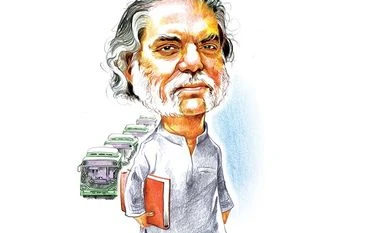 "Dinesh Mohan, Distinguished Professor, Shiv Nadar University, and guest professor, IIT Delhi.")