


Industrial output may have hit trough: ZyFin
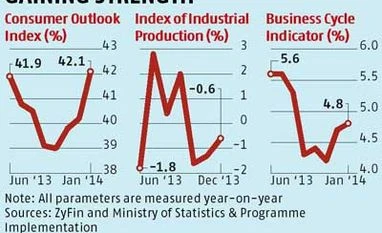
ZyFin's BCI rose from 4.2% in November to 4.7% in December and then further to 4.8% in January year-on-year
)
Industrial production, which contracted for a third month in a row in December, might have bottomed out, if one goes by calculations of financial research company ZyFin.
ZyFin's Business Cycle Indicator (BCI) rose from 4.2 per cent in November to 4.7 per cent in December and then further to 4.8 per cent in January year-on-year.
Explaining the indicator, Debopam Chaudhuri, vice-president of research and development in the firm, said it tells us about industrial activity one month in advance.
For instance, BCI is rising in December and January compared to the previous months; this implies that the Index of Industrial Production data will rise in January and February. On the other hand, BCI declined from 4.4 per cent in October to 4.2 per cent in November, which is why industrial output fell in December, explained Chaudhuri.
But, then why did BCI rise in December and January? Chaudhuri attributed this to increased consumer spending because of moderation in inflation. ZyFin's consumer outlook index has been rising since November (see chart). The index gives indication for the next three-six months.
High inflation, along with tight monetary policy of RBI, has squeezed spending by consumers, affecting many sectors, particularly consumer durables. Consumer durables production contracted for the 13th straight month in December, as its output fell 6.2 per cent against a fall of 8.1 per cent a year ago.
However, if auto sales are any indication, spending on consumer durables are still to revive. Car sales in India fell for the fourth straight month by 7.59 per cent in January this year.
Industrial production fell 0.6 per cent in December against a 1.3 per cent decline in November.

Don't miss the most important news and views of the day. Get them on our Telegram channel
First Published: Feb 14 2014 | 12:47 AM IST