


No consensus on what will replace Plan panel
Some of the proposals might be difficult to implement, especially those that give states a say in the financial allocations in Central schemes
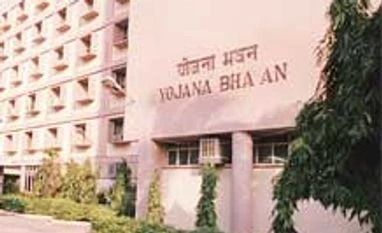)
If the government is to be believed, India will have a new body to replace the five-decade-old Planning Commission by the end of January 2015. It will be a body that will, in the words of Prime Minister Narendra Modi, encompass a new spirit and modern thinking while reflecting the changing pattern of India's economic growth.
Though various names are floating around for the new panel, some officials privately say that the new body will be called Neeti Aayog. There is some clarity on what its agenda is likely to be. A broad consensus has emerged that it will prescribe a far greater role for state governments in economic decisions, either through a permanent mechanism in which some chief ministers become part of the new organisation by rotation or informally through the forum of inter-state councils.
According to the information trickling through, the new body will have four major wings: Direct Benefit Transfer, Unique Identification Authority of India, Inter-state Councils and Programme Evaluation. Each is expected to be headed by a secretary, while the person overall in-charge will likely be designated the vice-chairman. The prime minister is expected to head the new body as was the practice with the defunct Planning Commission.

This is not the first time that a need has been felt to reform and revitalise the Planning Commission that was created to usher in Soviet-style planned economic development by India's first prime minister, Jawaharlal Nehru, in the 1950s. Having outlived its utility, there have been attempts since the early 2000s to inject fresh thinking into the working of the commission.
The attempt got somewhat formalised during the first United Progressive Alliance regime, when subject experts from the private sector and academics were actively involved in the panel, some as members, others as consultants. In fact, the 12th Five-Year Plan (2012-17) document was prepared after perhaps the most exhaustive discussions with people outside the government.
Former prime minister Manmohan Singh - who had a past association with the Planning Commission having been its member-secretary in the 1980s - in his last address to the body before demitting office had highlighted the need of a restructuring in the light of the changed domestic economic scenario. All through the era of controlled economy, the Planning Commission had played a pivotal role in shaping the growth model. At one point of time, it wielded such clout that it determined the location where a public-sector enterprise would be set up by the government.
However, after the Indian economy moved towards a more open regime with less state controls in the 1990s, the commission lost much of its utility. It did try to recalibrate its working, and was instrumental in the last decade in the formulation of some critical social interventions like the Rashtriya Krishi Vikas Yojana for agriculture as well as public-private partnerships in infrastructure, but its quintessential role as the driver of economic growth was blunted. Internally, too, there were efforts to rejig the functions of the body and special committees were created to achieve that. But there wasn't much to them.
It wasn't surprising, therefore, that after the National Democratic Alliance government took office a little over six months ago, Modi in his first prime ministerial speech from the Red Fort on Independence Day announced the abolition of the commission and plans to replace it with a more pertinent body.
Giving a new shape
The commission, in its last days, held a series of meeting with experts, policy makers and economists to formalise the broad contours of the replacement panel. It also invited suggestions from the public on the issue. In between, the finance ministry issued a circular directing all Central ministries to send their budget proposals for plan expenditure directly to it, rather than routing it through the Planning Commission, as was the practice earlier. This marked a formal shift in the financial powers from the panel to the ministry.
A wider discussion was also held with the chief ministers and representatives of all states and Union Territories earlier this month on the rationale for the new organisation. According to a presentation made at the meeting of chief ministers by the existing commission, all major Central schemes and programmes would be finalised by the government in consultation with the state governments. Determining priorities would involve the consensus of all states.
Moreover, state governments would have operational freedom to alter or tinker with the schemes initiated by the Centre. Till now, the states' concurrence on such programmes was taken for a formality. The central sector schemes, which more often than not reflect the priorities of the central government, will now on represent an amalgamation of the priorities determined jointly by the Centre and the states. However, some of the proposals might be difficult to implement, in particular those that give states a say in the financial allocations in central schemes.
"The complex nature of Indian politics and the varied interest of each state government might make it difficult to arrive at a consensus on many issues," a former member of the Planning Commission points out.
However, not everyone is pessimistic about the proposed new structure of the commission. Sudha Pillai, former member-secretary of the Planning Commission, in a recent discussion with Business Standard, said that the proposed structure would bring together development and security issues and deal with them in a coordinated manner. "This will lead to greater policy coherence," she said.
Pillai was of the view that the mechanism for consultation with the states had been grossly inadequate under the old system, and the Planning Commission had remained predominantly a central government organisation. "One very important difference among the various states is the presence or absence of a healthy resource base there. This aspect has to be factored in while discussing a differentiated approach," Pillai said. Come January, and we will know whether these concerns have been addressed.
Don't miss the most important news and views of the day. Get them on our Telegram channel
First Published: Dec 18 2014 | 10:30 PM IST