


Crowds at Rahul roadshow boost BJP hope
Party believes resurgent Congress will eat into AAP's vote share
)
The good turnout at Congress vice-president Rahul Gandhi’s roadshow has boosted Bharatiya Janata Party’s (BJP) hopes for a victory in the soon-to-be-held Delhi Assembly elections.
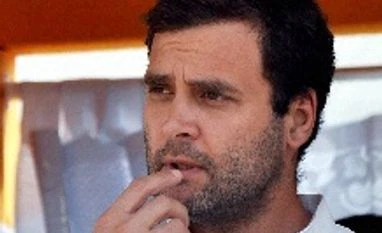
Rahul addressed large crowds at Govindpuri on Tuesday, smalling Prime Minister Narendra Modi for PR stunts. But the BJP saw gains for itself in the crowds.
The worst case scenario in Delhi, BJP strategists claim, would be a bipolar contest between their party and the Aam Aadmi Party (AAP). But they are also of the view the Congress will do better than predicted by the opinion polls. At least two opinion polls have forecast a close contest with advantage AAP. Last week, BJP president Amit Shah had lashed out at the findings of one of these opinion polls, commissioned by a private television news channel, alleging it was indulging in “yellow journalism”.

BJP strategists are of the view that the opinion polls have failed to capture the significant impact that “Independents, others and the third force” have had on the eventual outcome of Delhi Assembly polls in the last couple of elections.
Party insiders concede that the BJP performance could heavily depend on how well this “third force” — in the current scenario, the Congress represents this third force in Delhi — does in the polls.
According to party strategists, a Congress performance that fails to cross eight to nine per cent vote share could result in a photo-finish between AAP and BJP. However, Congress managing a vote share of 14 per cent or more would mean a comfortable majority for the BJP in the 70-member Delhi Assembly. The elections are slated on February 7; the counting on February 10.
The effort put in by the so called “others” and the “third force” have given the BJP reasons to believe that they will eat into AAP’s vote base. The Congress has fielded strong candidates on several seats, and its vice-president has committed to campaign frenetically in Delhi over the next week.
Bahujan Samaj Party chief Mayawati has also lined up over a dozen rallies. The BSP had performed creditably in the 2008 Assembly elections, winning over 14 per cent of vote share and two seats, but managed a bit over five per cent in 2013 as it lost its Dalit vote base to AAP.
BJP strategists believe AAP’s middle-class as well as aspirational class vote bases were now disillusioned with the party, but getting this section to turn up at the polling booths on poll day is a challenge that BJP, as well as Rashtriya Swayamsevak Sangh (RSS), rank and file have been tasked with.
What is of some concern to the BJP is that AAP seems to have not only consolidated its support in unauthorised colonies and among poorer sections but that Muslims have also gravitated towards that party. Large sections of the Muslims, which comprise nearly nine per cent of the total electorate of Delhi, had voted for Congress in 2013 Assembly polls.
Making Kiran Bedi the chief ministerial candidate is likely to help the BJP among Sikh voters as well women voters, or so it believes. The majority of the Sikhs in Delhi as well as women had supported AAP in 2013.
BJP emerged as the single largest party in 2013 Assembly polls, despite getting its poorest vote share since 1993.
Don't miss the most important news and views of the day. Get them on our Telegram channel
First Published: Jan 29 2015 | 12:48 AM IST