


Bad Company: Megan Greenwell's book explores human cost of private equity
Bad Company details how cliched abstractions like "consolidation" and "efficiency" have given cover to real betrayals
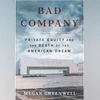 "BAD COMPANY: Private Equity and the Death of the American Dream")
BAD COMPANY: Private Equity and the Death of the American Dream


Listen to This Article
By Jennifer Szalai
BAD COMPANY: Private Equity and the Death of the American Dream
by Megan Greenwell
Published by Dey Street
294 pages $29.99
In 2019, Megan Greenwell had only a “vague sense” of how powerful private equity had become. Sure, she had heard the stories about Toys “R” Us, the beloved retailer that went bankrupt after private equity firms bought out the company. “I knew private equity was a problem,” she writes in her new book, Bad Company. “I just thought it wasn’t my problem.” Also Read

 "The Cave of Echoes: Stories about Gods, Animals and Other Strangers")
 "Dial 100: Tough Cases, Tougher Policemen")
 "Strategies in GATT and WTO negotiations")
 "Charlottesville A study of rage and resistance")
 "Thinking Aloud")
Greenwell was the editor of Deadspin, an online sports magazine whose mix of investigative reporting and cheeky commentary had attracted a devoted readership. But the magazine and its sister sites were also losing $20 million a year. Enter a private equity firm named Great Hill Partners to the rescue — or not. Greenwell recalls how Deadspin’s new owners seemed determined to come up with bad ideas that would run the website’s brand into the ground. After three months of being micromanaged she resigned in disgust: “The firm’s goal was never to make our website better or grow its readership. Great Hill Partners, and private equity at large, exists solely to make money for shareholders, no matter what that means for the companies it owns.”
It’s a business model that Greenwell writes about to potent effect in Bad Company, which emphasises the human costs of private equity. She says she started writing her book “not out of spite, but out of pure curiosity.” Why did Great Hill Partners flourish financially after reducing Deadspin to a husk of its former self? (Last year the site was sold to a Maltese gambling outfit that uses it to “drive traffic to online casinos.”) Shouldn’t a private equity firm make money when the company it buys makes money, and consequently lose money when it doesn’t? How could a firm continue to bring in revenue while its acquisitions flounder?
Twelve million Americans work for companies owned by private equity, which amounts to about 8 per cent of the labour force. In Bad Company, Greenwell tells the stories of four people whose lives have been upended by the industry. Liz Marin worked for six years at Toys “R” Us; Roger Gose was a doctor in rural Wyoming; Natalia Contreras was a journalist for a local paper in Texas; Loren DePina lived in a private equity-owned apartment complex in Alexandria, Va. Their stories share a similar arc: Tentative hopefulness followed by a rude awakening.
Greenwell offers stories that are textured, not one-note tales of woe. When Liz Marin started working for Toys “R” Us in 2012, private equity had owned the company for seven years. Although Marin didn’t know it, Toys “R” Us was a retailer in name only; in actual fact, it was a debt-payment machine. Its profits were used to repay the money borrowed by the private equity firms to buy it in the first place. While Toys “R” Us limped toward bankruptcy, top executives were awarded $16 million in bonuses; the 33,000 rank-and-file employees were simply laid off.
But all businesses are part of a larger community: A shuttered store not only inconveniences consumers but also deprives a municipality of tax revenue. And then there is private equity’s incursion into health care and housing. Greenwell’s chapters on Roger Gose, the Wyoming doctor, show what happens when private equity tries to squeeze rural medicine for profits it cannot produce. The local hospital stopped providing obstetrics services. It also had to pay rent on land it once owned.
Greenwell reports that, compared with their peers, companies acquired by private equity firms are 10 times as likely to go bankrupt. Of course, proponents of private equity maintain that this figure isn’t surprising, given that private equity specialises in trying to turn around struggling companies, selling itself as “the hero when no one else is brave enough to shoulder the risk.” But as Greenwell and other critics of the industry have pointed out, private equity firms charge management fees and benefit from tax breaks that sever risk from reward. If a company makes money, its private equity owners make money. If a company loses money, its private equity owners can still make money.
Private equity firms collect money from outside investors, including pension funds, to buy companies and run them. Consequently, they like to proclaim that their money making is often done on behalf of public workers like firefighters and teachers. “The private equity industry argues that working people would be far worse off without it,” Greenwell writes, “because the returns it generates allow them to retire.”
Bad Company details how clichéd abstractions like “consolidation” and “efficiency” have given cover to real betrayals. The people in this book wanted only to raise their families and contribute to their communities. Instead they were unwittingly drawn into an opaque system of financial extraction and debt peonage, for which no amount of hard work was ever enough.
The reviewer is non-fiction book critic for The Times
©2025 The New York Times News Service
More From This Section
 "Book")
 "Little Lhasa")
 "book")
 "book")
 "book")
Topics : Book reading BOOK REVIEW BS Reads
Don't miss the most important news and views of the day. Get them on our Telegram channel
First Published: Jul 06 2025 | 10:47 PM IST