


Hayek's Bastards: Far Right's love-hate relationship with globalisation
The economic ideas that are predicated on such a worldview are inevitably ruthless and cutthroat
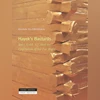 "HAYEK'S BASTARDS: Race, Gold, IQ, and the Capitalism of the Far Right")
HAYEK’S BASTARDS: Race, Gold, IQ, and the Capitalism of the Far Right
Listen to This Article
By Jeniffer Szalai
Argentina’s mutton-chopped president, Javier Milei, doesn’t exactly come across as a placid figure. A self-described “anarcho-capitalist,” he rails against “sick wokeism” and gleefully brandishes a chain saw to mimic his evisceration of government spending. (At the Conservative Political Action Conference in February, he gave a shiny red one to Elon Musk.) But standing before the world’s elite at Davos last year, Milei offered some soothing reassurance to the businesspeople in his audience. “You are social benefactors, you’re heroes,” he said. “Let no one tell you that your ambition is immoral. If you make money, it’s because you offer a better product at a better price, thereby contributing to general well-being.”
HAYEK’S BASTARDS: Race, Gold, IQ, and the Capitalism of the Far Right
Author: Quinn Slobodian
Publisher: Zone Books
Pages: 279
Price: $29.95
Also Read

 "LORDS OF EARTH AND SEA: A HISTORY OF THE CHOLA EMPIRE")
 "book review")
 "LETTERS FROM GAZA: By the People, From the Year that has Been")
 "VOICE FOR THE VOICELESS")
 "book review")
The combination of emollient platitudes, economic shock therapy and strongman authoritarianism is why Milei features prominently in the concluding chapter of Quinn Slobodian’s bracingly original new book, Hayek’s Bastards. Slobodian, a historian at Boston University, traces how right-wing figures across the world have positioned themselves as populist critics of “neoliberal policies” even while they pay frequent homage to Austrian economists like Friedrich Hayek and Ludwig von Mises, who laid the foundations for the neoliberal tradition, with its gospel of free markets. This so-called New Right has adopted the furious nostalgia of a backlash to what Milei has called a “global hegemony” while embracing radical deregulation. Slobodian locates a hinge moment in the end of the Cold War. For hard-core believers in the primacy of free markets, the collapse of communism was a surprisingly scary time. Instead of the end-of-history triumphalism emanating from more mainstream quarters, thinkers on the far right warned about the persistence of big states and public spending. “The social movements of the 1960s and 1970s had injected the poison of civil rights, feminism, affirmative action and ecological consciousness into the veins of the body politic,” Slobodian writes, paraphrasing the reactionary strain of neoliberal thinking at the time. According to this besieged worldview, egalitarian demands led inexorably to “victimology” and bloated states. “Neoliberals needed an antidote.” Against centrists’ soft-focus visions of incremental reforms and an expanding pie, a number of thinkers on the right turned to severe, zero-sum assertions of what Slobodian calls the three “hards”: hard borders, hard-wired human difference and hard money. (US President Donald Trump’s antagonistic trade war is the reductio ad absurdum of this brutal worldview.) Slobodian vividly shows how far-right intellectuals took to promoting racial homogeneity, an obsession with IQ and gold as the ultimate currency. They presented themselves as faithful followers of Hayek and Mises, who traded their early calls for the free movement of labour for an acceptance of closed borders, especially to keep out non-white migrants.
The title of Slobodian’s book is an explicit echo of Voltaire’s Bastards (1992), John Ralston Saul’s bravura work of intellectual history. Saul posited that technocratic elites had fetishised the Enlightenment ideal of rationality to the point of extremism. Slobodian sees a similar dynamic at play with the ideas of Hayek and Mises, and the “intellectual free-for-all” among their epigones on the far right. Hayek, for instance, claimed that in his critiques of immigration he was assuming not innate differences in people’s genes but, rather, cultural differences — a notion that his “bastards” would stretch, warp and deform. “The point is not to salvage the honour of the Austrian school sages,” Slobodian writes, “but to show how ideas are instrumentalised, adapted and weaponised.” Hayek’s Bastards demonstrates how a history of ideas can be riveting. Slobodian grounds intellectual abstractions in the lives of the people who espoused them. The cast of hard-right thinkers in this book include the economist Murray Rothbard; the financial writer Peter Brimelow, who founded the anti-immigration website VDARE; the political scientist Charles Murray and the psychologist Richard Herrnstein, who together wrote The Bell Curve (1994), the notorious treatise on race and IQ that described affirmative action as “leaking a poison into the American soul.”
Rothbard was adamant that “biology stands like a rock in the face of egalitarian fantasies.” Like the other figures in this book, he presumed that hierarchy and inequality were entirely natural.
The economic ideas that are predicated on such a worldview are inevitably ruthless and cutthroat. In a universe based on hierarchy and inequality, cruelty can never be eliminated, only ameliorated. Rothbard pointed to the wars in the former Yugoslavia as proof that “national heterogeneity simply does not work.” Slobodian lays out how, for right-wingers fearful of a spendthrift government “debauching” the currency, gold became the objective standard of value. It’s a formula that has been turbocharged in the digital age. A similar mix of gullibility and paranoia fuels today’s rush for the “new gold” of cryptocurrency, in which suspicions of central banks meet credulous frenzies for memecoins. Slobodian’s book offers an illuminating history to our current bewildering moment, as right-wing populists join forces with billionaire oligarchs to take a chain saw to the foundations of public life, until there’s nothing left to stand on.
©2025 The New York Times News Service
More From This Section
 "India Inked: Elections in the World's Largest Democracy")
 "Book")
 "chart")
 "BOOK")
 "BOOK")
Topics : BS Reads Politics Book reading BOOK REVIEW
Don't miss the most important news and views of the day. Get them on our Telegram channel
First Published: Apr 20 2025 | 11:45 PM IST