


Non-alignment: Conception versus praxis in Nehru's Cold War legacy
Non-alignment in popular parlance was understood as a foreign policy of rejecting a subordinate ally status in either the ideological and military bloc headed by the US or that led by the Soviet Union
 "BOOK")
Listen to This Article
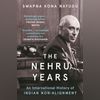
The Nehru Years: An International History of Indian Non-Alignment
Author: Swapna Kona Nayudu
Publisher: Juggernaut
Pages: 352
Price: ₹999
Also Read

 "book")
 "book")
 "book")
 "BOOK")
 "BOOK")
Non-alignment in popular parlance was understood as a foreign policy of rejecting a subordinate ally status in either the ideological and military bloc headed by the US or that led by the Soviet Union. This posture was rooted in the colonial experience of India and other states of Asia, Africa and Latin America, which having overthrown the colonial yoke were not prepared to exchange it for another form of subservience. In this elemental sense, there was a natural solidarity and political affinity among this category of newly emerging nations in the post Second World War period. Non-alignment manifested itself in different ways in the foreign policies of countries that became part of the Non-Aligned Movement, which came into existence in 1961. But the overarching sense of solidarity has remained alive under the current brand of the Global South.
Dr Nayudu has shown how Nehru’s conception of non-alignment was conflicted between the idea of forming a third bloc confronting the demands for acquiescence from East and West and Nehru’s deeply rooted sense of internationalism and cosmopolitanism, that sought engagement with both. He came to see the United Nations as a platform offering opportunities for transcending the power divide to enlarge the arena for peace. It is this perspective that led India to play an active and critical role in four international crises — the Korean War between the US and China (1950-53), the Suez Canal Crisis involving a joint UK, French and Israeli attack against Egypt (1956), the Soviet invasion of Hungary (1956) and finally the Congo Civil War (1960-63).
While Nehru may have worked together with other non-aligned countries in seeking peace in these crises, it was clearly India in the lead, with the personal prestige of Nehru as an international statesman being deployed. Even though Nehru was one of the seminal figures behind the successful Afro-Asian Conference in Bandung in 1955, he resisted the idea of its formalisation as a movement and recent archives show that he may not have been enthusiastic about the Non-Alignment Movement being announced in 1961. Yugoslavia’s Tito and Egypt’s Nasser were its main drivers.
Dr Nayudu also reveals the constant tension between Nehru’s conception of non-alignment and the repeated deflections from it in response to the complexities of the crises with which he had to deal. There were also the compulsions of upholding India’s national interests. The way India reacted to the Suez crisis was different from its response to the Hungarian crisis. Although Dr Nayudu does try to square the circle, there is no doubt that India was bolder and more explicit in opposing aggression in one case and somewhat coy in the other. The partnership with the Soviet Union was beginning to take shape and it was not in India’s interests to condemn Moscow in the same manner. The argument that condemnation had to be avoided to keep open the door to peace is a Nehruvian legacy that has been embraced by his successors. It is far too convenient a diplomatic instrument to be abandoned as we have seen in the Ukrainian crisis.
Dr Nayudu is unusually perceptive in demonstrating Nehru’s discomfort in engaging with Africa with which he was less familiar than with Asia. He was no champion of a pan-African political movement and seemed discomfited by the integral place of race in Africa’s search for a modern identity. Though he led the way in opposing apartheid in South Africa, which was racist in conception, he did not fully appreciate its pervasive overlay across Africa even in its post-colonial situation.
Another Nehruvian legacy that remains intact is India’s role in UN peacekeeping, providing Indian troops, paramilitary personnel, and even its diplomats to keep the peace in conflict situations. Nehru saw this as part of India’s internationalist responsibility. While this began as peacekeeping with unarmed troops, it evolved into peacekeeping with armed troops but with no mandate to engage in hostile operations — and finally, as in the Congo civil war, to engaging in combat operations to militarily change the situation on the ground. It’s an interesting account and deserves a fuller treatment.
This book is a welcome spotlight on one of the foundational principles of India’s foreign policies and the thinking of its main preceptor, Nehru, examined in all its richness, complexity, ambiguity, and its contradictory expressions in practice. We shall find these resonating in India’s foreign policy to this day.
The reviewer is a former foreign secretary
More From This Section
 "JOHN & PAUL: A Love Story in Songs")
 "THE THINKING MACHINE: Jensen Huang, Nvidia, and the World's Most Coveted Microchip")
 "My Truth: Autobiography of Narmadashankar Dave")
 "GEOTECHNOGRAPHY: Mapping Power and Identity in the Digital Age")
 "THE MYSTERIOUS MR NAKAMOTO: A Fifteen-Year Quest to Unmask the Secret Genius Behind Crypt")
Topics : Book BOOK REVIEW Nehru
Don't miss the most important news and views of the day. Get them on our Telegram channel
First Published: Apr 08 2025 | 11:08 PM IST