


Top talent moving to the US: Sachin Bansal on India's brain drain
He also pointed out that Indians are highly successful in the US, often holding top leadership positions
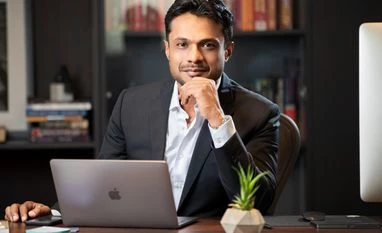 "Sachin Bansal")
“Indians are the ones who are building all this stuff outside the country. We need somebody to take up that vision,” said Bansal.
Listen to This Article
Tech billionaire Sachin Bansal, co-founder of India’s largest e-commerce company Flipkart, said that Indian companies have a significant opportunity to develop artificial intelligence (AI) foundation models and large language models (LLMs). However, he emphasised that achieving this would demand substantial capital investment, commitment, and skilled talent.
“I do think about it quite often, but the challenge is that building LLMs is a full time job and it can’t be a side activity. Also, it requires a lot of money,” said Bansal on Thursday night at an event organised by consultancy firm Redseer in Bengaluru. “If you can accumulate talent and capital, there is an opportunity and Indians are good at it.”
Bansal acknowledged the success of a group of Chinese novices who built an LLM through DeepSeek, a low-cost competitor to OpenAI, offering hope that smaller companies could replicate that. However, he noted that the benchmarks are rapidly evolving.
“But the problem is that the goal post is moving. If you are able to meet the benchmarks of yesterday, that benchmark is moving and evolving,” said Bansal.
He also highlighted the challenge of 'brain drain' in the country, with talent increasingly relocating to other nations especially to the US.
Also Read

 "Nothing Phone 3a series")
 "Flipkart")
 "Harsh Pokharna: From IITian to Flipkart employee to Startup Co-founder")
 "Prakash Sikaria, Founder & CEO, super.money")
 "Walmart")
“I graduated with a computer science degree from IIT. Most of my batchmates are sitting outside India. Maybe 80 per cent of them are either professors or doing AI work at Google or running their startups outside of the country. We are losing the best of our talent moving to the US,” he said.
However, the situation is different in places like China and Taiwan, where talent has returned from around the world, including the US, to help build platforms like DeepSeek, Baidu, and Taiwan Semiconductor Manufacturing Company Limited (TSMC). He also pointed out that Indians are highly successful in the US, often holding top leadership positions, whereas the Chinese talent pool in the US is comparatively smaller. But, he said that China has a sufficient critical mass of talent.
“Indians are the ones who are building all this stuff outside the country. We need somebody to take up that vision,” said Bansal.
On January 30, Union Minister for Information Technology Ashwini Vaishnaw announced that India would have its own sovereign foundation model within 8-10 months, or by July, if companies took an aggressive approach.
The Minister stated that the Ministry of Electronics and Information Technology (MeitY) has been collaborating with experts in LLMs and SLMs (small language models) for the past 18 months to develop a framework for India's AI foundation model.
The foundation models are part of the Rs 10,372 crore INDIAai Mission, which was approved by the Union Cabinet in March 2024.
Finance access for one billion people
After leaving Flipkart, Sachin Bansal founded Navi Technologies, a fintech startup. In 2018, when US retail giant Walmart invested $16 billion for a majority stake in Flipkart, the Bengaluru-based firm was valued at less than $21 billion. This not only made the founders Sachin Bansal and Binny Bansal billionaires but also provided blockbuster exits to the investors.
Sachin Bansal shared that his vision for Navi is to solve financial challenges for the masses and provide access to finance for a billion people. Navi has now become the fourth largest UPI (Unified Payments Interface) app in India, following PhonePe, Google Pay, and Paytm. He acknowledged that the National Payments Corporation of India (NPCI) and the government have played a crucial role in enabling smaller players like Navi to access the UPI market.
“Thankfully, there is an effort from NPCI (National Payments Corporation of India) and the government to help smaller players and we have been the biggest beneficiary of that effort,” said Bansal.
He predicted that a large portion of UPI transactions will be credit-driven in the near future.
“It is not money from a bank account but from a credit product that you use to make payments,” said Bansal. “That would be one big change that we will see in the next five years.”
When asked what sets Navi apart from its UPI competitors, Bansal said that while those players have invested money, they haven't truly done justice to their products.
“Nobody has put UPI at the front and centre of their product like we have done. If you look at Amazon, or early attempts from Flipkart or WhatsApp… On WhatsApp it is hard to find where UPI is. On Amazon, it is impossible to find it in that space. Everybody tried UPI as a side activity. We took it as the main theme as a front and centre of our business and we put all of our effort behind it,” he said.
Bansal said the final story of UPI hasn’t played out yet. It will evolve significantly in the coming years, creating opportunities for new players.
More From This Section
 "Nayara Energy, Nayara")
 "birla opus")
 "IIFL Group")
 "Sebi")
 "Coromandel International")
Don't miss the most important news and views of the day. Get them on our Telegram channel
First Published: Mar 07 2025 | 8:52 AM IST