


Personal milestones not a priority now? Why India fell short in Lord's Test
Across two innings, the total score from India's top order, except Rahul, was only 89 runs, which heavily hurt India's chances in the match
 "Indian skipper Shubman Gill during Lord's Test")
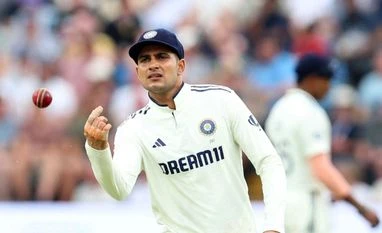
Indian skipper Shubman Gill during Lord's Test (PIC: X)
Listen to This Article
The recently concluded third Test between India and England at Lord’s cricket ground, which saw the English team walk away with a close 22-run victory, has been one of the most exciting Test matches in recent history, if not of all time. The match was a tight contest from the get-go, with India dominating for most parts except the last few sessions, where the home side edged past the visitors to secure the win and go 2-1 up in the series.
India came into the Test high on confidence after their 336-run victory at Edgbaston and were hoping for another win at Lord’s. But they lost battles at crucial junctures of the game, which cost them the match and the chance to take the lead in the series. But what exactly went wrong for Shubman Gill and Co in the match? Let’s take a look.
Lack of partnerships during the chase
Probably one of the biggest reasons for India’s loss is the lack of big partnerships while chasing a small target of 193 in the fourth innings. India’s biggest partnership of the innings was 36 runs between KL Rahul and Karun Nair for the second wicket. After that, the partnerships for the subsequent five wickets were 1, 5, 13, 10, and 1. India did get partnerships of 30, 35, and 23 for the last three wickets, but it was mostly Jadeja scoring runs, and he eventually ran out of partners as India fell 22 runs short of the target.
Indian skipper Shubman Gill himself admitted after the match that all India needed to win was one big partnership. Gill, in the post-match presentation, said, “I was pretty confident of our chances with plenty of batting left. We needed a couple of 50-run partnerships but we weren’t able to get that.”
Also Read

 "WTC points table")
 "ENG vs IND 4th Test begins on July 23 at Old Trafford in Manchester.")
 "Bumrah celebrating Root's wicket at Lord's")
 "Ravindra Jadeja batting at Lord's against England")
 "ENG vs IND 3rd Test")
Sluggish fielding takes toll again
India’s sluggish fielding during the third Test was also one of the reasons why they lost the game. India dropped a total of four catches in England’s first innings. They dropped chances of Ollie Pope, who went on to score 44, Jamie Smith, who made 51, and Brydon Carse, who scored 56 before finally being dismissed. All of these missed opportunities cost India more than 75 runs, and had those chances been converted, the final story of the match could have been different.
Rahul lone ranger at the top order
The biggest reason for India’s success at Edgbaston was their top order going full throttle—something that was missing in the third Test. Except KL Rahul, who scored 100 and 39 in the two innings, no other top-order batter was able to deliver for India. Yashasvi Jaiswal scored 13 and 0 in the two innings, falling to Jofra Archer on both occasions. Karun Nair scored 40 in the first innings but failed again in the second innings, being dismissed for just 14. One of the biggest setbacks for India was Shubman Gill’s outing with the bat. The Indian skipper had 585 runs to his name in the four innings before the start of the match, but at Lord’s, he could only score 16 and 6. Across two innings, the total score from India’s top order—except Rahul—was only 89 runs, which heavily hurt India’s chances in the match.
Skipper Stokes stands tall for England
One of the biggest reasons behind India’s loss was the English skipper Ben Stokes having the outing of his life. Stokes first scored 44 runs with the bat in the first innings before taking two wickets with the ball. But his biggest contribution during the first innings came when he ran Rishabh Pant out on 74, completely changing the momentum of the match.
Stokes continued his exploits in the second innings and again scored a crucial 33 runs with the bat before taking three wickets to lead England to an exciting victory.
Bowlers’ trouble to dismiss tail-enders continues
One of the biggest problems for Indian bowlers for a long time has been that even when they manage to dismiss the top and middle order early, they often fail to finish off the tail-enders quickly and end up conceding critical runs. The same was the case during England’s first innings, where India reduced the home side to 271 for 7 but conceded another 116 runs for the final three wickets. While Jamie Smith (51) was a recognised batter at the crease at the time, Brydon Carse (56) was England’s No. 8 batter. Carse not only scored a half-century but also added 32 runs for the last two wickets with Archer and Bashir to help England finish the innings at a strong total of 387.
More From This Section
 "Zimbabwe tri-series")
 "Scott Boland vs West Indies at Sabina Park")
 "Lowest team totals in Test cricket")

 "ENG vs IND 3rd Test Day 5")
Topics : India cricket team England cricket team ICC World Test Championship Test Cricket India vs England
Don't miss the most important news and views of the day. Get them on our Telegram channel
First Published: Jul 15 2025 | 1:11 PM IST