


India asks US to review proposed 12.5% tariff under Section 301 rules
New Delhi says USTR has not made an economy-specific case against India; offers dialogue to address specific concerns
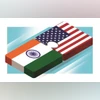 "India US trade talks, bilateral trade agreement, BTA negotiations, Rajesh Agrawal, Brendan Lynch, USTR, Sunil Barthwal, Modi Trump trade deal, tariffs, commerce department")
Listen to This Article
India has asked the United States to reconsider a proposed 12.5 per cent tariff on Indian imports over allegations that New Delhi has failed to prohibit goods produced with forced labour.
In its submission to the US Trade Representative (USTR), India said the proposed measure, brought under the US' Section 301 rules, lacked sufficient basis and that it was willing to engage with Washington through consultation and dialogue on any specific concern.
The tariff threat, however, is still a proposal and has not been finalised. Public hearings on the report will be held on July 7 (US time), after which USTR will consider comments and testimony before taking a final decision.
The issue stems from Section 301 investigations into the acts, policies and practices of various economies related to the failure to impose and effectively enforce a prohibition on the importation of goods produced with forced labour.
What is India’s response?
Also Read

 "economic policy, geoeconomics")
 "US tariffs, trade, transport, logistics")
 "PepsiCo chief Indra Nooyi (Photo: Indra Nooyi)")
 "Trade, ports, export")
 "Sergio Gor")
“In view of the claims advanced, the identified gaps and lack of a sufficient basis, India requests the United States to reconsider the proposed imposition of tariffs against India. India remains willing to engage constructively with the USTR through consultation and dialogue on any specific concern,” the Indian government has said in its July 6, 2026, submission to USTR.
India has argued that the USTR has neither identified nor engaged with the discrete elements of Section 301 of the Act for any country, including India, that directly amounts to an unreasonable Act, policy or practice.
It also submitted that USTR had failed to meet the evidentiary requirements to establish how the absence of such import bans in these countries conclusively or substantially distorts market conditions and undermines the profitability of compliant firms.
“India submits that a mere absence of a forced labour import prohibition, without meeting the evidentiary basis of other statutory requirements, cannot be construed as ‘unreasonable’ within the meaning of Section 301 of the Act,” the Indian submission added.
India also said USTR had not undertaken an economy-specific analysis of laws and practices across the 60 economies under investigation. Instead, it said, the US trade agency had issued a sweeping determination that all such approaches were inadequate without considering the specific measures being implemented by those economies.
“In relation to India, there is inadequate and insufficient evidence that the lack of forced labour import ban causes an alleged unfair comparative advantage to the detriment of the US industry. Evidence across sectors of major exports of India to the US does not suggest any linkage with forced labour inputs,” India said.
What USTR proposed under Section 301
USTR launched two separate Section 301 investigations on March 11 and 12, 2026, covering 60 economies over concerns related to forced labour and excess industrial capacity.
On June 3, USTR issued its findings in the forced-labour investigation and proposed additional tariffs on imports from 54 economies.
The proposal includes a 10 per cent tariff on imports from Canada, Ecuador, the European Union, Indonesia, Mexico, and Pakistan, and a 12.5 per cent tariff on imports from 48 other economies, including India and China.
Business Standard had earlier reported that the US agency had proposed additional duties on imports from several economies under Section 301. India was also expected to oppose the proposed tariff at the USTR hearing.
The immediate question is whether USTR accepts India’s argument that a country-wide tariff cannot be justified without economy-specific evidence. Until the final decision is taken, the proposed 12.5 per cent duty remains a live trade risk rather than an imposed levy.
More From This Section
 "INS Mahendragiri")
 "Jaishankar, Bahrain King")
 "Prime Minister Narendra Modi being welcomed by Indonesia's President Prabowo Subianto on his arrival in Jakarta, Indonesia. (@MEAIndia/X via PTI Photo)")
 "In this screengrab from a video posted on July 6, 2026, Prime Minister Narendra Modi being welcomed by Indonesia's President Prabowo Subianto on his arrival in Jakarta, Indonesia. (@NarendraModi/Yt via PTI Photo)")
 "frigate, Mahendragiri, Navy vessel, Indian navy")
Don't miss the most important news and views of the day. Get them on our Telegram channel
First Published: Jul 07 2026 | 8:17 PM IST