


India-Pakistan ceasefire: The hotline call that changed everything
Ceasefire via hotline: As deadly hostilities pushed India and Pakistan to the brink of full-scale war, a single hotline call became the turning point that led both nations back from the edge
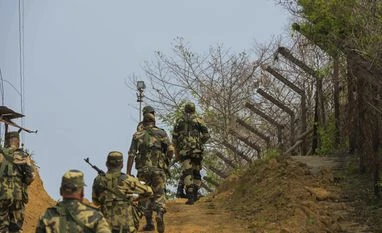 "BSF, Army, India Bangladesh border")
As tensions rose and war loomed, a senior Pakistani officer used the DGMO hotline to request a ceasefire.
Listen to This Article
In one of the most serious military escalations between India and Pakistan in nearly three decades, both nations teetered on the edge of a full-scale in early May 2025. The four-day flare-up saw missile strikes, drone attacks, and intense artillery fire, claiming lives on both sides and drawing global concern over the potential for war between two nuclear-armed neighbours.
The situation changed when Pakistan contacted India through the military hotline between the Directors General of Military Operations (DGMOs), a secure and direct channel designed for such situations, reported India Today.
Pakistan requested ceasefire via hotline
As tensions spiralled and the risk of all-out war loomed, a senior Pakistani military officer used the DGMO hotline on a Saturday afternoon to request a ceasefire, according to Indian officials. This request marked the beginning of a de-escalation process that eventually ended the hostilities.
While Pakistan initially claimed that the outreach was conducted through diplomatic intermediaries, including the United States, the military eventually admitted that direct communication via the hotline played an important role.
Also Read

 "Supreme Court, SC")
 "Indian Army")
 "Sofiya Qureshi")
 "Ashok Gehlot")
 "Rajouri: Security personnel near the site of an encounter with terrorists in Kandi area of Rajouri district, Friday, May 5, 2023. (PTI Photo)")
What is the DGMO hotline?
The DGMO hotline is a fixed, encrypted landline that connects India’s Army Headquarters in New Delhi and Pakistan’s General Headquarters in Rawalpindi. It was established following the 1971 war to provide real-time military-to-military communication.
Key features of DGMO hotline:
- Secure and encrypted: Not connected to mobile, internet, or satellite networks.
- Military-only access: Used exclusively by DGMOs or authorised senior officers.
- Immediate activation: Used during emergencies such as ceasefire violations or military standoffs.
- Bypasses diplomacy: Allows for swift resolution of conflict without waiting for political or diplomatic channels.
The hotline is typically used for routine weekly calls (usually on Tuesdays), but during crises, it serves as a lifeline to prevent misunderstandings and de-escalate rapidly.
Why the hotline was used
With missiles flying and casualties mounting, time was critical. The hotline provided the fastest and most reliable way for both sides to speak directly, assess the situation, and put an end to the violence.
- Immediate need for de-escalation: Real-time communication helped prevent further misjudgments that could have escalated the dispute.
- Bypassing diplomatic delays: The hotline enabled the militaries to avoid traditional diplomatic channels, which sometimes take longer to process and respond.
- Managing a high-stakes crisis: Discussions included troop deployments, ceasefire terms, and future safeguards—all critical to preventing a recurrence of the violence.
International role and what followed
The US played a behind-the-scenes role in reducing tensions, holding urgent conversations with both Indian and Pakistani leadership. US officials encouraged both nations to use the hotline as a direct “off-ramp” from further military escalation.
The ceasefire agreement was finalised during the DGMO call. That night marked the first peaceful stretch along the border in several days, though both sides reported isolated violations in the hours that followed.
More From This Section
 "IMF, International monetary fund")
 "IMF reports on Pakistan")
 "Bangladesh, Bangladesh Flag")
 "BSF JAwan")
 "David Lammy")
Topics : Indian Army Operation Sindoor India-Pak conflict Pakistan-India border shelling Indo-Pak border ceasfire violations BS Web Reports
Don't miss the most important news and views of the day. Get them on our Telegram channel
First Published: May 14 2025 | 5:48 PM IST