


India to study implications of Pakistan-Saudi Arabia defence pact
India said it will study the implications of the Pakistan-Saudi Arabia defence pact for its security and regional stability, reaffirming its resolve to protect national interests
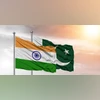 "India Pakistan, India, Pakistan")
The Pakistan-Saudi Arabia defence pact could impact India’s security calculus and defence ties with Riyadh, which have strengthened in recent years. (Photo: Shutterstock)
Listen to This Article
A day after Pakistan and Saudi Arabia signed a strategic defence pact, India on Thursday said it will study the implications of the agreement for its national security as well as for regional and global stability.
New Delhi also said it would take all steps to protect its national interests and ensure comprehensive national security across all domains. The signing of the Pakistan-Saudi Arabia defence agreement comes over four months after a four-day military conflict between India and Pakistan, and days after Israel’s air strikes on Qatar targeting Hamas leaders.
The spokesperson for the Ministry of External Affairs, Randhir Jaiswal, said the Indian government “was aware that this development”—the signing of a strategic mutual defence pact between Saudi Arabia and Pakistan—“which formalises a long-standing arrangement between the two countries, had been under consideration.”
The Strategic Mutual Defence Agreement was signed by Saudi Arabia’s Crown Prince Mohammed bin Salman Abdulaziz Al Saud and Pakistan Prime Minister Shehbaz Sharif on Wednesday. Sharif, accompanied by Pakistan Army Chief Field Marshal Asim Munir and Defence Minister Khawaja Asif, was on an official visit to Saudi Arabia.
Also Read

 "Ishaq Dar, foreign minister of Pakistan")
 "India Pakistan, India, Pakistan")
 "tv match")
 "India cricket team")
 "Trial by Water")
The agreement states that “any aggression against either of the two countries shall be considered as an aggression against both,” according to a joint Pakistan-Saudi Arabia statement. The two countries had earlier signed a bilateral security cooperation agreement in 1982, which provided for defence and military cooperation, including training of personnel.
Jaiswal said India would “study the implications of this development for our national security as well as for regional and global stability. The government remains committed to protecting India’s national interests and ensuring comprehensive national security in all domains.”
The Pakistan-Saudi Arabia defence pact could impact India’s security calculus and defence ties with Riyadh, which have strengthened in recent years. The first ministerial visit on the defence side in more than 12 years took place when then Minister of State for Defence Ajay Bhatt attended the World Defence Show in Riyadh in February 2024.
In December 2020, then Chief of Army Staff General Manoj Mukund Naravane visited Saudi Arabia—the first-ever visit by an Indian Army Chief to the kingdom.
As maritime neighbours, India and Saudi Arabia have also expanded naval cooperation. Two editions of the bilateral naval exercise Al Mohed Al Hindi have been held so far. The first India-Saudi joint land force exercise, EX-SADA TANSEEQ-I, was conducted in India between January 29 and February 10, 2024. In January 2024, Admiral Fahd Al-Ghofaily, Chief of Staff of the Royal Saudi Naval Forces, paid his first official visit to India. An Indian Navy delegation also participated in the 3rd Saudi International Maritime Forum held from November 19–21, 2024.
Both sides also maintain cooperation in defence industries and capacity building. During Bhatt’s visit in February 2024, Munitions India Limited signed an agreement to export defence equipment worth $225 million to Saudi Arabia.
However, the new Pakistan-Saudi joint statement poses fresh challenges, according to sources in New Delhi. The agreement reflects the “shared commitment of both nations to enhance their security” and aims to strengthen joint deterrence against aggression by expanding defence cooperation.
More From This Section
 "PM Modi, Sushila Karki")
 "Caption: Indian Air Force's Light Combat Aircraft (LCA) Tejas Mk-I. Image Credit: PIB")
 "India UAE")
 "Pakistan-Saudi Arabia sign defence pact")
 "US Visa")
Topics : External Affairs & Defence Security News India Pakistan relations Saudi Arabia India-Saudi Arabia
Don't miss the most important news and views of the day. Get them on our Telegram channel
First Published: Sep 18 2025 | 7:45 PM IST