


Jaishankar calls India's trade pacts with mature markets 'space to watch'
Jaishankar says India is now focusing on FTAs with mature, rule-bound markets like the UK, EU, and US, moving away from Southeast Asia to ensure balanced, transparent trade partnerships
 "S Jaishankar, Jaishankar")
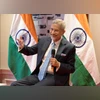
External Affairs Minister S Jaishankar said the consistent theme underpinning India’s foreign policy has been planning for a multi-polar world. | File Photo
Listen to This Article
External Affairs Minister S Jaishankar has termed India’s bilateral trade agreements as the “space to watch”, and said New Delhi in the last 11 years pursued trade pacts with countries that have “more mature markets”, and are more, “transparent and rule bound” compared to the East Asian countries.
Jaishankar said India is now more interested in key free trade agreements. He said the one with the United Kingdom is more or less finalised, the one with the European Union is in advanced stages of negotiations and there have been several rounds of negotiations between the Indian and American officials for the bilateral trade agreement.
In an interview to public broadcaster DD India, a link of which the minister posted on X on Saturday (June 21), Jaishankar said in the years after the economic reforms, most of India’s trade agreements were with Southeast Asian nations, which “skewed the balance” as several of these economies competed with India and didn’t market access. It was important to make the correction and have an understanding with more mature markets, which are more transparent and rule bound.
Jaishankar said India’s trade pacts with the United Arab Emirates and Australia are significant achievements, describing New Delhi’s push for FTAs as the “space to watch”. In 2019, India did not join the Regional Comprehensive Economic Partnership (RCEP) trading block that comprises the 10-member Asean grouping, and other Asia-Pacific economies, including China, Australia and Japan.
He said India in the last 11 years has systematically tried to "deepen our posture, our strategic posture, to have good relations with all major countries, but also other regions, so that we get into the optimal position".
Also Read

 "S Jaishankar, Jaishankar")
 "Iran-Israel, Israel-Iran")
 "S Jaishankar, Jaishankar, Mohamed bin Zayed Al Nahyan, UAE President")
 "Asaduddin Owaisi, Asaduddin, Owaisi")
In the last 11 years, the EAM said, the consistent theme underpinning India’s foreign policy has been planning for a multi-polar world, which India not only desires, as it gives it a higher profile and more influence. “But it is not just the question of our wishes, that is the direction in which the world is moving,” he said, which is why New Delhi, despite enormous pressure on it, maintained its relationship with Russia, he added.
About India’s ties with the US, he said, “Where the US is concerned, yes, there is unpredictability, therefore at a systemic level, you stabilise it with as many linkages and relationships as possible.”
On India’s relations with China, Jaishankar said, “With China, if you have to stand up to that country and we have had some very difficult periods, (and) so it is important to prepare the capabilities.” The minister said a "really perplexing" aspect of India's China policy before 2014 was the “complete neglect of our border infrastructure in the previous decades”.
“To have a China policy and neglect your border infrastructure was absurd,” he said. “And, that is one of the things which has changed. We have today that standing up, in defence of our national interests, along the LAC. It is because we have built the border infrastructure to make that possible," Jaishankar said.
On India’s ties with its immediate neighbours, Jaishankar said that India "should not expect smooth sailing" all the time. He said New Delhi has attempted to shape a “collective interest” to build an inherent stability in relationships, irrespective of changes in regimes. At the end of the day, “the logic every one of our neighbours must realise” is that working with India will “give you benefits”, and not working with India “has a cost”, he said.
“Some take longer to realise, some understand it better. One exception of course is Pakistan, because it has defined its identity under the army, in a way it has an in-built hostility in it. So if you put Pakistan aside, the logic will apply everywhere else,” the EAM said.
More From This Section
 "Modi, Narendra Modi, Masoud Pezeshkian")
 "Indian Navy, Singapore ship")
 "Shehbaz Sharif")
 "Egyptian Foreign Minister Dr. Badr Abdelatty")
 "Operation Sindhu: Students evacuated from Iran")
Topics : S Jaishankar India trade policy Free Trade Agreements India China relations India Pakistan relations
Don't miss the most important news and views of the day. Get them on our Telegram channel
First Published: Jun 22 2025 | 3:50 PM IST