


Ex-Japan minister's bullet train comments individual opinion: MEA
The government rejected criticism by a former Japanese minister, saying discussions on the Mumbai-Ahmedabad high-speed rail project are progressing well
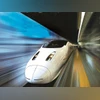 "Bullet train, train, railway")
Representative Image
Listen to This Article
India on Friday described a former Japanese minister’s criticism of the delays in the progress of the Mumbai-Ahmedabad bullet train project as “an individual opinion and at considerable variance with facts.”
Japan is providing financial and technological assistance for the project.
It also said that “no Japanese offer was received” for the signalling equipment, which was ordered in line with international specifications.
Since Japan will provide the E10 train series only in the early 2030s, both sides agreed to start operations with an Indian high-speed train, and the first section will open in 2027 itself, the Ministry of External Affairs (MEA) said.
Earlier this week, Hideki Makihara, a former Japanese state minister for economy, trade and industry, posted his reaction to an article in a Japanese media outlet.
Also Read

 "bullet train")
 "Dharavi")
 "Mumbai Rains, Rain, Rains, waterlogging, waterlogged")
 "Bullet train, train, railway")
 "Hyderabad Metro")
The article on the Mumbai-Ahmedabad high-speed rail corridor claimed that there were “no results” from Japanese Prime Minister Sanae Takaichi’s India visit “either,” and went on to describe the situation as “India Shinkansen failure,” and “Japan excluded from the signal system.”
In his social media post, Makihara blamed the Indian side's approach to the project as being one of “sheer chaos,” of not keeping promises, and of continuously “pushing their own self-interest.”
Responding to questions at the MEA briefing on Friday evening regarding Makihara's social media post, spokesperson Randhir Jaiswal termed the former Japanese minister's views as at “considerable variance from facts.”
The spokesperson said that discussions between India and Japan on the Mumbai-Ahmedabad high-speed train “are in fact progressing well.”
Jaiswal said Japan will provide E10 series trains, but only in the early 2030s, and that the train in question (mentioned in the article and Makihara’s post) is still under development.
“Meanwhile, construction work has rapidly progressed. The first section will be opened in 2027 itself. Therefore, both sides agreed to start the operations with an Indian high-speed train,” Jaiswal said.
The MEA spokesperson said, “The signalling equipment has been ordered accordingly and is in line with international specifications. No Japanese offer was received in this context.”
He said the project execution is in line with the common goal of starting the high-speed train project at the earliest.
In his post on X earlier this week, Makihara, a former Japanese state minister for economy, trade and industry, said, “The Shinkansen project in India is something I was involved with myself, but what stood out in international meetings and negotiations was the sheer chaos of the Indian side, repeated over and over.”
The former minister slammed the Indian side for not keeping their promises. “They just don’t keep promises, no matter what. Even if they make a promise, they flip it right away. They keep pursuing their own self-interest right up to the very end,” said Makihara, adding that “the minister in charge was especially awful,” and “if the top guy is like that, there is no way to have any decent dealings.”
Makihara is also a former justice minister who has not served as a lawmaker since losing his seat in 2024. “For the honour of the Japanese folks who poured their hearts into this, I have to say it: I feel 100 per cent that this hasn’t moved forward is entirely on the Indian side,” Makihara said.
The 508-km high-speed rail Mumbai-Ahmedabad corridor has faced delays because of slow land acquisition. India and Japan signed the agreement in 2015, and the project was to be completed in seven years at an estimated cost of $10.1 billion. Japan agreed to provide 81 per cent funding and uses the country’s Shinkansen technology. According to the National High Speed Rail Corporation Limited's website, the estimated project cost is $ 17 billion, and it is being executed with Official Development Assistance (ODA) Loan assistance from the Japan International Cooperation Agency (JICA). It states that about 81 per cent of the total project cost will be funded by the Government of Japan through JICA. The remaining project cost will be funded by Government of India. It states that 100 per cent of the land has been acquired for the project. Out of 1390 hectares earmarked for the corridor, 430 hectares is in Maharashtra and another 960 hectares is in Gujarat and Union Territory of Dadra and Nagar Haveli.
Japanese PM Takaichi was in India on a three day visit from July 1-3 for the annual India-Japan annual summit. The joint statement issued after the visit concluded stated that the two PMs, Takaishi and Narendra Modi “reaffirmed the importance of the Mumbai-Ahmedabad High Speed Rail as a flagship project between India and Japan”.
According to the statement, Prime Minister Takaichi stated that Japan fully understands India's target to commence commercial operations on priority sections in 2027 and remains committed to extending the necessary cooperation. The two PM’s “acknowledged the goal of introducing the E10.” “They also expressed willingness to explore possible ways to cooperate on future high-speed corridors to achieve India’s vision of a national High Speed Rail network of 7,000 km, the statement said.
Prime Minister Modi invited Japanese companies to explore opportunities to participate in the development of the future corridors and conveyed his readiness to facilitate such engagement, which the Japanese side welcomed, it said. The two PMs also shared the view to accelerate private sector-led cooperation and investment in High Speed Rail and comprehensive mobility, with the aim of combining Japan’s advanced mobility technologies with India’s excellent human resources and market potential across India.
More From This Section
 "Water dam, water reserves, reservoir")
 "Defence Minister Rajnath Singh attended the Strategic Infrastructure Conclave organised by Border Roads Organisation in New Delhi (Photo: X/@rajnathsingh)")
 "MEA spokesperson Randhir Jaiswal")
 "Union External Affairs Minister S Jaishankar launches India's campaign for a non-permanent seat on the UN Security Council for the 202829 term. (@DrSJaishankar/X via PTI Photo)")
 "Randhir Jaiswal")
Don't miss the most important news and views of the day. Get them on our Telegram channel
First Published: Jul 17 2026 | 7:47 PM IST