


GST cut on insurance may not bring relief, premiums could rise 12-18 %
Nil-rated vs exempt GST status will decide if savings reach you, or if premiums quietly climb instead
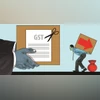 "GST Revamp, fiscal deficit, GST rate cut")
Illustration: Binay Sinha
Listen to This Article
When Finance Minister Nirmala Sitharaman announced in the 56th GST Council meeting that GST on individual health and life insurance premiums would be reduced from 18 per cent to 0 per cent from September 22, 2025, policyholders were understandably relieved. But experts say the benefit you finally see may depend on whether these premiums are classified as nil-rated or exempt, two terms that sound similar but have very different cost implications.
“Nil-rated supplies are taxable supplies with 0 per cent GST, which means insurers can still claim input tax credit (ITC). Exempt supplies, on the other hand, are outside GST and do not allow ITC,” explains Siddharth Surana, a chartered accountant.
“This difference decides whether insurers can offset GST paid on expenses like rent, agent commissions, and IT services and that directly impacts your premium,” he said.
Why nil-rating matters for your wallet
Under the previous regime, insurers collected 18 per cent GST on premiums and claimed ITC on expenses, reducing their net tax cost.
“A nil-rated classification is more favourable for the insurer and, by extension, the policyholder, as it allows for a more significant reduction in the premium,” explains Rohit Jain, managing partner, Singhania & Co. “Conversely, an exempt classification, by blocking ITC, leads to a smaller net benefit for the customer.”
Jain breaks it down further:
Nil-rated supply: GST is 0%, but insurers can still claim ITC on inputs like rent, IT services, and marketing, reducing the cost of providing insurance.
Exempt supply: No GST is charged, but insurers lose ITC benefits. The tax they pay on business expenses becomes a cost, often passed on to the consumer.
Also Read: How To E-Verify Your Income Tax Return
Surana offers a simple example:
Earlier: For a Rs 100 premium, insurers paid Rs 5.4 GST on costs and claimed this as ITC, keeping net cost neutral.
Now (if exempt): They must reverse that ITC, effectively increasing operating costs by 5.4 per cent. To maintain margins, premiums may have to be raised by roughly the same percentage.
Sachin Sharma, managing partner, KSV Tax Consultants, agrees. “Exemption amplifies the cost burden on insurers. The Rs 9 GST they paid on Rs 50 of expenses now becomes an additional cost without ITC. To recover this, the premium could rise from Rs 100 to Rs 109.”
Standalone health insurers may face bigger pain
Experts warn that standalone health insurers (SAHIs) could be hit harder than general insurers because they lack other taxable product lines like motor or fire insurance to offset ITC.
“Nearly 30 per cent of insurers’ costs attract GST,” says Surana. “We expect retail health premiums could rise by 5-6 per cent.”
Manish Goyal, chairman and managing director of Finkeda, puts the potential impact higher: “SAHIs might see premium hikes of 12-18 per cent if the exemption continues.”
Industry waiting for clarity
Insurers and industry bodies are urging the GST Council to treat these premiums as nil-rated rather than exempt to preserve ITC flow. “Clarity is expected in the coming weeks,” says Sharma. “This will decide whether the full benefit of the GST cut can be passed on to policyholders or not.”
Until then, the zero-GST announcement is good news, but the size of your actual saving depends on what the GST Council clarifies next.
More From This Section

 "loan, loans, personal loan")
 "life insurance, insurance")
 "Ikea")
 "bank loan, banks")
 "income tax")
Don't miss the most important news and views of the day. Get them on our Telegram channel
First Published: Sep 15 2025 | 4:30 PM IST