


Unsafe building? MHADA offers Rs 20,000 monthly rent and temporary housing
Maharashtra Housing and Area Development Authority (MHADA) has announced a monthly rent assistance of ₹20,000 for tenants of 96 "extremely dangerous" cessed buildings in Mumbai.
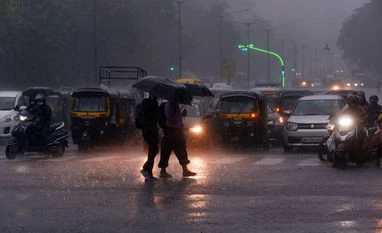 "Mumbai rain")
Commuters make their way during heavy rain, near Oberoi Mall at Goregaon Mumbai on Wednesday.
Listen to This Article
Residents of 96 dangerously dilapidated cessed buildings in Mumbai's island city will now receive Rs 20,000 per month from the Maharashtra Housing and Area Development Authority (MHADA) to secure alternative accommodation during the reconstruction of their homes. This decision comes in the wake of MHADA's annual pre-monsoon survey, which identified these structures as hazardous.
The move aims to ensure the safety of approximately 3,162 tenants—comprising 2,577 residential and 585 non-residential occupants—especially with the monsoon season approaching.
What this means for you:
If you're a tenant in one of these 96 buildings:
Monthly Rent Assistance: MHADA will provide Rs 20,000 per month to help you arrange alternative housing.
Also Read

 "Jaideep Ahlawat")
 "Godrej Eden Estate, a 3D-villa project in Hinjewadi, Pune")
 "India's real estate sector, significantly buoyed by a robust economy, has emerged as a pivotal player in the country's development. With an 18 per cent share in national employment, real estate is the largest employment generator after agriculture. C")
 "Housing, Houses, Apartments, residential building")
 "Real estate")
Transit Tenements: MHADA plans to lease 400 transit units, ranging from 180 to 250 sq ft, for a period of three years to accommodate affected residents.
Redevelopment Costs: Expenses for rent assistance and transit accommodations will be recovered from private developers or cooperative housing societies undertaking the redevelopment of these properties.
Context: During a pre-monsoon survey, the Mumbai Building Repairs and Reconstruction Board, a unit of Mhada, had declared 96 cessed buildings in the island city as dangerous structures. There are 13,091 cessed buildings in the island city in total.
What is a cessed building?
A cessed building is an old, rent-controlled building in Mumbai where tenants pay a special tax called a cess. This tax is collected by MHADA (Maharashtra Housing and Area Development Authority) and is meant to be used for repairing or rebuilding these aging structures. Most of these buildings are located in south and central Mumbai and are several decades old—some even over 100 years.
Because rent in these buildings is very low, landlords often don’t invest in upkeep. Over time, many of them have become structurally unsafe, especially during the monsoon.
What is MHADA doing now?
To keep residents safe, MHADA has:
Declared 96 such buildings as dangerously dilapidated.
Announced on Tuesday that each affected tenant will get ₹20,000/month to help pay for alternate accommodation while the buildings are being redeveloped.
Mhada vice president Sanjeev Jaiswal has instructed the Mumbai Building Repairs and Reconstruction Board to issue a public advertisement for leasing 400 transit tenements, measuring between 180 sq ft and 250 sq ft, through external agencies for a period of three years.
They’re meant for 2,577 residential tenants and 585 non-residential (shops, offices, etc.) tenants who currently live in the 96 unsafe buildings.
But there is one big problem:
- Only 786 transit homes (temporary flats) are currently available.
- There are over 3,100 tenants (residential + commercial) who need to be moved.
- This means MHADA doesn’t have enough ready flats to house everyone who’s affected.
The solution: Interim Housing Support
To fix this gap, MHADA’s Vice President Sanjeev Jaiswal has approved an interim arrangement:
MHADA will lease 400 more temporary flats from external sources.
This ensures tenants don’t get stuck waiting for safe accommodation.
The focus is on keeping alternative housing options within Mumbai, so residents don’t have to move far from their jobs, schools, or communities.
It has also been decided that all expenses incurred under both provisions, monthly rent, monthly rent and the lease of transit units through external agencies, including maintenance, will will be recoverable from the private developers or cooperative housing societies undertaking redevelopment of the concerned properties. The financial burden on MHADA will be temporary, with recoveries enforced once redevelopment contracts are executed.
What are Transit Tenements and who gets them?
Transit tenements are temporary housing units managed by MHADA. These are meant to help people who’ve had to leave their homes because their buildings are:
- Structurally unsafe or collapsed
- Scheduled for repairs or redevelopment
- Too close to road widening projects
- On narrow plots that can’t support rebuilding while people live there
How many are available?
MHADA currently manages 20,591 transit tenements across Mumbai.
- These flats are not permanent homes—they’re meant to provide temporary shelter until:
- Your original building is repaired or rebuilt, or
- You’re given a permanent home as part of a redevelopment or resettlement plan
Who is Eligible?
You may qualify for a transit flat if:
- You are a tenant in a cessed building marked for demolition or repair
- You’ve been evacuated due to safety risks
- Your home was affected by infrastructure projects, like road widening
In such cases, MHADA gives you a place to live temporarily while they or a private developer handle the long-term solution.
More From This Section
 "income tax")
 "mutual fund, SIP, systematic investment plans")
 "gold loan, gold financing, gold financier")
 "PNB, Punjab National Bank")
 "Fixed Deposit, FD")
Topics : Real Estate
Don't miss the most important news and views of the day. Get them on our Telegram channel
First Published: Jun 04 2025 | 12:55 PM IST