


Civil mock drills in Mumbai, Thane, Pune today: All you need to know
The nationwide civil defence drill today will test emergency readiness post-Pahalgam attack; Maharashtra among key states with large-scale mock exercises
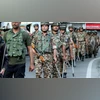 "Mock drill")
The primary goal is to test and strengthen the preparedness of civil defence infrastructure at both state and local levels. (Photo/PTI)
Listen to This Article
Amid the retaliatory ation by Indian armed forces on terrorist infrastructure in Pakistan and Pakistan Occupieed Kashmir following the recent terror attack in Pahalgam on April 22 that claimed 26 lives, the Ministry of Home Affairs (MHA) has announced a nationwide civil defence mock drill scheduled for today. Maharashtra is among the states where large-scale preparedness activities will be conducted, covering key urban centres like Mumbai, Thane, and Pune.
What is a civil defence mock drill?
A civil defence mock drill is a structured exercise designed to assess the readiness of emergency systems in the event of crises such as aerial strikes or wartime scenarios. These drills help authorities identify strengths and shortcomings in existing protocols while enhancing coordination between agencies and public awareness.
Mock drill: What are the objectives of the exercise?
The primary goal is to test and strengthen the preparedness of civil defence infrastructure at both state and local levels. The drills will evaluate the responsiveness of multiple stakeholders, including local authorities, emergency responders, and citizens.
Also Read

 "Drills")
 "India Pakistan")
 "Operation Sindoor")
 "Operation Sindoor")
 "Marco Rubio")
“In the current geo-political scenario, new and complex threats/challenges have emerged, hence, it would be prudent that optimum civil defence preparedness in the states/UTs is maintained at all times,” the letter from the Directorate General Fire Service, Civil Defence and Home Guards said.
The letter further stated, "The conduct of the exercise is planned up to the village level. This exercise aims to assess and enhance the readiness of civil defence mechanisms across all states and Union territories."
Mock drill in Maharashtra: Key locations across the state
Besides major cities, the drill will extend to other sensitive zones including Uran, Bhusawal, Tarapur, Nashik, Raigad, Ratnagiri, Sindhudurg, Manmad, Sinnar, Pimpri-Chinchwad, Nagothane, Thal-Vaishet, Rohn-Dhatao, and Chhatrapati Sambhajinagar (Aurangabad). ALSO READ: 'Justice is served': Indian Army strikes nine terror camps in Pak and PoJK
Instructions have been issued to Chief Secretaries and Union Territory Administrators to engage district officials, civil defence personnel, educational institutions, and volunteers. The initiative targets improved preparedness across 244 strategically important districts nationwide, with several located in Maharashtra.
What will the drill cover?
The mock drill will replicate high-alert situations and will include:
>Air raid alerts: Testing public alert systems using sirens in densely populated towns
>Evacuation drills: Practising safe and orderly movement from vulnerable areas, especially in cities like Mumbai and Thane
>Blackout exercises: Simulated power and signal shutdowns to reduce visibility during aerial attacks
>Camouflage operations: Rapid concealment of strategic infrastructure like power plants and defence sites
>Public awareness sessions: Training on emergency response, first aid, and communication will be conducted in schools and community areas in cities including Pune, Aurangabad, and Nashik
What is the purpose behind the drill?
According to the MHA, the mock drill is intended to familiarise civilians with emergency protocols, test the functioning of control centres, assess air raid alert systems, and ensure seamless coordination with the Indian Air Force. Blackout readiness, camouflage execution, and civil defence service efficiency will also be evaluated.
India’s response to the Pahalgam attack
Following the April 22 terror incident in Pahalgam, the Indian government implemented several countermeasures targeting Pakistan. These include the suspension of the Indus Waters Treaty, halting all trade, shutting down the Wagah-Attari border, ceasing postal exchanges, and banning Pakistani aircraft and ships from Indian airspace and ports.
India also reduced diplomatic presence, revoked Pakistani visas, and expelled military envoys. Social media platforms with connections to Pakistan were blocked, while civil defence exercises were launched across the country to bolster national emergency readiness.
(With agency inputs)
More From This Section
 "court, dispute, court order")
 "Labourer, farmers, ECONOMY, INFLATION")
 "Punjab Chief Minister Bhagwant Mann with Bhakra Beas Management Board at Nangal Dam")
 "AR Rahman")
 "Image")
Don't miss the most important news and views of the day. Get them on our Telegram channel
First Published: May 07 2025 | 7:00 AM IST