


'Law doesn't recognise marital rape': HC drops sex charge against husband
The Delhi High Court said Section 377 can't apply within marriage without proof of lack of consent, as Indian law does not currently recognise marital rape as an offence
 "Delhi High Court")
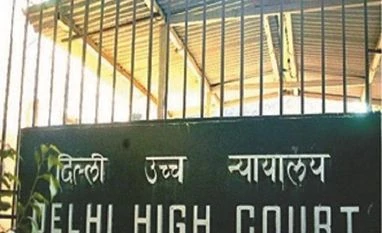
Delhi HC clears man of unnatural sex charge, says marital rape not recognised under current law.
Listen to This Article
The Delhi High Court has set aside a trial court order directing the framing of charges under Section 377 of the Indian Penal Code (IPC) against a man accused of performing oral sex on his wife, ruling that marital rape is not recognised under Indian law.
Justice Swarana Kanta Sharma, hearing the husband's plea, observed that Section 377—which criminalises "unnatural offences"—cannot be invoked in the absence of non-consensual allegations within a marital relationship.
“There is no basis to assume that a husband would not be protected from prosecution under Section 377 of IPC, in view of Exception 2 to Section 375 of IPC,” the court said, adding that the law presumes implied consent for both sexual intercourse and sexual acts, including anal and oral intercourse, within marriage.
The court noted that the wife had not specifically alleged lack of consent, and cited the Supreme Court's 2018 ruling in Navtej Singh Johar vs Union of India, which decriminalised consensual sex between adults under Section 377. The ruling reaffirmed that consent remains central to any criminal charge under the provision.
“The essential ingredient of lack of consent – central to constituting an offence under Section 377 of IPC post-Navtej Singh Johar – is clearly missing. Thus, there is not only a lack of prima facie case, but even the threshold of strong suspicion is not met,” the court said.
Also Read

 "Delhi High Court")
 "Reliance Industries, RIL")
 "Airports, Airline, air passenger, flights")
 "gavel law cases")
 "Supreme Court, SC")
It concluded: “No prima facie case is made out against the petitioner for the offence under Section 377 of IPC. The impugned order directing the framing of charge is, therefore, unsustainable in law and is liable to be set aside.”
Contradictions and legal implications
The wife had also alleged that the husband was “impotent”, and that the marriage was part of a conspiracy to extort her family. In response, the husband argued that the marriage was valid and that consensual sexual acts within marriage do not attract criminal liability under Section 377.
Justice Sharma noted a contradiction in the wife’s statements—accusing the husband of impotence while also alleging that he performed oral sex.
The court further clarified that oral or anal intercourse is now included under the expanded definition of rape in Section 375(a) IPC, but remains exempt from prosecution when committed by a husband, due to the existing marital exception.
“In the context of a marital relationship, Section 377 of IPC cannot be applied to criminalise non-penile-vaginal intercourse between a husband and wife. Such an interpretation would be in line with the reasoning and observations of the Supreme Court in Navtej Singh Johar,” the court added.
More From This Section
 "Satyapal Malik")
 "Supreme Court")
 "Scam")
 "Expressway projects, road, uttar pradesh")
 "D K Shivakumar, Shivakumar")
Topics : Delhi High Court marital rape BS Web Reports
Don't miss the most important news and views of the day. Get them on our Telegram channel
First Published: May 22 2025 | 7:03 PM IST