


Hospital fires expose deep safety lapses, weak enforcement across India
While such practices exist in leading private facilities, experts say public hospitals, often stretched and underfunded, struggle with outdated wiring, inadequate maintenance, and lax inspection
 "Fire in Hospital")
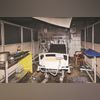
Fire in Jaipur's hospital. | File Image
Listen to This Article
Amid recurring incidents of fire, hospitals have stepped up safety audits, with some of them setting higher benchmarks.
Hardik Ajmera, medical director, Saifee Hospital, Mumbai, said: “Our hospital has a next-gen intelligent firefighting and detection system with smoke detectors, sprinklers, hydrants, and fire alarms. They are strictly maintained and regularly checked. The staff is trained in firefighting and evacuation procedures through regular mock drills in accordance with the standards of the National Accreditation Board for Hospitals and Healthcare Providers (NABH).”
While such practices exist in leading private facilities, experts say public hospitals, often stretched and underfunded, struggle with outdated wiring, inadequate maintenance, and lax inspection.
They have warned the Jaipur incident, which took place late on Sunday, is yet another reminder that India’s hospital-safety framework remains reactive rather than preventive.
Eight patients, including three women, died in the intensive care unit (ICU) of the Trauma Centre at Sawai Man Singh (SMS) Hospital. It was reportedly triggered by a short circuit in a storeroom.
Also Read

 "Jaipur Fire, Hospital Fire, SMS Hospital Fire")
 "Bhajanlal Sharma, Bhajanlal, Rajasthan CM")
 "Fire, Fire accident")
According to reports, the blaze erupted in the ICU’s storage area, where papers, medical equipment, and blood-sample tubes were kept.
Smoke quickly spread through the ward, causing panic among patients and the staff. Rescue operations were hampered because of thick smoke, and several patients had to be pulled out through broken windows and doors by the hospital staff and family members.
This comes amid a spate of such incidents in the country.
A day earlier, there were two hospital fires in Ahmedabad within 24 hours. One was at Sardar Vallabhbhai Patel (SVP) Hospital and the other at Vrundavan Children’s Hospital, both reportedly caused by electric faults. No casualties were reported.
In August, a basement fire at a private hospital in Navi Mumbai forced the evacuation of 21 patients, while a smaller fire at an east Delhi hospital in April this year also drew attention to electrical safety lapses.
Last year in May seven newborns died in a fire in an east Delhi hospital.
These have highlighted systemic weaknesses in fire preparedness. A 2024 news report found in 11 major hospital fires that took place over the past five years and which claimed 107 lives, most of the accused, including hospital owners and administrators, either remained out on bail or had faced no punitive action.
Experts say the root cause lies in neglect and lack of enforcement.
“Hospitals constantly balance patient care, essential services, and facility upkeep. Yet, managing safety on premises often slips down the priority list,” said Nilaya Varma, co-founder and group chief executive officer, Primus Partners.
“Reviews in hospitals show recurring gaps — faulty alarms, delays in shutting off oxygen, poor electrical maintenance, and staff untrained for emergencies. These are not isolated incidents but reflect a larger pattern of weak oversight.”
Most hospitals treat safety audits and mock drills as routine formalities rather than life-saving measures, he added.
He recommended steps such as independent safety audits, regular emergency drills, quick-response safety teams, and stricter linkage of compliance with licensing and funding.
More From This Section
 "indigo airlines, indigo")
 "Ranchi: Security personnel keep vigil during a rail blockade by protestors under the banner of Adivasi Kurmi Samaj, demanding Scheduled Tribe status, at Muri railway station, in Ranchi | PTI")
 "Civil Aviation Minister K Rammohan Naidu")
 "Supreme Court, SC")
 "Jairam Ramesh, Jairam, Pawan Khera")
Topics : Fire accident fire safety Jaipur Healthcare sector
Don't miss the most important news and views of the day. Get them on our Telegram channel
First Published: Oct 07 2025 | 8:15 PM IST