


Centre withdraws draft amendments to Sugarcane Control Order of 1966
The amendments were floated last month and were open for public comments till May 20
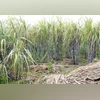 "sugarcane farmers")
Centre withdraws draft Sugarcane Control Order amendments after protests by farmers, gur units and sections of the sugar industry.
Listen to This Article
The Central government has decided to withdraw the draft amendments to the Sugarcane Control Order of 1966 following strong opposition from farmers’ groups, particularly those situated in western Uttar Pradesh, the unorganised gur and khandsari units that were sought to be regulated through the order, and also a section of the millers.
“Based on the suggestions and comments received from state governments and other stakeholders, it is considered necessary to revisit the draft Sugarcane (Control) Order, 2026. Accordingly, the draft Sugarcane (Control) Order, 2026 is hereby withdrawn,” the official order said on Friday.
The amendments were floated last month and were open for public comments till May 20.
One particular provision of the draft that has been a cause of consternation among farmer groups was the one that sought to regulate the gur and khandsari units by making licences mandatory for them and making payment of Fair and Remunerative Price (FRP) to farmers compulsory.
Khandsari is a traditional, unrefined raw sugar derived from cane. According to rough estimates, around 31 per cent of India's annual sugarcane production of around 435 million tonnes is used by the gur, khandsari and jaggery units. This number varies from year to year.
Also Read

 "sugar mill, ethanol, sugar")
 "sugarcane")
 "Sugar mill")
 "The oil marketing companies (OMCs) in their second tender for supply of 0.88 billion litres of ethanol in 2024-25 supply year have for the first time said that preference would be given to ethanol produced from cooperative sugar factories, officials")
 "sugarcane farmers")
‘Gur’ and ‘khandsari’ making units are largely small micro enterprises that are often run by cane farmers themselves or by local entrepreneurs.
As per some estimates, in Uttar Pradesh, the major 10-12 sugarcane-growing districts account for the bulk of these ‘gur’ and ‘khandsari’-making units that run on something called ‘kolhu-crushers’ in local parlance.
As per some estimates, there are around 2,000-3,000 such local manufacturing units in each major sugarcane-growing district.
The bulk of these localised gur- and khandsari-making units are located in the prime sugarcane-growing areas of Meerut, Muzaffarnagar, Baghpat, Saharanpur, Bijnor, Amroha and Bareilly, among others.
The farmer groups had said that the draft provisions not only sought to regulate the unorganised ‘gur’ and ‘khandsari’ units but also contain some punitive provisions that could be detrimental to both sugarcane farmers and the khandsari industry.
The Bharatiya Kisan Union (Apolitical), in a letter to the Central government, had said that one of the main defects in the draft is the definition of crushers.
The farmers’ union argued that all crushers and traditional ‘kolhus’ should be brought under a single category, as modern kolhus now use advanced rollers comparable to or larger than those used in khandsari units.
It suggested that the classification should be based on crushing capacity rather than roller size, arguing that animal-driven units have virtually disappeared.
The BKU faction also objected to the categorisation of ‘shakkar’ (jaggery powder) alongside raab (traditional sugarcane syrup made from jaggery) and khandsari sugar.
According to the union, ‘shakkar’ was essentially powdered jaggery and should therefore be treated as a jaggery product rather than as a sugar derivative. Then there were concerns related to sugarcane pricing.
The union had also criticised the current mechanism of fixing the Fair and Remunerative Price (FRP) largely on the basis of sugar recovery. It argued that sugar mills now generate substantial additional income through ethanol production, compressed biogas (CBG), molasses, bagasse-based electricity generation and press mud.
The letter demanded that revenue from all these by-products be factored into cane price calculations.
On the regulation of gur and khandsari units, the farmers’ groups were of the view that Section 4 of the draft mandates that such units shall also pay the Fair and Remunerative Price to farmers.
Their argument was that although the khandsari industry generally pays more than the FRP, payments are usually linked to the recovery of khandsari sugar or jaggery, which remains low during October-November, while farmers begin harvesting cane during this period to prepare for wheat sowing and require immediate cash.
Sugar mills typically begin operations only when recovery crosses 9 per cent, by which time wheat sowing is nearly complete.
Farmers had also met NDA ally and Union Minister for Skill Development and Rashtriya Lok Dal (RLD) chief Jayant Chaudhary and highlighted the problems in the draft amendments and the unease they were causing among farmers and small crushers alike.
With the all-important Assembly elections in Uttar Pradesh scheduled for 2027, it seems the Central government decided not to make a burning issue out of sugarcane.
The cooperative sugar millers, in their submission on the draft, had proposed the adoption of the Gujarat model of cane payment system across the country, wherein the first instalment, as prescribed by the government, is paid on the basis of the previous year’s sugar recovery; the second instalment is paid on the basis of current-year sugar recovery at the close of the crushing season; and the final instalment is paid on the basis of final sugar recovery for the season.
Sources said the cooperative sugar factories wanted to retain the provision on interest on delayed payment at 15 per cent for payments delayed beyond 14 days in the interest of farmers.
On the distance criterion between two mills, which the draft amendments have proposed to increase to 25 kilometres from the existing 15 kilometres, the NFCSF felt that sugar mills with a capacity below 5,000 TCD may be permitted to expand in a liberal manner without strict enforcement of the stipulated parameters. However, permission for expansion beyond a certain limit may be discouraged.
A section of private sugar millers also felt that the provisions suggested in the draft amendments might increase scrutiny of them and thereby be detrimental to their operations.
More From This Section
 "urea, farmer, fertiliser")
 "Shivraj Singh Chouhan, Shivraj Singh, Shivraj")
 "Madhya Pradesh Chief Minister Mohan Yadav (Photo: X/@DrMohanYadav51)")
 "Yogi Adityanath, yogi, UP CM")
 "illustration")
Don't miss the most important news and views of the day. Get them on our Telegram channel
First Published: May 29 2026 | 10:04 PM IST