


Rare-earth relief to revive electric two-wheeler growth next fiscal
Improving magnet availability and cost economics support demand, even as competitive intensity accelerates consolidation
 "Electric two-wheeler (e2W) companies have expressed concerns that the budget allocated for the subsidy under the PM Electric Drive Revolution in Innovative Vehicle Enhancement (E-DRIVE) scheme, launched on October 1 for 2024-25 (FY25), may be exhaust")
Industry executives expect the divergence to deepen over the next two years.
Listen to This Article
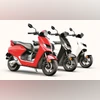
India’s electric two-wheeler (E2W) market is expected to rebound sharply next fiscal as easing rare-earth magnet supply and strong ownership cost advantages revive demand, even as intensifying competition accelerates consolidation among weaker players.
According to Crisil Ratings, E2W volumes are likely to grow 16–18 per cent in FY27, up from an estimated 12–13 per cent in FY26, which was weighed down by temporary disruptions in the supply of rare-earth magnets and the short-term impact of GST-led price reductions in internal combustion engine (ICE) vehicles.
The recovery will be driven by improving availability of critical components, particularly rare-earth magnets sourced largely from China, alongside initial efforts by manufacturers to diversify supply chains and localise sourcing.
“The supply disruption caused by the shortage of rare-earth magnets had weighed on volumes around mid-year. With supply conditions improving and the structural cost advantage of EVs intact, growth is expected to re-accelerate next fiscal,” said Anuj Sethi, senior director, Crisil Ratings.
Despite a tapering of government subsidies and slower declines in battery prices, electric two-wheelers continue to enjoy a significant total cost of ownership (TCO) advantage. Running costs for E2Ws remain at about Rs 0.3 per km, compared with Rs 2–2.5 per km for ICE vehicles.
Also Read

 "Yamaha Motor, EC-06 scooter, Electric scooter")
 "EVs, China EV, electric cars, Electric vehicles")
 "Ather Energy")
 "Ola Electric, OLA")
This economics-led advantage is expected to support deeper penetration, with E2Ws projected to account for around 7 per cent of total two-wheeler volumes by next fiscal, up from about 5.5 per cent currently.
Scooters continue to dominate adoption, accounting for 90–95 per cent of E2W volumes, with electric penetration in scooters already at about 15 per cent, reflecting stronger urban usage and last-mile commuting demand.
However, the competitive landscape is becoming increasingly uneven. Crisil’s analysis of 10 major original equipment manufacturers (OEMs), accounting for about 85 per cent of E2W volumes, shows that legacy manufacturers with diversified ICE and EV portfolios are gaining ground, while EV-only start-ups face mounting financial stress.
Legacy players’ market share has risen to around 62 per cent by January 2026, from 47 per cent a year earlier, supported by wider dealer networks, stronger supplier ecosystems and faster rollout of entry-level and mid-priced electric models.
In contrast, many new-age EV-only manufacturers continue to report Ebitda losses of Rs 25,000–35,000 per vehicle, relying heavily on investor capital to sustain operations.
“As incentives fade and battery costs stabilise, price-led competition has narrowed. Reliability, service reach and execution are emerging as key differentiators — areas where legacy OEMs currently score higher,” said Poonam Upadhyay, director, Crisil Ratings.
Industry executives expect the divergence to deepen over the next two years. Ayush Lohia, chief executive officer of Zuperia Auto, said margin pressures and supply-chain volatility will likely force strategic realignments.
“Legacy and diversified OEMs are better positioned to absorb short-term disruptions. Many EV-only start-ups will face stress on margins and cash flows, leading to partnerships, acquisitions or exits over the next 18–24 months,” he said.
According to Lohia, profitability for several new-age players will remain elusive due to battery pricing volatility, fragmented supply chains and rising input costs. However, this phase is expected to mark a transition towards market maturity.
Looking ahead, sustained growth in electric two-wheelers will hinge on urban mobility demand, broader adoption beyond early users, faster localisation of components, and stability in raw material supplies. Continued access to capital will remain critical for EV-only players as they scale dealer networks and after-sales infrastructure to narrow per-vehicle losses.
By FY27, industry participants expect the EV sector to enter a more disciplined phase, shifting focus from rapid volume expansion to sustainable scale, operational efficiency and financial resilience. While electric two-wheelers are set to grow steadily, sharper consolidation appears inevitable, with only players focused on product reliability, cost control and long-term value creation likely to endure.
As the sector evolves, easing supply bottlenecks may reignite growth, but survival will increasingly depend on execution rather than ambition alone.
More From This Section
 "Ola Electric, electric bike, electric vehicles, Ola, EV")
 "Bajaj Motors")
 "auto components, auto sector")
 "Maruti Suzuki's domestic PV wholesales stood at 174,529 units in January, registering a marginal year-on-year growth of 0.5 per cent")
 "Jeep Compass")
Don't miss the most important news and views of the day. Get them on our Telegram channel
First Published: Feb 04 2026 | 7:32 PM IST