


Sebi boosts tech-driven measures to curb scams, safeguard retail investors
Sebi chief highlighted the importance of tools like SEBI Check-- developed to help users verify the legitimacy of entities soliciting investments --and encouraged wider dissemination
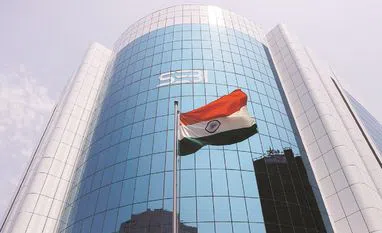 "Sebi")
The current Portfolio Management Services (PMS) regulations were introduced in 2020, and certain aspects now warrant re-examination
Listen to This Article
As the number of retail investors surges, Sebi Chairman Tuhin Kanta Pandey said the regulator is intensifying surveillance and technology-driven enforcement to curb rising pre-investment scams that divert funds before investors even interact with registered intermediaries.
Pandey, whocompleted one year at the helm of the regulator on March 1, noted that many new and intending investors are being misled by fake trading apps, WhatsApp groups and promises of high returns, often diverting funds to personal accounts of fraudsters long before any engagement with Sebi-regulated intermediaries.
He stressed that investor caution must evolve beyond mere awareness to informed action, especially given the country's expanding retail base.
Responding to a query on pre-investment frauds, Pandey said many individuals intending to enter the markets are being "hijacked by scamsters" even before they reach a Sebi-registered intermediary.
"Someone who is intending to come is actually being trapped by promises of high returns. It doesn't even come to Sebi or to any broker because the person has already fallen prey," he told PTI in an interview, pointing to the growing use of WhatsApp groups, fake apps and other digital channels to lure investors.
Also Read

 "Sebi")
 "Tuhin Kanta Pandey, Chairman, Securities and Exchange Board of India (Sebi) | Photo: Kamlesh Pednekar")
 "markets, Sensex, nifty")
 "Sebi")
 "Securities and Exchange Board of India, Sebi")
Calling such instances "quite many," Pandey said the regulator has stepped up measures to curb the menace and safeguard investors' money.
Sebi chief highlighted the importance of tools like SEBI Check-- developed to help users verify the legitimacy of entities soliciting investments --and encouraged wider dissemination of validated platforms and UPI handles to safeguard payments.
While noting that such initiatives are not new, Pandey emphasised that widespread adoption remains critical to combating cyber fraud.
Pandey said that the regulator will do all kinds of campaigns. It has launched a project which will roll out multimedia campaign, multilingual campaign in order to see that these frauds are done.
He also called for investor discipline, advocating long-term investment strategies such as SIPs (Systematic Investment Plans) and pooled vehicles over speculative trading in complex instruments like derivatives, which many retail participants engage in without adequate understanding.
He reiterated Sebi's push for investor education and warned against unrealistic returns touted by unregistered "finfluencers".
On the supervisory technology front, Pandey highlighted Sebi's ongoing and evolving deployment of AI and data tools to monitor market misconduct, flag misleading content and track unregistered advisories in real time, as part of the regulator's broader investor protection framework.
Currently,India has over 140 million unique investors.
To a questions on high level committee on conflict of interest, Pandey said the recommendations of the committee was discussed in the board and required more deliberations. "So, we will discuss it in the next board".
The Securities and Exchange Board of India (Sebi) had constituted the panel in March 2025 after Pandey took charge. The committee submitted its report in November, which recommends disclosures by officials above the rank of chief general manager.
On the recent technical glitches at MCX and NSDL, the Sebi chairperson said such incidents, while occasional, are not uncommon given the complexity and high degree of interconnectivity in market infrastructure systems.
He noted that the two incidents were of a different nature. "In both cases, Sebiwas kept informed throughout and closely monitored the developments," he said.
Clarifying that PMS should not be directly compared with mutual funds, he said the two operate under different models.
"Mutual fund is a different industry. So, let us not simply compare the two because one is a pooled vehicle and other one is a customized operation. We have to look at what are the issues facing them," he noted.
The current Portfolio Management Services (PMS) regulations were introduced in 2020, and certain aspects now warrant re-examination.
Among the key issues under consideration is portability. At present, investors shifting from one portfolio manager to another are required to open a separate demat account, effectively resulting in the sale and repurchase of securities.
"Today, there is a requirement of opening a separate demat account. So, you have to practically shift the securities. You have to sell securities here and buy the securities here whereas we can make the things much easier because the securities are in the name of the holder and he is only merely shifting the portfolio manager, PMS operator, so fund manager," the chairman said, adding that the regulator is examining ways to make the system more efficient and progressive.
On concerns relating to PMS returns and sales practices, he said all issues would be examined comprehensively. "We will look at all concerns after due deliberation," he added.
In the NSDL episode, market participants acted responsibly and with maturity to ensure continuity of operations. The issues were initially addressed by shifting operations to the disaster recovery (DR) site and through other contingency measures.
The situation was eventually stabilised and fully resolved.
He added that in both instances, a root cause analysis (RCA) is conducted within a defined timeframe. The findings are examined by the Technical Advisory Committee (TAC), a panel comprising domain experts, following which appropriate remedial measures are implemented.
The regulator will continue to minimise the possibility of recurrence and strengthen safeguards by identifying systemic vulnerabilities, he said.
(Only the headline and picture of this report may have been reworked by the Business Standard staff; the rest of the content is auto-generated from a syndicated feed.)
 "IPOs, global travel industry, Markets News, travel industry, travel")
 "Stock Market LIVE Updates, March 2, 2026")
 "Ola Electric share price today")
 "Tejas Networks shares zooms 55% in 4 sessions")
 "India VIX soars 20% on West Asia concerns")
Don't miss the most important news and views of the day. Get them on our Telegram channel
First Published: Mar 02 2026 | 2:53 PM IST