


Tech Wrap Dec 8: Android XR, Starlink home plan, OnePlus 15R, POCO C85 5G
Google Android Show XR Edition. Starlink home plan pricing in India. OnePlus 15R key specifications revealed. POCO C85 5G launch on Dec 9. Google Chrome autofill update
 "Tech Wrap December 8")
Tech Wrap December 8
Listen to This Article
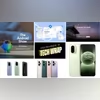
Google will host ‘The Android Show XR Edition’ tonight, December 8, where the US-based tech giant is expected to share updates on its upcoming extended-reality hardware, including XR glasses and a headset. The event is likely to highlight Google’s latest progress in the extended-reality (XR) space, following earlier sneak peeks and the short demo shown during Google I/O in May 2025.
Elon Musk-owned Starlink has announced India pricing for its satellite-powered internet services. At present, the company has introduced only one plan under the residential category. It is widely expected that Starlink will share business-tier pricing once commercial operations begin in the country. The company is still awaiting several regulatory approvals before starting full operations in India, though it began conducting security tests in October. The pricing update now suggests that Starlink’s commercial rollout could be close.
Also Read

 "Google Pixel Watch 4 (45mm) in Satin Moonstone colour (Image: Harsh Shivam)")
 "POCO C85 5G")
 "OnePlus 15R smartphone in Charcoal Black and Mint Breeze colours")
 "Google's Android Show XR Edition 2025")
 "Artificial Intelligence")
The OnePlus 15R will launch in India on December 17. Ahead of the event, the Chinese smartphone maker has confirmed details regarding the phone’s processor, display, battery capacity, and charging capabilities. The device will feature a 7,400mAh battery in India, supported by 80W SUPERVOOC fast charging. Earlier, the brand had already revealed that the phone will be powered by the Qualcomm Snapdragon 8 Gen 5.
Chinese smartphone maker POCO is preparing to unveil the C85 5G in India on December 9. Ahead of the announcement, the brand has disclosed several key specifications, including details about the battery, design, and more. The POCO C85 will run on the MediaTek Dimensity 6300 chipset and pack a 6000 mAh battery. POCO has also confirmed colour options — Mystic Purple, Spring Green, and Power Black — each featuring a dual-tone finish. A dedicated microsite on Flipkart has gone live, confirming the device’s hardware features.
Google is introducing a new round of enhancements to Chrome Autofill, featuring Android UI adjustments, Google Wallet support, and improved smart address recognition designed to speed up online form-filling. The company says the upgrades aim to reduce the time users spend entering repeated information across different websites.
Realme is expected to introduce the 16 Pro series in India on January 6, marking its first major smartphone launch of 2025. As reported by the Mint, the lineup may feature two models — the Realme 16 Pro and Realme 16 Pro Plus. The company has yet to officially disclose any launch details.
Google is reversing two recent changes in the Photos app after sustained user backlash. The company noted on its support page that it is reinstating the perspective correction tool and restoring the original crop screen corners. The perspective tool, which disappeared earlier this year, had been one of the most frequently requested features, especially for users editing documents, artwork or product photos. Google said user feedback played a central role in its return.
Meta’s mixed-reality glasses, codenamed Phoenix, has been delayed, according to a report by TechCrunch, citing Business Insider. The device, earlier planned for launch in the second half of 2026, is now expected to arrive in the first half of 2027. As per the report, the glasses will differ from Meta’s existing Ray-Ban smart glasses and its VR headsets, adopting a form factor closer to Apple’s Vision Pro.
Google has reportedly started releasing a visual refresh for the always-on display (AOD) on the Pixel Watch, an update previously promised for Wear OS 6 users. According to 9To5Google, the rollout includes revamped AOD modes for the Timer, Stopwatch and media controls. For now, the update is said to be reaching select Pixel Watch 4 units.
The year 2025 proved to be pivotal for India’s space programme, bringing significant achievements, important lessons, and new international collaborations. The Indian Space Research Organisation (Isro) partnered closely with NASA on a major Earth-monitoring satellite, advanced its human spaceflight preparations, and executed key communication and navigation missions. The year also included a notable setback, highlighting the inherent uncertainties of space exploration.
More From This Section
 "Meta Ray-Ban Display glasses")
 "Starlink price in India")
 "Realme 15 Series")
 "Google Photos reverse changes")
 "BGMI")
Don't miss the most important news and views of the day. Get them on our Telegram channel
First Published: Dec 08 2025 | 8:03 PM IST