


Tariffs drive June inflation rise in US, delaying Fed rate cut hopes
The personal consumption expenditures (PCE) price index rose 0.3 per cent last month after an upwardly revised 0.2 per cent gain in May, the Commerce Department's Bureau of Economic Analysis said
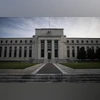 "US Federal Reserve, Fed")
"The Fed is unlikely to welcome the inflation dynamics currently taking hold," said Olu Sonola, head of US economic research, Fitch Ratings. (Credit: Bloomberg)
Listen to This Article
US inflation increased in June as tariffs boosted prices for imported goods like household furniture and recreation products, supporting views that price pressures would pick up in the second half of the year and delay the Federal Reserve from resuming cutting interest rates until at least October.
The report from the Commerce Department on Thursday showed goods prices last month posting their biggest gain since January, with also solid rises in the costs of clothing and footwear. The US central bank on Wednesday left its benchmark interest rate in the 4.25 per cent-4.50 per cent range and Fed Chair Jerome Powell's comments after the decision undercut confidence the central bank would resume policy easing in September as had been widely anticipated by financial markets and some economists.
"The Fed is unlikely to welcome the inflation dynamics currently taking hold," said Olu Sonola, head of US economic research, Fitch Ratings. "Rather than converging toward target, inflation is now clearly diverging from it. This trajectory is likely to complicate current expectations for a rate cut in September or October."
The personal consumption expenditures (PCE) price index rose 0.3 per cent last month after an upwardly revised 0.2 per cent gain in May, the Commerce Department's Bureau of Economic Analysis said.
Economists polled by Reuters had forecast the PCE price index climbing 0.3 per cent following a previously reported 0.1 per cent rise in May.
Also Read

 "information technology, IT Sector, IT Service")
 "US economy")
 "India US trade, US import tariffs 2025, reciprocal tariffs India, Indian exporters US, apparel export India, 90-day tariff pause, US India trade relations, export challenges tailor-made goods, US tariff impact India, Indo-US apparel trade")
 "thailand, cambodia, thailand cambodia border")
 "Donald Trump, Trump")
Prices for furnishings and durable household equipment jumped 1.3 per cent, the biggest gain since March 2022, after increasing 0.6 per cent in May. Recreational goods and vehicles prices shot up 0.9 per cent, the most since February 2024, after being unchanged in May.
Prices for clothing and footwear rose 0.4 per cent.
Outside the tariff-sensitive goods, prices for gasoline and other energy products rebounded 0.9 per cent after falling for four consecutive months. Services prices rose 0.2 per cent for a fourth straight month, restrained by cheaper airline fares and steady prices for dining out and hotel stays.
In the 12 months through June, the PCE price index advanced 2.6 per cent after increasing 2.4 per cent in May.
The data was included in the advance gross domestic product report for the second quarter published on Wednesday, which showed inflation cooling, though remaining above the Fed's 2 per cent target. Economists said businesses were still selling inventory accumulated before President Donald Trump's sweeping import duties came into effect.
They expected a broad increase in goods prices in the second half. Procter & Gamble said this week it would raise prices on some products in the US to offset tariff costs.
The Fed tracks the PCE price measures for monetary policy.
Excluding the volatile food and energy components, the PCE price index increased 0.3 per cent last month after rising 0.2 per cent in May.
In addition to higher goods prices, the so-called core PCE inflation was lifted by rising costs for healthcare as well as financial services and insurance.
In the 12 months through June, core inflation advanced 2.8 per cent after rising by the same margin in May.
Stocks on Wall Street were mixed. The dollar was steady against a basket of currencies. US Treasury yields fell.
CONSUMER SPENDING STEADY
The BEA also reported that consumer spending, which accounts for more than two-thirds of economic activity, rose 0.3 per cent in June after being unchanged in May. The data was also included in the advance GDP report, which showed consumer spending growing at a 1.4 per cent annualized rate last quarter after almost stalling in the first quarter.
In the second quarter, economic growth rebounded at a 3.0 per cent rate, boosted by a sharp reduction in the trade deficit because of fewer imports relative to the record surge in the January-March quarter. The economy contracted at a 0.5 per cent pace in the first three months of the year.
Spending is being supported by a stable labor market, with other data from the Labor Department showing initial claims for state unemployment benefits rose 1,000 to a seasonally adjusted 218,000 for the week ended July 26.
But a reluctance by employers to increase headcount amid uncertainty over where tariff levels will eventually settle is making it harder for those who lose their jobs to find new opportunities, which could hamper future spending.
The number of people receiving benefits after an initial week of aid, a proxy for hiring, was unchanged at a lofty seasonally adjusted 1.946 million during the week ending July 19, the claims report showed.
The government's closely watched employment report on Friday is expected to show the unemployment rate rising to 4.2 per cent in July from 4.1 per cent in June, according to a Reuters survey of economists.
Economists expect pressure from tariffs and a slowing labor market will put a brake on consumer spending in the third quarter. Slow growth is likely already in the works as inflation-adjusted consumer spending edged up 0.1 per cent in June after declining 0.2 per cent in May.
Precautionary saving could also curb spending. The saving rate was unchanged at 4.5 per cent in June.
Though a third report from the Labor Department showed wage growth picking up in the second quarter, inflation-adjusted annual gains moderated to 0.9 per cent from 1.1 per cent in the 12 months through March.
The BEA report showed inflation cutting into income for households after accounting for taxes, which was flat in June.
Signs of financial strain are also emerging among higher-income households, who have largely been driving spending. Lower- and middle-income families have been disproportionately affected by tariff-related price increases, higher borrowing costs and slowing economic activity.
"While consumer spending has thus held up — supported by solid income gains — it now faces mounting headwinds from a cooling labor market and renewed inflationary pressures," said Gregory Daco, chief economist at EY-Parthenon.
More From This Section
 "stablecoin, cryptocurrency, crypto")
 "Donald Trump, Trump")
 "Donald Trump, Trump")
 "Scott Bessent, right, with US President Donald Trump")
 "Donald Trump")
Don't miss the most important news and views of the day. Get them on our Telegram channel
First Published: Jul 31 2025 | 11:10 PM IST