


Trump admin targets Cuba's leaders, generals and spies with new sanctions
The punitive action is part of the president and Secretary of State Marco Rubio's push to squeeze the island's economy, most notably through a de facto energy blockade
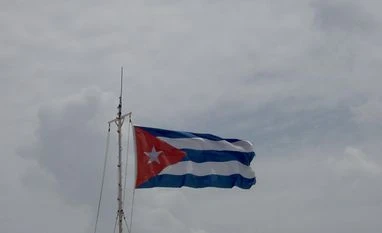 "Cuba, Cuba flag")
Last week, Cuba announced it was out of the fuel oil and diesel it needs to keep many of its aging power plants operating | Image: Wikimedia commons
Listen to This Article
By Jim Wyss
President Donald Trump’s administration slapped sanctions on some of Cuba’s top leaders and its spy agency, as Washington aggressively ratchets up pressure in a bid to end nearly seven decades of communist rule.
The Treasury Department sanctioned Justice Minister Rosabel Gamon Verde, Energy Minister Vicente de la O Levy, Communications Minister Mayra Arevich Marín and Esteban Lazo, president of the national assembly. The additions to the US blacklist also include the Intelligence Directorate, the head of that agency, three top generals and a top central committee official.
In a major escalation earlier this month, Trump unveiled a broader program that allows Washington to go after foreign citizens and entities that engage in business with sanctioned Cuban entities and officials. Under that threat, Canadian nickel miner Sherritt International has since begun to wind down its joint ventures with state companies on the island.
The punitive action is part of the president and Secretary of State Marco Rubio’s push to squeeze the island’s economy, most notably through a de facto energy blockade that has ground many industries to a halt. Last week, Cuba announced it was out of the fuel oil and diesel it needs to keep many of its aging power plants operating.
Also Read

 "Trump bought shares of Kura Sushi USA in February")
 "US soldiers, US army, military, US flag, troops")
 "Donald Trump")
 "Donald Trump,Trump")
 "Anthropic")
Washington and Havana are engaged in talks and Central Intelligence Agency Director John Ratcliffe visited last week. But those discussions have produced few results, and Trump and his allies have floated the idea of taking the island by force.
Over the weekend, Axios reported that US officials were worried about Cuba stockpiling armed drones just 90 miles off Florida’s coast. Without denying the specific drone claim, Cuban officials dismissed the report as a US effort to pave the way for military intervention.
President Miguel Díaz-Canel said earlier Monday his country represented “no threat” to the US, but warned any attack on the island would “trigger a bloodbath with incalculable consequences” and destabilize the region.
“Cuba, which is already suffering multidimensional aggression from the US, has the absolute and legitimate right to defend itself against a military onslaught,” Díaz-Canel said in a post on X. But self-defense “cannot be a logical or honest excuse for waging war on the noble Cuban people.”
More From This Section
 "Standard Chartered")
 "Pete Hegseth")
 "Elon Musk, Tesla CEO")
 "Donald Trump")
 "Parents and children leave the mosque, at the scene of a shooting at the Islamic Center in San Diego, California, U.S., May 18, 2026 | REUTERS")
Don't miss the most important news and views of the day. Get them on our Telegram channel
First Published: May 19 2026 | 7:52 AM IST