


Why Myanmar is going to hold elections on December 28 amid a civil war
Critics argue the polls neither restore Myanmar's fragile democracy, dismantled by the military takeover in 2021, nor offer a pathway to ending the violence triggered by continued army rule
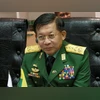 "Min Aung Hlaing")
Burmese army general Min Aung Hlaing. (Photo: Wikimedia Commons)
Listen to This Article
Myanmar is set to conduct the first phase of a general election on Sunday, which would mark its first nationwide voting exercise in five years. The step, however, comes against the backdrop of an ongoing civil war and widespread scepticism from within the country and abroad.
Critics argue the polls neither restore Myanmar’s fragile democracy, dismantled by the military takeover in 2021, nor offer a pathway to ending the violence triggered by continued army rule. Instead, they say the exercise serves a more political purpose for those in power.
The 2021 coup and its fallout
The military removed the elected government led by Aung San Suu Kyi in a February 2021 coup, just as her National League for Democracy (NLD) prepared to begin a second term after a landslide electoral victory.
The generals accused Suu Kyi and the NLD of election fraud, a charge she rejected. International election observers reported no major irregularities. Following the coup, Suu Kyi, senior NLD leaders and thousands of critics of the junta were detained.
The ruling military council promised elections by August 2023, followed by a return to democratic governance. That timeline slipped as the army lost control over large parts of the country amid clashes with ethnic armed groups and anti-junta forces. The NLD was later dissolved for failing to re-register under new election laws.
Also Read

 "Ministry of External Affairs (MEA) spokesperson Randhir Jaiswal")
 "Coforge")
 "IAS")
 "Image via Shutterstock")
 "MEA spokesperson Randhir Jaiswal")
Why is Myanmar holding elections now?
According to a Reuters report, many experts view the election as an attempt by the military, which has dominated Myanmar’s politics for much of the last six decades, to entrench its authority through proxy parties and seek legitimacy at home and internationally, despite the absence of a credible opposition.
How will the election be conducted?
Voting is scheduled in phases rather than nationwide.
Voting is set for December 28 in 102 townships, January 11 in 100 townships, and January 25 in 63 townships.
It is to be noted that this covers 265 of Myanmar’s 330 townships, according to an assessment by the Asian Network for Free Elections (ANFREL), a Bangkok-based non-partisan organisation.
Junta chief Min Aung Hlaing has publicly accepted that voting will not take place across the entire country, as reported by the state-run newspaper The Global New Light of Myanmar.
Dates for counting and declaration of results remain undisclosed, Reuters reported.
The military-backed election commission says more than 50,000 electronic voting machines will be deployed to accelerate counting. The commission claims the machines have received “national certifications”.
Seats will be allocated through a mix of first-past-the-post, proportional representation and mixed-member proportional systems, according to Reuters.
Previous elections relied solely on a plurality model, where candidates with the highest votes won seats.
Under Myanmar’s 2008 constitution, drafted by the army, 25 per cent of seats in both houses of parliament are reserved for serving military officers appointed by the armed forces chief.
Overseas voting arrangements
Myanmar has opened 50 overseas polling stations at embassies, permanent missions and consulates for advance voting in the junta-organised 2025 multiparty election. According to the country's state-run newspaper, voting has been concluded at 41 locations by December 8 and 28 embassies have announced staggered voting schedules.
These include polling from November 29 to December 1 in Egypt, and December 1 to 4 in Chiang Mai, followed by December 6 and 7 in Bangkok. Thailand hosts Myanmar’s largest migrant population, The Global New Light of Myanmar reported.
Which parties are taking part?
Only six political parties are contesting at the national level, while 51 are running within a single state or region, according to Reuters.
Many parties that participated in the previous two elections no longer exist, and armed resistance groups have refused to join the process, the report said.
This leaves the field dominated by junta-approved parties, including the military’s proxy Union Solidarity and Development Party (USDP).
The USDP, which won the last military-run election in 2010, has fielded 1,018 candidates, around one-fifth of the total.
Led by former generals, the USDP suffered decisive defeats at the hands of the NLD in the 2015 and 2020 elections, the latter later annulled following the coup.
As in 2010, with the military guaranteed 25 per cent of parliamentary seats and its allied parties expected to secure many more, the armed forces are positioned to influence the presidency, government formation, and key judicial and civil service appointments.
How will the president be chosen?
Myanmar’s constitution requires parliament to convene within 90 days of the start of the election. Lawmakers will first elect speakers, followed by the selection of a president at a later stage.
Three electoral colleges nominate presidential candidates. One consists of members from the upper house, another from the lower house, and the third is made up exclusively of military-appointed legislators.
The full bicameral parliament then votes, with the highest-polling candidate becoming president and the remaining two serving as vice presidents. The president subsequently appoints the cabinet.
What is the international response?
The United Nations, several Western governments and human rights groups have described the election as a “sham” designed to prolong military dominance.
UN High Commissioner for Human Rights Volker Türk warned that the military-controlled vote is happening amid escalating violence, intimidation and arbitrary arrests, which leaves no scope for meaningful participation.
“These elections are clearly taking place in an environment of violence and repression,” Türk said in a statement.
“There are no conditions for the exercise of the rights of freedom of expression, association or peaceful assembly,” he added.
The Association of Southeast Asian Nations, of which Myanmar remains a member, has called for a fair and inclusive process.
Burmese army general Min Aung Hlaing, has, however, intensified diplomatic outreach this year, including two visits each to China and Russia.
Junta’s response to criticism
The military leadership rejected international objections and insisted that the election proceeds without coercion and enjoys public backing.
“The election is being conducted for the people of Myanmar, not for the international community,” junta spokesperson Zaw Min Tun said on December 14, adding, “Whether the international community is satisfied or not is irrelevant.”
In a separate statement, Maung Kaung, another Burmese military officer, said: “No matter what anyone says, a free and fair multiparty democratic general election will be held on 28 December, and partner countries supportive of Myanmar’s national interests will soon send election observers. Journalists from foreign countries will arrive to witness the real situation in Myanmar and gain a more accurate understanding of the country and its people.”
Myanmar’s electoral record spans a century, with six elections held between 1922 and 1947, three during the parliamentary era from 1948 to 1962, four under the Myanmar Socialist Programme Party between 1962 and 1988, and one election during military rule from 1988 to 2010.
Since the transition to a limited democratic framework in 2010, the country has held three general elections and three by-elections.
More From This Section
 "Yoon Suk Yeol, Yoon Suk, South Korea President")
 "Volodymyr Zelenskyy, Zelenskyy")
 "Israel, Yemen, airstrike")
 "Former Malaysia PM Najib Razak")
 "Battery")
Don't miss the most important news and views of the day. Get them on our Telegram channel
First Published: Dec 26 2025 | 4:51 PM IST