


Yale, US universities plan student loan options as Trump caps grad debt
Graduate student loans account for half of the outstanding $1.7 trillion federal student loan portfolio, according to the Education Department
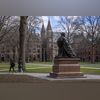 "Yale University in New Haven, Connecticut")
The Ivy League school will soon introduce an option with “comparable, if not more competitive” loan terms to previous Grad Plus loans, its School of Public Health said | Image Credit: Bloomberg
Listen to This Article
By Janet Lorin
Yale University is creating a new program to offer student loans to graduate and professional students, now that the government is limiting the amount they can borrow through the federal lending program.
The Ivy League school will soon introduce an option with “comparable, if not more competitive” loan terms to previous Grad Plus loans, its School of Public Health said in a LinkedIn post. Yale explored multiple outside loan sources and will announce the lender it has chosen once details are finalised, said spokesperson Karen Peart.
The University of Pennsylvania is also preparing options to offer alternative loan resources through third-party lenders, according to a spokesperson for its division of finance. The loans aren’t being funded from the school’s own budget or its endowment. And Duke University has created a list of private lenders and is working to create a loan option for students who don’t meet the criteria for the preferred lender list or don’t have credit histories, said Frank Tramble, a spokesperson.
The borrowing initiatives come after President Donald Trump’s signature domestic policy law, the One Big Beautiful Bill Act, put new caps on federal loans for graduate students that take effect in July — ahead of the 2026-2027 academic year for which students are now applying. Previously, students could borrow up to the full cost of attendance, including tuition, room, board and other expenses.
Now, some of the richest US universities are seeking options for their students to bridge the funding gap.
Also Read

 "Students hug on the campus at Brown University following a mass shooting in Providence, Rhode Island on Dec. 14")
 "Letitia James")
 "Donald Trump, Trump")
 "Demolition of a section of the East Wing of the White House, during construction on the new ballroom extension of the White House in Washington, DC, US, on Tuesday, Oct. 21, 2025")
 "United States Department of Justice")
The school-based loans are alternatives to slashing the cost of tuition or giving more grant aid, said Mark Kantrowitz, the author of How to Appeal for More College Financial Aid.
“Comparing this to the cost of making grants, loans are a lot less expensive to the school,” Kantrowitz said.
Under the new law, students pursuing degrees requiring a license such as medical or law can borrow up to $50,000 a year with a lifetime cap of $200,000. Graduate programs that don’t qualify for the higher amount have a limit of $20,500 annually and lifetime cap of $100,000. Grad Plus loans for this academic year have a rate of 8.9 per cent, in addition to an origination fee of 4.2 per cent.
A master’s degree in public health at Yale yields a median total federal debt at graduation at $62,532, according to the federal College Scorecard. Yale is the second-richest private college with a $44 billion endowment.
Graduate student loans account for half of the outstanding $1.7 trillion federal student loan portfolio, according to the Education Department.
The department has said it expects the changes from the new law “will help drive down the cost of graduate programs and reduce the debt students have to take out.”
Economists with the Education Department in the Biden administration expressed concern that advanced degrees weren’t necessarily resulting in greater earnings.
“There is generally very little correspondence between the amount students borrow to finance their advanced degrees and their labour market outcomes,” economists Tomás Monarrez and Jordan Matsudaira wrote in a 2023 report.
Princeton University has long offered loans to parents of undergraduate students, and at better rates than the government. For the current year, a Princeton parent loan is 6.7 per cent, compared to the federal government rate for parents of 8.9 per cent.
More From This Section
 "US personnel, US military")
 "Bangladesh Flag")
 "Elon musk, musk, Elon")
 "Vladimir Putin, Putin")
 "Donald Trump, Trump")
Don't miss the most important news and views of the day. Get them on our Telegram channel
First Published: Dec 20 2025 | 8:19 AM IST