


China exports fall for fifth month
Import slump continues for 13th month
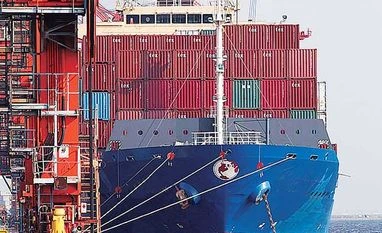 "China exports fall for fifth month")
China's exports fell for a fifth month while a slump in imports moderated, as policymakers seek to spur domestic spending amid tepid global demand.
Overseas shipments dropped 6.8 per cent in November in dollar terms from a year earlier, the customs administration said Tuesday. That compared to the median forecast of a five per cent decline in a survey of economists and the 6.9 per cent fall in October. Imports declined for a record 13th straight month, dropping 8.7 per cent in dollar terms versus an 18.8 per cent slump in October, leaving a trade surplus of $54.1 billion.With sluggish trade combining with slowing residential construction, policymakers may need to keep their foot on the gas even after six interest rate cuts and expedited fiscal spending. The import decline remains a drag on other nations as robust consumer demand hasn't picked up fast enough to offset declines in rust belt industries. "Global demand is staying around the bottom, just like China's domestic economy," said Hu Yuexiao, an economist at Shanghai Securities Co. "We will still see tepid trade next year with a big trade surplus." The Shanghai Composite Index was 1.4 per cent lower at 1:05 pm local time and the yuan weakened.
The trade data comes after a report last week showed China's manufacturing conditions slipped to the weakest level in more than three years. Inflation data Wednesday is forecast to show consumer prices grew about half as quickly as the central bank targets and producer price deflation deepened in November.
Also Read

"The economy is generally weak," said Zhu Qibing, a Beijing-based analyst at China Minzu Securities Co. "Except for consumption, we are unlikely to see any pickup in other data releases this month."
Exports to the US, one of the world's few economic bright spots, dropped 5.3 per cent from a year earlier, while shipments to the European Union decreased nine per cent.
"Global demand remains weak and Chinese manufacturing is feeling the brunt of a relatively strong currency," Louis Kuijs, head of Asia economics at Oxford Economics Ltd in Hong Kong, wrote in an e-mail.
"The large depreciations of many currencies against the US dollar, including the euro and the yen, have worsened the competitive position" of Chinese manufacturing.
China's exports are forecast to decline more than 2 per cent this year, according to a survey by Bloomberg, the first annual decrease since 2009. Combined with slumping imports, that will mean trade comes in well below the government's annual target for a 6 per cent increase this year.
The nation's policy makers are under increasing pressure to keep Premier Li Keqiang's growth target within reach, as sluggishness continues in old growth engines such as exports, manufacturing and real estate. The yuan's effective exchange rate against a basket of currencies has strengthened this year, further eroding the competitiveness of the nation's low-end factories.
Imports Decline
The decline in imports compared to a median forecast for an 11.9 per cent drop. Imports from Brazil jumped 34.9 per cent, reversing a stretch of declines this year.
The decrease in general imports, which are a signal of domestic demand, narrowed. Excluding key commodities, the decline moderated to a 9 per cent drop, according to calculations by Nomura Holdings Inc. economists led by Zhao Yang.
"Import data suggests a slight improvement in, albeit still weak, domestic demand," the analysts wrote in a report.
In another sign of improving demand, passenger-vehicle deliveries in China increased at the fastest pace in nine months in November after the government cut a tax to boost sales in the world's largest auto market.
China increased its volume of imported iron ore, crude oil and agricultural products while reducing those of coal and steel in the first eleven months from a year earlier, the customs administration said on its website.
"Fading exports remain a main drag on the slowing economy, adding downward pressure on the yuan and increasing the likelihood of further easing," Bloomberg economists Fielding Chen and Tom Orlik wrote in a note. "The hope is that the recovery in the global economy in 2016 may extend some help to China's exports."
Don't miss the most important news and views of the day. Get them on our Telegram channel
First Published: Dec 09 2015 | 12:13 AM IST