


Greece: A country in crisis, and elections ahead
A timeline of how the economic crisis in the euro nation has unfolded
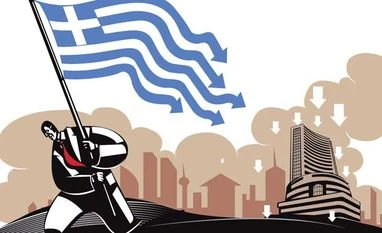)
With Prime Minister Alexis Tsipras resigning on Thursday, the Greek crisis seems to be deepening. There is a fear of a delay in the healing process, at least till a new government is put in place.
However, the German Parliament on Wednesday approved a third bailout package, of 86 billion euros ($95 billion). The country has often spoken of ‘Grexit’, a term used to refer to Greece’s exit from the euro zone. If Greece defaults on its debt and exits the grouping, experts argue, it might create global financial shocks bigger than the collapse of Lehman Brothers did.
Part of the euro zone but accounting for a very small part of the area’s economy, Greece has been intermittently facing an economic crisis since 2010. The unemployment situation has worsened of late, and the government debt has shot up.
According to various sources, the country’s debt currently stands at about 200 billion euros. It owes the most (57 billion euros) to Germany, followed by France (43 billion euros), Italy (38 billion euros), and Spain (25 billion euros), besides 32 billion euros to other countries. This apart, European Central Bank and other euro zone banks hold 27 billion euros worth of Greek bonds. The country also has to pay 24 billion euros to IMF and 11 billion euros to others.
The current problem is wreaking havoc not only in the euro zone’s stock markets but has also shaken inventor sentiment globally. Greece’s national debt stands at as high as 180 per cent its gross domestic product; while unemployment is at a whopping 25 per cent, the highest in the euro zone, according to ec.europa.eu/eurostat. The rate of retail inflation in that country currently is in the negative — at -2.23 per cent (according to inflation.eu).

Here is a timeline explaining how the crisis has unfolded so far:
2009:
· Fitch ratings downgrades Greece’s credit to ‘BBB+’ from ‘A-’; it was the first time that the country was downgraded below ‘A’
· In October, Greece announces it has been understating its budget deficit figures for years, leading to concerns over the soundness of Greek finances
· Suddenly, the country is shut out from borrowing in the financial market, leading to a debt crisis
2010:
To avert a crisis, the so-called troika — the International Monetary Fund, the European Central Bank and the European Commission — issues the first of two international bailouts for Greece, which would eventually total more than 240 billion euros.
2011:
The country has to undertake austerity measures, as agreed upon while securing a bailout
2014:
· Greece returns to the bond market
· The Greek government, led by New Democratic Party, is in a turmoil as Parliament refuses to endorse then prime minister Antoni Samaras’ presidential candidature
2015:
Jan: Left-leaning Syriza party, led by Alexis Tsipras, forms a coalition government with right-wing Independent Greek Party.
Jun:
· Greece bows to German-led pressure to stick to the broad terms of its 240-bn-euro (£176-bn) bailout to obtain a four-month extension to the rescue
· Finance Minister Yanis Varoufakis sends a six-page list of proposed economic reforms to Brussels
· IMF chief Christine Lagarde, however, says the Greek menu of policies is not sufficiently specific, and does not go far enough, singling out value-added tax, pension and labour-market reforms and privatisation as issues
Jul:
· Syriza Party, an anti-bailout and anti-austerity measures party, conducts a referendum seeking public mandate on the issue
· Greeks reject the terms of an international bailout in the referendum
· 38.7% Greeks vote ‘Yes’ in the plebiscite, while 61.3% go for ‘No’
Aug 19: The German Parliament gives its go-ahead to a third bailout package of 86 billion euros. The Lower House backs the programme after a three-hour debate, with 454 in favour, 113 against and 18 abstaining.
Aug 20: Prime Minister Alexis Tsipras resigns, calls for fresh elections. Polls are expected on September 20.
Don't miss the most important news and views of the day. Get them on our Telegram channel
First Published: Aug 21 2015 | 3:02 PM IST