


Book Extract: Dos and don'ts in a digital world
In the digital world, you have to earn trust and foster transparency. Here is what led to the initial adoption of Bitcoin
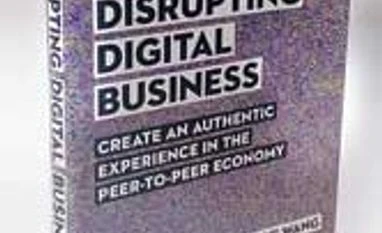 "Disrupting digital business")
DISRUPTING DIGITAL BUSINESS: CREATE AN AUTHENTIC EXPERIENCE IN THE PEER-TO-PEER ECONOMY
Author: R 'Ray' wang
Publisher: Harvard Business Review Press
ISBN: 9781422142011
Price: Rs 895
Bitcoin is a digital currency created by an anonymous founder, or founders, who use the name Satoshi Nakamoto. Nakamoto posted the original design to an obscure cryptography mailing list on January 3, 2009. The idea: digital money could enable instant payments to anyone anywhere in the world in an anonymous and secure manner. In a 2011 profile of the programmer in the New Yorker, writer Joshua Davis called Bitcoin "all bit and no coin," which is a really good point, given that this was a complete digital currency.
Since the dawn of the internet, many people have attempted to create a digital equivalent of cash, and a lot of them have failed. That's because they relied on a central authority within an existing global financial system to support a disruptive alternative. That's just not going to happen. These central authorities would play a role in tracking the creation and expenditure of the currency, which would defeat the purpose. People didn't want to be tracked.
This is the disruptive nature of a cash system that's direct, which in a P2P world is very different from a centralized currency system. All monetary systems depend on a degree of trust, and traditional currency is about trust in the currency itself and in the issuing body. At a time when people don't trust their governments' monetary policies and how they're printing more money than the countries are worth and inflating currencies and so on, this is a great problem.
Digital currency depends on that kind of trust, plus something else: trust in the system and all its participants. It has to function differently. Bitcoin doesn't rely on a central authority that manages transactions and issues currency. In fact, the network manages itself, which lends trust and transparency. Money is mined through this interesting algorithm with an absolute limit of 21 million coins. It can't inflate the coins. This cryptocurrency can't be inflated, manipulated, or impacted by political pressures, like if we need to raise money for a war or we have to drop interest rates. So, as with all currency and stored value mechanisms, the value depends on the currency holder's belief that a bitcoin is worth something. So trust is paramount.
This is a great example of trust and transparency. The reason previous systems have failed is that people were trying to figure out how many times a unit of currency was used and who used it. Bitcoin solved this problem by having a third party manage a ledger of all these transactions and then releasing the ledger to the public in a peer-to-peer fashion. It's one of the things that makes Bitcoin unique-building that trust.
How did Bitcoin establish trust in the currency? By using the seven trust factors we talked about earlier. First, Bitcoin's encryption is durable. It's been shown and proven. It's been going since April 2010. People see how these things are mined. It's been going on long enough. There have been trading networks.
Second, there's consistency. Exchanges ensured a safe and secure way to convert bitcoins into other currencies. And the value of bitcoins definitely is not being inflated or manipulated.
Competency - well, people are actually accepting bit-coins as currency. In June 2014, the State of California accepted Bitcoin as a payment mechanism. And this has added to the level of trust. Also, it's very hard to steal a bitcoin.
The public ledger chain shows a predictable money supply that you can't hyperinflate. This timeliness of information that shows how this money rate occurs keeps mischief from happening.
Bitcoin also has a meritocracy system, where the mining of cryptographic puzzles unlocks fifteen new bitcoins to those who solve them. So exchange for value immediately occurs when you mine a bitcoin by using computing processing.
As for accountability, only 21 million bitcoins will be produced. Despite anonymity, bitcoins are spent and stored in a public ledger chain that's decentralized and transparent to everyone.
And finally, because of the anonymity of bitcoin, every user or holder of value is theoretically treated the same. That's mutual respect. There's no discrimination in the use of a bitcoin. In fact, your anonymity and privacy are being respected. Bitcoin has succeeded because of these seven trust factors. They are what drove the initial adoption of Bitcoin.
But that trust has started to erode. Bitcoin, like other cryptocurrencies (Canada's cryptocurrency, MintChip, is an example), is losing some level of trust because the original design produced 21 billion units of currency.
Reprinted by permission of Harvard Business Review Press. Excerpted from Disrupting Digital Business: Create an Authentic Experience in the Peer-to-Peer Economy. Copyright 2015 Harvard Business School Publishing Corporation.
All rights reserved.

Don't miss the most important news and views of the day. Get them on our Telegram channel
First Published: Nov 23 2015 | 12:07 AM IST