


India to remain an attractive investment destination: Gopal Bhattacharya
Interview with Global markets head, Societe Generale, India
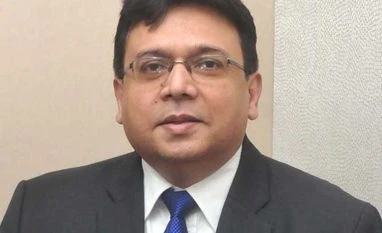 "Gopal Bhattacharya")
The fear of slowing global growth had cast its shadow on the global financial markets in the September 2015 quarter. The Indian benchmarks, too, slipped nearly six per cent in this backdrop during this period. Gopal Bhattacharya, global markets head, Societe Generale, India tells Puneet Wadhwa that going ahead, growth expectations will remain a key driver of the equity markets. In the Indian context, the interest rate cycle appears to be supportive and the valuations don’t look stretched, he says. Edited excerpts:
How long do you expect the upbeat scenario to last across global equity markets?
Our analysts believe that 62 per cent of the current market value of major developed and emerging equity markets is derived from long- term growth. As a result, growth expectations are a key driver and equity markets may be expected to be sensitive to news flow on growth prospects. Within emerging markets, China and Brazil are expected to be more resilient, while the Indian equity market, which is pricing in bullish growth assumptions, may be more vulnerable.

Do you expect the US Federal Reserve to increase rates in December? Can the lift-off trigger a global sell-off in equities?
There has been increasing talk of a US rate hike in the December FOMC (Federal Open Market Committee). The lack of negative reaction in the global equity market, or in most emerging market currencies, would suggest a lot of price hike is already priced in. Overall, it is unlikely that there will be a significant sell-off on the back of the first rate hike – if its impact is considered in isolation.
Do you expect a series of hikes all through calendar year 2016 or will the US central bank stop after the lift-off to gauge the impact?
The first rate hike - whether it comes in December or March - is expected to be around 25 basis points (bps). In terms of future rate hikes, a lot will depend on how growth shapes up next year. While the base case is for four rate increases next year, the risk is on the downside - the rate hikes may get delayed if growth looks too soft.
How do you see the Reserve Bank of India (RBI) reacting to this?
As far as the interest rate outlook in India is concerned, the chances are RBI will be on pause mode for the next three-to-six months. If we have to look for some correlation (between RBI action and Fed action), I think broadly the triggers will be directionally similar.
What about India as an investment destination within the emerging markets in this backdrop? Can one expect an outperformance over the next one year or is the India story over?
We believe the Indian economy is on the mend, though not yet reflected in corporate earnings. Macro indicators including the fiscal deficit appear to be in a healthier trend. Even while reforms requiring legislative approval have been delayed, administrative reforms are progressing. The interest rate cycle appears to be supportive and the valuations don’t look stretched. Over the medium term, India should remain an attractive investment destination.
What are your key takeaways on the September quarter corporate earnings? What is your sector preference in this backdrop?
With a slowing global economy, slower corporate earnings growth may be something to get used to and it will take some time to recover momentum. Next year will be really crucial for the medium-term outlook. In terms of sectors, our analysts prefer consumer discretionary, industrials, information technology (IT) and banks.
As regards commodities, are we in for a prolonged slump in prices, especially industrial metals given that the drivers of global growth could themselves be slowing?
With evidence emerging that the metal-intensive industrial sectors of developed countries are beginning to feel the impact of a slowdown in China (and elsewhere), our analysts believe the outlook for base metals is bearish and it might take time for prices to move away from recent lows.
Nearly all commodity markets have declined significantly over the past year. The S&P GSCI and BCOM commodity indices reached their lowest levels in the past 28 and 16 years, respectively. Our analysts believe China’s industrial and construction sectors taken together will grow by only two or three per cent in real terms this year, and will remain largely flat in 2016, which is bad news for industrial metals. This part of China’s economy accounts for 40 per cent of global metals demand.
What about precious metals such as gold and silver?
In terms of precious metals, our analysts believe the consensus market forecasts are perhaps too optimistic. We expect any tightening of US monetary policy is set to strengthen the dollar. Against this backdrop, we are bearish on gold and silver.
More From This Section
Don't miss the most important news and views of the day. Get them on our Telegram channel
First Published: Nov 17 2015 | 10:47 PM IST