The JWST was conceptualised in 1996 when development began with an initial R&D budget of $500 million. It is to be located at an L-Point, L-2, 1.5 million km from earth. Being clear of the atmosphere, this offers clearer vision, allowing to observe much larger volumes of space. If such an instrument is kept cold, it can “see” even better in the infrared spectrum, since infrared penetrates dust clouds and gas more effectively than visible light. Indeed, the JWST is designed mainly for infrared observations. The technical difficulties were considerable. It took thousands of scientists and engineers to iron out the problems, and create the JWST. A total of 258 companies, government agencies, and academic institutions have contributed, over the past 25 years. Of these, 142 are from the US, 104 from 12 European countries, and 12 from Canada.
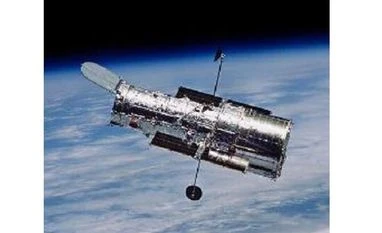
The telescope was launched on an ESA Ariane5 rocket from the ESA’s equatorial space centre in French Guiana. It will take at least a month before it is in a stable position with its solar arrays, antennae, sunshields, etc. deployed. The JWST has a fancy rotating sunshield, which is designed to keep one side cold, allowing it to analyse faint heat signatures. It has far better infrared resolution and sensitivity than its predecessor, the Hubble Telescope. Its observations of very distant galaxies should give us a better understanding of the early universe. It would also analyse exoplanets (planets orbiting other star systems) in great detail. The key factor is that the speed of light (and other electromagnetic waves) is not infinite. Depending on distance, our observations are rooted in the past. We see the sun as it was eight minutes ago, for instance, because that is how long sunlight takes to travel to Earth. As distance grows, so does the “age” of the observed object. The JWST’s “vision” extends almost all the way back to when the universe came into existence nearly 14 billion years ago. It can search for light from the very first stars and galaxies, and observe early star formation and galaxy formation, for major cosmological insights.
It should have enough fuel to keep going for 10 years, before it starts to drift away from L-2. One of the wonderful features of this project is that anybody can submit a proposal for JWST observations, and the data gathered and transmitted back to Earth at 458 GB/day will all eventually be publicly available. It is hard to extrapolate the concrete payoffs from such “blue-sky” mega-projects. But the history of space exploration indicates that the technologies developed for the JWST, and the likely insights from its data, will more than recoup the costs.


 "Nasa hubble telescope")