


Hola Ola, grow up, India has seen many foreign hands
Fight Uber on the street with transparency, ethics and innovation, not with name calling
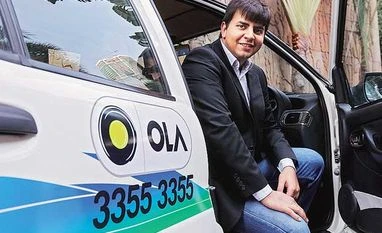 "Bhavish Aggarwal, Co-founder and CEO, Ola Cabs")
Bhavish Aggarwal, Co-founder and CEO, Ola Cabs
Your name is foreign, the business model is copied from your rival in the West and even the money, which makes our rides around town cheaper, is foreign.
There is too much foreign influence on you.
It is not that your rival Uber is a saint. It has violated local rules, as the Karnataka government charges and as you have pointed out. They have a reputation of first building the business by giving incentives to drivers and discounts to riders to grow market share and then force change of rules in many countries. They also take on local governments in court to defend their business model.
Agreed that your so called innovation - cash payment, so common in India's e-commerce space, has been copied by a foreign company Uber.
In Bengaluru, your hometown, you launched the two wheeler taxi just after Uber piloted its UberMoto. It was not that you didn't know that taking passengers for a fee as motorcycle taxis was violating the Motor Vehicles Act, 1998, the rules that you claim to uphold.
Also Read

The threat of a crackdown by the Karnataka transport department made you back off, and not your conscience of having broken the law. You ran your shuttle bus service as long as you could, despite knowing that it was violating rules to compete with BMTC buses.
Uber, whose founder Travis Kalanick hobnobbed with Prime Minister Narendra Modi in January, thinks it knows the top man at the Centre and continues to show contempt for local rules.
But that does not absolve you of the crime of violating rules.
Let us take the business itself. Both you and Uber are non-transparent. Each of you claim one has a lead over the other in India.
The only thing we know, in the absence of clear data from both of you, is that in this winner-takes-it-all market, the guy with the larger fleet of cars and customers in its platform will emerge as the winner. The runner up is a distant second like your global ally Lyft is in the United States.
Uber is desperate to ensure that India doesn't become China, where Didi Chuxing, with tonnes of new money, is giving them a hard time.
For now in India, Uber has more money in its war chest, which it is spending on offering rides as cheap as bus fares in smaller towns such as Mysuru. We know that you are raising fresh funds to fill in the sieve that your business model is.
We agree that you complied with the new rules in Karnataka that mandate license for cab aggregators meeting the requirements. Uber claims it wants to comply even if it is against its principles. That is why it has gone to the court.
Now your Monday's petition in the Karnataka High Court claims that Uber is bypassing local laws as it is a foreign company that is looking to make profits. Aren't you looking at profits?
What we are surprised is that when you break the law, it is for the general good of the public. If Uber does, it is the foreign hand. Does this argument make sense?
Don't miss the most important news and views of the day. Get them on our Telegram channel
First Published: Jun 28 2016 | 12:24 PM IST